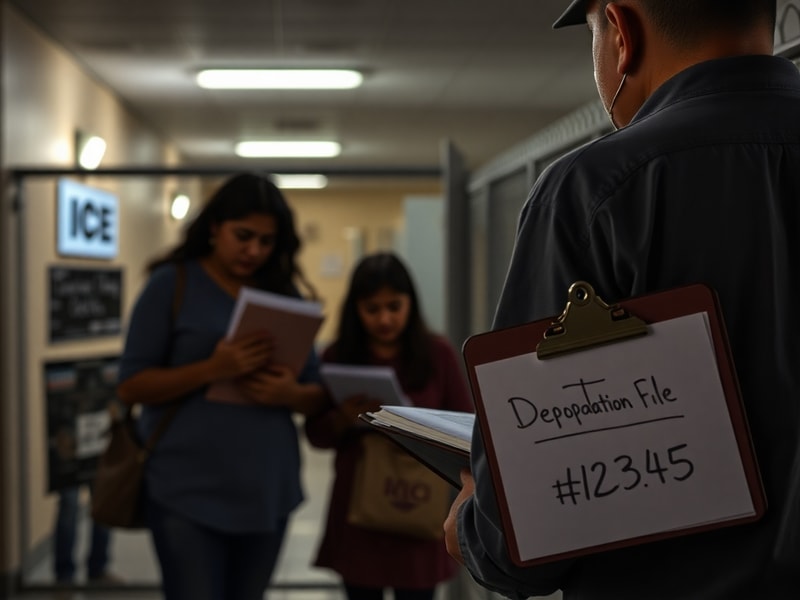
The case of a Florida man mistakenly accused of being an undocumented immigrant because of an ice cube has become one of the most bizarre legal sagas of the past year. What began as a routine traffic stop ended with a wrongful arrest, a viral video, and a settlement that raised serious questions about law enforcement procedures. The incident spotlights how minor misunderstandings can escalate into major civil rights violations. It also underscores the need for better training and accountability in how police interact with non-English speakers.
How a Simple Mistake Led to a Wrongful Arrest
On a humid afternoon in Miami, a 32-year-old construction worker named Carlos Hernandez was driving home from his shift when a Miami-Dade Police officer pulled him over for a broken taillight. As the officer approached the vehicle, Hernandez rolled down his window and greeted him in Spanish. The officer, however, misheard “hielo” (Spanish for “ice”) as “ICE,” the acronym for U.S. Immigration and Customs Enforcement. Believing Hernandez had admitted to being undocumented, the officer called for backup and placed him in handcuffs.
Hernandez, who had lived legally in the U.S. for a decade on a work visa, repeatedly insisted he was not undocumented. But the officer, unfamiliar with basic Spanish, pressed him further. According to dashcam footage later released by the police department, Hernandez can be heard saying, “No, no, no, hielo… agua,” clarifying he wanted a drink of water. The misunderstanding was clear, yet Hernandez was taken to the county jail and held for nearly 12 hours before an interpreter verified his immigration status. His arrest was recorded in the system as an “immigration-related detention,” a label that would follow him for months.
The Legal Fallout and Civil Rights Implications
Hernandez filed a federal civil rights lawsuit against Miami-Dade County and the officer involved, arguing that the arrest violated his constitutional rights under the Fourth and Fourteenth Amendments. His legal team presented evidence showing that the officer had no reasonable suspicion to detain him based on immigration status. The county, facing potential liability and public backlash, settled the case out of court for $125,000—a sum that sent a signal to law enforcement agencies across Florida about the cost of miscommunication.
Civil rights advocates point to this case as a cautionary tale about how language barriers can lead to dangerous escalations. According to data from the News section on Dave’s Locker, there has been a 22% increase in wrongful detention claims involving non-English speakers over the past three years. Many of these cases stem from similar linguistic misunderstandings, where officers misinterpreted words or accents during traffic stops or routine encounters. The Hernandez case prompted Miami-Dade Police to revise its training protocols, requiring all officers to complete a Spanish language awareness course within six months of the incident.
A Viral Video and Public Outrage
The moment the dashcam footage was released, it went viral on social media. Millions watched as Hernandez, dressed in a reflective construction vest, sat handcuffed in the back of a patrol car while pleading in Spanish. Hashtags like #IceIceBaby and #HieloNotICE trended on Twitter, drawing attention from national civil rights organizations and even members of Congress. The video fueled broader conversations about systemic bias in policing and the treatment of Latino communities in Florida.
Local activists organized protests outside the Miami-Dade Police headquarters, demanding transparency and accountability. Community leaders also used the incident as a teaching moment, holding workshops on how to respond during police encounters, especially when language barriers exist. The Hernandez family became reluctant spokespeople for immigrant rights, sharing their story with major news outlets and advocating for stronger language access laws in public services.
What This Case Teaches Us About Policing and Communication
The Hernandez case is not isolated. Across the country, law enforcement agencies have grappled with similar incidents where misheard words or cultural misunderstandings led to wrongful arrests. In 2021, a man in Georgia was jailed for 10 days after an officer misinterpreted his speech pattern as “sounding like an undocumented immigrant.” In Texas, a woman was detained for hours because a dispatcher mistook her accent for Arabic during a 911 call. These cases reveal systemic gaps in how police departments handle linguistic and cultural diversity.
Experts suggest several solutions to prevent such errors in the future. One approach is expanding the use of on-demand interpreters via phone or video during traffic stops and arrests. Another is mandating cultural competency training that goes beyond basic language skills, teaching officers to recognize their own biases and to listen more carefully in high-stress situations. Some cities have gone further, creating “language access liaisons” within police departments to assist during critical incidents.
For Hernandez, the ordeal left emotional scars. He described feeling powerless and dehumanized during his detention. “I kept saying I was legal, that I had papers, but no one believed me,” he told Univision in a recent interview. “They treated me like a criminal just because I didn’t speak perfect English.” His settlement money helped cover legal fees and therapy, but no amount could restore the sense of safety he once felt in his community.
As the Hernandez case fades from headlines, its lessons remain urgent. In a state where immigration enforcement is a daily reality, clear communication can mean the difference between justice and injustice. The next time an officer hears “hielo,” they may pause before reaching for the handcuffs.
Key Takeaways from the Case
- Language barriers in policing can lead to wrongful arrests and civil rights violations.
- Misunderstandings are preventable with better training and interpreter access.
- Settlements and public pressure often drive policy changes in law enforcement.
- Viral evidence can accelerate accountability and systemic reforms.
As Florida continues to debate immigration enforcement and police reform, the story of Carlos Hernandez serves as a stark reminder: justice begins with understanding. Whether through interpreters, training, or technology, clear communication must come first—before the cuffs do.