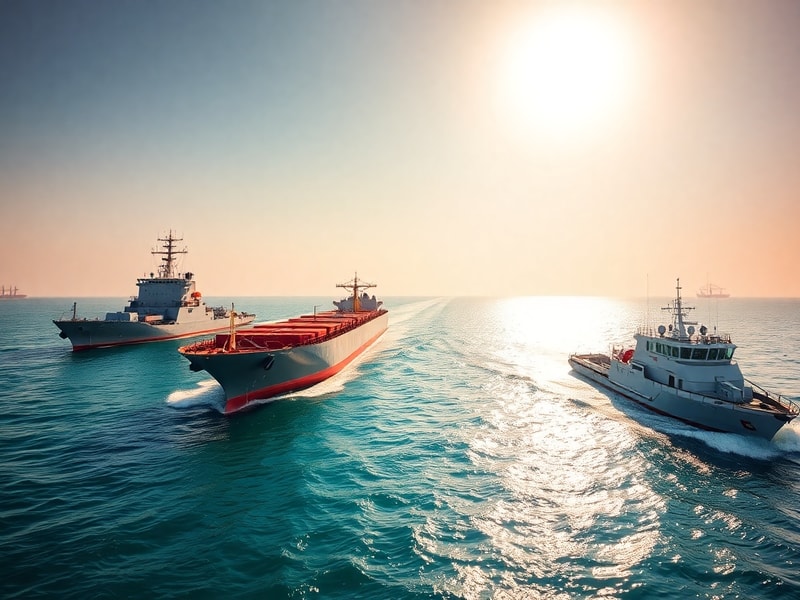
strait of hormuz news
The Strait of Hormuz remains one of the most strategically vital waterways on Earth. This narrow passage between Oman and Iran connects the Persian Gulf to the Gulf of Oman and, ultimately, the Arabian Sea. Roughly 20% of the world’s oil supply passes through these waters daily, making it a linchpin of global energy security. Recent months have seen heightened tensions, with incidents involving commercial vessels, military drills, and diplomatic standoffs drawing international attention.
Beyond its economic significance, the strait is a flashpoint for geopolitical rivalry, particularly between Iran and Western-aligned Gulf states. The region’s instability has prompted naval coalitions, rerouted shipping lanes, and raised questions about long-term energy security. Understanding the Strait of Hormuz requires examining both its operational realities and the broader implications of any disruption.
The Strategic Importance of the Strait
Every day, tankers carrying millions of barrels of crude oil transit the Strait of Hormuz. According to the U.S. Energy Information Administration, about 21 million barrels of oil passed through the strait in 2023—roughly 20% to 25% of global petroleum liquids consumption. This volume underscores why any disruption could ripple across global markets, triggering price spikes and supply shortages.
The strait is also a critical route for liquefied natural gas (LNG), with Qatar—the world’s largest LNG exporter—depending almost entirely on its southern passage. Were the strait to close, even temporarily, the consequences would be immediate and severe. Global oil prices could surge by 50% or more within days, according to market analysts. Such a scenario would not only strain economies but also test the resilience of alternative supply chains.
The geography itself compounds the risk. At its narrowest point, the strait is only 21 nautical miles wide. The navigable channel is even narrower—just two miles across in each direction. This confines tankers to a heavily monitored and contested corridor, making them vulnerable to interference, accidents, or deliberate attacks.
Key Facts About the Strait of Hormuz
- Location: Connects the Persian Gulf to the Gulf of Oman; bordered by Iran to the north and Oman (and the UAE) to the south.
- Width: Approximately 21 nautical miles at its widest, with a navigable channel of just 2 miles per lane.
- Daily Oil Flow: Around 21 million barrels of oil transit daily (2023 data), roughly 20% of global consumption.
- LNG Dependence: Qatar exports over 70% of its LNG through the strait.
- Military Presence: Multiple nations, including the U.S., UK, and Iran, maintain naval forces in the region.
Recent Tensions and Escalating Risks
Since 2019, the Strait of Hormuz has become a focal point of regional conflict. A series of attacks on tankers—attributed by Western nations to Iran—sparked international condemnation and triggered the formation of naval task forces. In 2023 alone, there were at least six confirmed incidents involving commercial vessels, including drone strikes and limpet mine explosions.
Iran has repeatedly threatened to close the strait in response to sanctions and perceived threats. While such a move would likely invite military retaliation, the risk of miscalculation remains high. In April 2024, Iran seized an Israeli-linked container ship near the strait, escalating tensions further. The incident followed a pattern of tit-for-tat actions that have characterized the region’s volatile security environment.
Meanwhile, regional alliances are shifting. The Abraham Accords have strengthened ties between Israel and Gulf states, creating a de facto bloc opposed to Iranian influence. This alignment increases the likelihood of proxy conflicts in and around the strait. At the same time, China and Russia have deepened their presence in the region, pursuing port access and energy deals that complicate U.S. dominance.
Global Implications: Energy, Markets, and Military Strategy
The Strait of Hormuz is not just a regional issue—it’s a global one. Any disruption would send immediate shockwaves through energy markets. Oil futures could surge, inflation could rise, and economic growth in import-dependent nations could stall. Countries like China, India, and Japan—which rely heavily on Gulf oil—would face difficult choices about rerouting supplies or absorbing higher costs.
Militarily, the strait has become a testing ground for modern naval deterrence. The U.S. Fifth Fleet, based in Bahrain, patrols the region alongside allied forces. Iran, meanwhile, has developed asymmetric capabilities, including fast attack boats, anti-ship missiles, and naval drones. This imbalance creates a dangerous dynamic where even a small incident could spiral into a larger confrontation.
Economically, the cost of rerouting oil around the Cape of Good Hope—adding thousands of miles and weeks to voyages—would be substantial. Insurance premiums for vessels transiting the strait have already risen, reflecting the elevated risk. Some shipping companies are exploring alternative routes, but none offer the same efficiency or capacity as the Hormuz passage.
Potential Scenarios and Their Consequences
- Temporary Blockade: Iran disrupts shipping for days or weeks. Oil prices spike 30–50%, triggering global economic slowdown and potential shortages in Europe and Asia.
- Accidental Attack: A misidentified vessel or errant missile causes a major incident. Escalation could lead to targeted strikes on Iranian military sites.
- Prolonged Closure: A sustained conflict halts all traffic. Alternative routes become overwhelmed; strategic petroleum reserves are tapped globally.
- Diplomatic Resolution: A new security framework is established, involving Gulf states, Iran, and international stakeholders. Tensions ease, but mistrust lingers.
Looking Ahead: Can Stability Be Restored?
Stability in the Strait of Hormuz depends on two factors: de-escalation and deterrence. Diplomatically, confidence-building measures—such as joint maritime patrols or dialogue platforms—could help reduce tensions. Economically, diversifying energy sources and routes remains a priority for importing nations.
Militarily, the presence of multinational naval forces acts as a deterrent but also increases the risk of miscalculation. Iran’s nuclear program and ballistic missile arsenal further complicate the picture, with many analysts warning that a wider conflict could erupt if diplomacy fails.
The path forward requires careful balancing. Gulf states must address Iran’s security concerns while maintaining freedom of navigation. Western powers must avoid actions that could be perceived as provocative. And Iran must recognize that escalation serves no long-term strategic interest.
Ultimately, the Strait of Hormuz is both a symbol of global interdependence and a powder keg of geopolitical rivalry. Its future will shape energy markets, military strategies, and the stability of the Middle East for decades to come.
Conclusion
The Strait of Hormuz is more than a shipping lane—it is the world’s most critical energy chokepoint and a barometer of global stability. Recent tensions have exposed the fragility of regional security and the far-reaching consequences of any disruption. While the path to lasting peace remains uncertain, the stakes could not be higher. Nations must act decisively to prevent a crisis that could destabilize economies and ignite wider conflict.
Monitoring developments in the strait is essential for policymakers, energy traders, and global citizens alike. The next chapter in this ongoing story may well determine the trajectory of 21st-century geopolitics.
For more insights on regional security and energy markets, visit our News and Analysis sections.