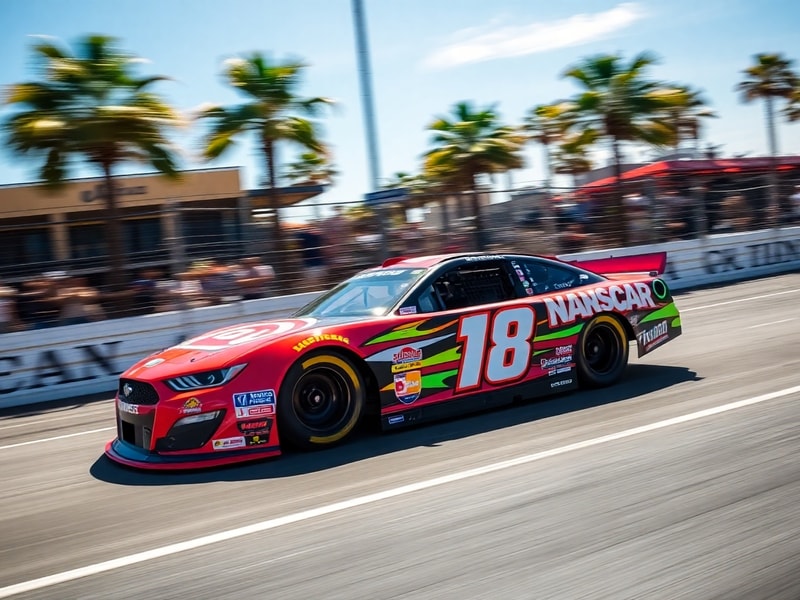
NASCAR’s presence in San Diego remains one of the most intriguing yet underreported stories in West Coast motorsports. While the sport’s traditional roots stretch from the Carolinas to the Midwest, a small but dedicated community of fans, drivers, and promoters has worked to bring stock car racing to the shores of Southern California. The effort isn’t about replacing oval tracks with beachside races—though that would be a spectacle—but about building a sustainable bridge between NASCAR’s core audience and the state’s diverse, motorsports-hungry population.
Why NASCAR Struggles to Gain Traction in San Diego
The challenges are both geographic and cultural. NASCAR’s fanbase skews older and more conservative, while San Diego’s population is younger, more diverse, and often more aligned with open-wheel and off-road racing. The city’s proximity to Mexico and its strong ties to Baja racing culture create natural affinities for series like the NASCAR Mexico Series, which occasionally races in nearby San Bernardino. Yet, despite these connections, NASCAR has struggled to establish a regular presence in San Diego itself.
Part of the issue lies in venue availability. The closest major oval track to San Diego is Auto Club Speedway in Fontana, nearly a two-hour drive inland. While this track hosts NASCAR Cup Series events, it’s too far for most fans to attend regularly. Smaller local tracks like Otay Mesa Speedway and Alpine Speedway have hosted regional and touring series events, but none have the infrastructure to support a full NASCAR national series race.
Another barrier is media saturation. San Diego’s sports media landscape is dominated by the Chargers, Padres, and, in recent years, the MLS’ San Diego Loyal. NASCAR receives limited coverage in local newspapers and broadcast outlets. Even digital platforms like Dave’s Locker Sports cover the sport sporadically, often focusing on national headlines rather than local grassroots efforts.
Still, the lack of a major track doesn’t mean NASCAR is absent from the region. Regional touring series, fan clubs, and even exhibition-style events have helped keep the sport alive in Southern California. The key to growth may lie in reimagining what a NASCAR event in San Diego could look like—not as a traditional oval race, but as an innovative, fan-focused experience that blends the sport’s heritage with California’s unique culture.
The Role of Grassroots NASCAR in Southern California
Despite the challenges, Southern California has quietly become a hub for grassroots NASCAR development. Tracks like Orange Show Speedway, Irwindale Speedway, and the now-defunct Mesa Marin Raceway have hosted NASCAR-sanctioned regional and touring series events for decades. These venues serve as proving grounds for West Coast drivers aiming for national recognition, including names like Jimmie Johnson, who honed his skills at local tracks before rising to NASCAR stardom.
One of the most successful grassroots initiatives in recent years has been the NASCAR Advance Auto Parts Weekly Series, which includes events at Southern California tracks. The series allows local drivers to compete on a national stage while earning points toward the NASCAR Advance Auto Parts Weekly Series championship. In 2022, Irwindale Speedway hosted a NASCAR Whelen All-American Series event, drawing over 5,000 spectators—a strong turnout for a regional race.
The growth of fan clubs has also played a role. NASCAR San Diego, an unofficial fan group, organizes watch parties, track days, and even charity events tied to the sport. Their efforts have helped introduce NASCAR to younger audiences through social media campaigns and partnerships with local schools. These grassroots programs don’t just keep the sport alive in San Diego; they lay the groundwork for future expansion.
Another promising development is the rise of eNASCAR, the sport’s virtual racing series. San Diego’s tech-savvy gaming community has embraced eNASCAR as a way to engage with the sport digitally. Events like the eNASCAR Ignite Series have attracted local gamers to compete in virtual races, with some even earning real-world opportunities like simulator training sessions. This digital approach could serve as a gateway to bringing fans from their couches to the actual track.
Could San Diego Host a Future NASCAR Race?
The million-dollar question remains: Could San Diego ever host a major NASCAR race? The short answer is yes—but not in the way traditionalists might imagine. The most viable path forward is through a street circuit or a temporary track layout that transforms the city’s urban landscape into a racing venue. San Diego’s waterfront, with its wide boulevards and scenic backdrop, has been floated as a potential host site for a NASCAR Xfinity Series or Truck Series event.
In 2019, NASCAR explored the idea of a race in downtown Los Angeles, envisioning a street course around Crypto.com Arena and LA Live. While that event never materialized, the concept demonstrated NASCAR’s willingness to experiment with non-traditional venues. San Diego, with its tourism-driven economy and commitment to hosting major events like the Comic-Con International, could be an ideal candidate for a similar experiment.
Another possibility is a race at Marine Corps Air Station Miramar. Military bases have hosted NASCAR events in the past, such as the NASCAR Cup Series race at Homestead-Miami Speedway’s former military base layout. Miramar’s expansive runways and open spaces could accommodate a temporary road course, offering a unique blend of speed and military pageantry.
Of course, any event would require significant logistical planning. Traffic, noise restrictions, and environmental concerns would need to be addressed. But San Diego’s experience hosting large-scale events like the San Diego International Boat Show and the San Diego Comic-Con proves that the city can handle complex logistics when the right opportunity arises.
The financial incentives also make sense. NASCAR races draw tens of thousands of spectators, many of whom travel from out of state. A San Diego race could attract fans from Mexico and the broader West Coast, boosting local tourism and hospitality revenues. Hotels, restaurants, and retail businesses would all benefit from the influx of visitors over a race weekend.
The Cultural Shift: NASCAR Meets California Cool
For NASCAR to truly resonate in San Diego, the sport would need to adapt to the region’s unique culture. That means more than just slapping a NASCAR logo on a beach tow truck—it requires authentic engagement with the community. One way to do this is by highlighting West Coast drivers in NASCAR’s national broadcasts. Kyle Larson, a San Diego native and 2021 NASCAR Cup Series champion, has already helped bridge the gap. His success has drawn attention to the region, and local fans have embraced him as one of their own.
NASCAR could also explore partnerships with California-based brands and influencers. Collaborations with companies like Tesla, Surf City USA, or even local craft breweries could help rebrand the sport as more inclusive and relevant to San Diego’s lifestyle. Imagine a race weekend that includes a tailgate party featuring local food trucks, live music from regional artists, and interactive fan zones that celebrate both racing and California culture.
Social media engagement will be critical. NASCAR’s digital presence has improved in recent years, but the league still lags behind other sports in terms of viral reach. A dedicated San Diego-focused campaign—highlighting fan stories, driver meet-and-greets, and behind-the-scenes content—could help build a local following. Platforms like TikTok and Instagram are ideal for reaching younger audiences who might not tune in to a traditional TV broadcast.
Ultimately, NASCAR’s future in San Diego depends on its ability to evolve. The sport can’t rely on its traditional fanbase alone; it must connect with new audiences in innovative ways. Whether through a street race, grassroots initiatives, or digital engagement, NASCAR has the opportunity to write a new chapter in San Diego’s motorsports history.
For now, the dream of a San Diego NASCAR race remains just that—a dream. But with the right mix of vision, planning, and community involvement, it could become a reality sooner than anyone expects. Until then, the fans will keep the flame alive, one local track day and virtual race at a time.