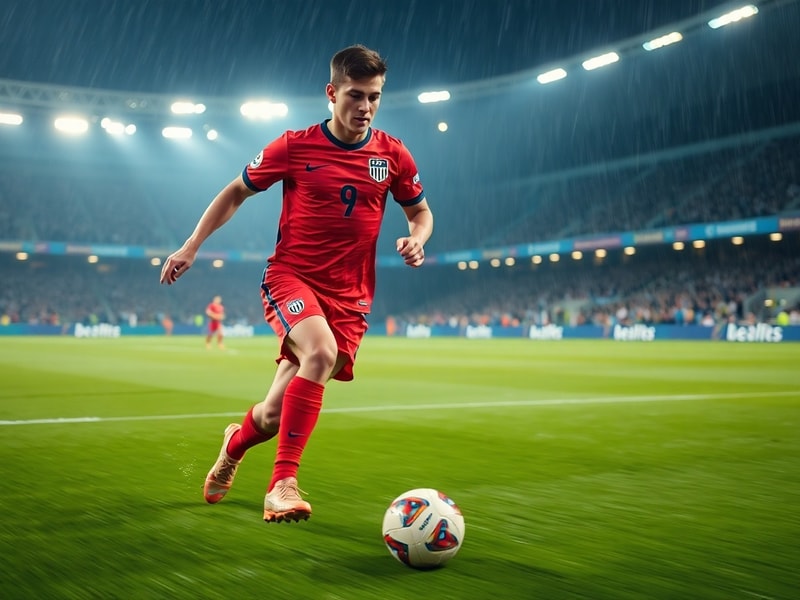
Christian Pulisic’s rise from small-town Pennsylvania to global stardom reads like a modern sports fable. Born in Hershey, the town synonymous with chocolate and not football, Pulisic’s journey defied early expectations. By the age of 16, he had already moved to Europe, joining Borussia Dortmund’s youth ranks in 2015. His technical skill, vision, and maturity belied his age, earning him comparisons to American soccer prodigies of the past and present.
Pulisic’s breakthrough moment came in 2016 during a UEFA Europa League match against Tottenham Hotspur. At just 17 years old, he became the youngest American to score in a major European competition. That goal signaled more than personal achievement; it marked the arrival of a new generation of U.S. talent ready to compete at the highest levels. His performances drew attention from Europe’s elite clubs, and in 2019, Chelsea secured his services for a reported £58 million—then a record fee for an American player.
From Hershey to Stamford Bridge: The Making of a Star
The Pulisic family’s move to Germany was not just a soccer decision—it was a cultural leap. The Hershey community, known for its tight-knit feel and strong work ethic, instilled in Pulisic the values of discipline and perseverance. Those traits became evident as he navigated Bundesliga academies and later the Premier League. His ability to adapt quickly to different styles of play set him apart from peers who struggled with the physicality and intensity of European football.
Under coaches like Thomas Tuchel at Chelsea, Pulisic flourished. Tuchel’s system emphasized versatility and positional fluidity, qualities Pulisic possessed in abundance. Whether deployed as a winger, attacking midfielder, or even a false nine, he demonstrated an understanding of the game that transcended his years. His partnership with teammates like Olivier Giroud and Mason Mount highlighted his unselfish play and knack for creating scoring chances.
The Premier League, known for its relentless pace and physicality, was once considered a bridge too far for American players. Pulisic changed that narrative. In his debut season, he scored the winning goal against Manchester United, becoming the first American to net in a top-five European league that season. His performances earned him the U.S. Soccer Male Player of the Year award in 2019, a testament to his impact on both club and country.
Cultural Impact: Representation and Identity in Global Football
Pulisic’s ascent carried significance beyond the pitch. As one of the few prominent American players in European football, he became a symbol of representation for young athletes in the United States. His success challenged stereotypes about American soccer players, often dismissed as physically dominant but lacking technical finesse. Pulisic’s style—characterized by dribbling, creativity, and composure—reshaped perceptions and inspired a generation to prioritize skill development over raw athleticism.
His influence extended to the global soccer diaspora. In cities like London, where Chelsea’s fanbase is diverse and cosmopolitan, Pulisic’s presence resonated with immigrant communities and expatriates alike. His humility and professionalism, traits often highlighted in interviews, further endeared him to fans who valued authenticity over hype. This connection was evident during the 2022 World Cup, where Pulisic led the U.S. Men’s National Team with quiet confidence, embodying the values of resilience and unity.
Pulisic’s cultural footprint also intersected with fashion and lifestyle. His clean-cut image and global brand partnerships, including collaborations with Adidas and BMW, positioned him as a crossover figure in sports and entertainment. Unlike some athletes who lean into controversy for visibility, Pulisic’s appeal lies in his consistency and understated charisma. This approach has made him a marketable figure in regions where soccer intersects with lifestyle and consumer culture, from Los Angeles to Seoul.
Challenges and Criticisms: Navigating Expectations and Injuries
Despite his success, Pulisic’s career has not been without setbacks. Injuries have been a recurring challenge, from hamstring strains to muscle tears that sidelined him for extended periods. In a sport where physicality is paramount, injuries can derail even the most promising careers. Pulisic’s ability to bounce back, however, speaks to his mental toughness and dedication to recovery. His return from injury during the 2020-21 season, where he scored crucial goals in the Champions League, demonstrated his resilience.
Critics have also questioned whether Pulisic has lived up to his potential as a generational talent. At Chelsea, he often played second fiddle to higher-profile stars, and his role in the team’s tactical setup fluctuated under different managers. Some pundits argued that his best performances came in isolated moments rather than sustained dominance. Yet, those critiques often overlook the realities of modern football, where versatility and adaptability are prized over individual brilliance alone.
Pulisic’s international career with the U.S. Men’s National Team has faced scrutiny as well. Despite leading the team to the 2022 World Cup, questions lingered about the team’s overall progress and consistency. Pulisic’s role as captain and primary playmaker placed immense pressure on his shoulders, and while he delivered in big moments, the team’s struggles in tournament play highlighted the broader challenges facing U.S. soccer. His performances, however, remain a bright spot in an otherwise mixed era for the national team.
The Future: Legacy and Beyond the Pitch
Now 25 years old, Pulisic stands at a pivotal juncture in his career. With a move to AC Milan in 2023, he joined one of Europe’s historic clubs, seeking to revitalize his career and prove his doubters wrong. The Serie A league, known for its tactical depth and defensive solidity, offers a new challenge. Pulisic’s ability to adapt to Italian football could redefine his club legacy and open doors to even greater opportunities.
Off the field, Pulisic’s influence continues to grow. His social media presence, though low-key, reflects his global appeal. Whether sharing training sessions or engaging with fans, he maintains a professional demeanor that contrasts with the noise of modern sports culture. This balance has made him a role model for young athletes navigating the pressures of fame and expectation.
Looking ahead, Pulisic’s legacy will likely be defined by more than trophies or statistics. He represents a bridge between American soccer’s past and future, a player who elevated the profile of U.S. talent on the world stage. His story is one of perseverance, adaptability, and quiet leadership—qualities that resonate far beyond the soccer pitch.
As football continues to evolve, players like Pulisic remind us that success is not measured solely by titles or accolades, but by the impact they have on the game and the communities they inspire. Whether he adds to his trophy cabinet or transitions into a new role, his influence on global soccer is already secure.