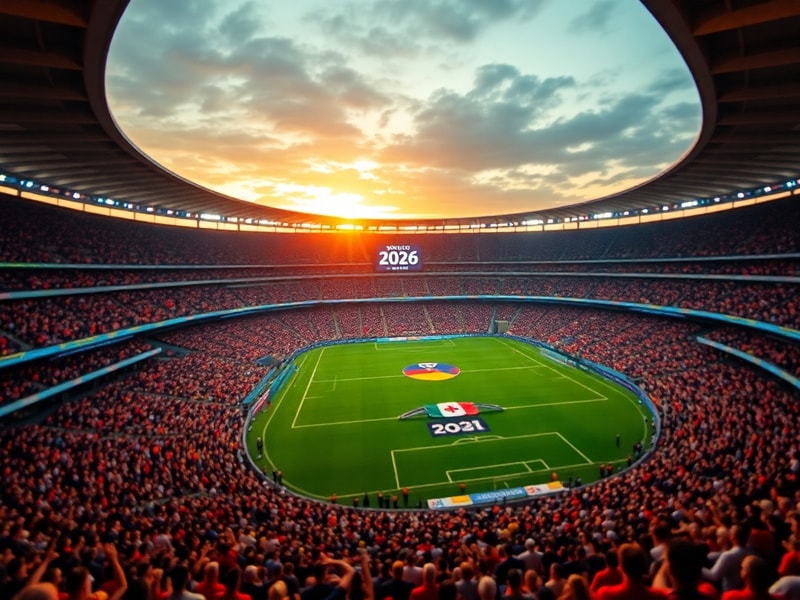
FIFA World Cup 2026™: Why This Tournament Will Change Football Forever
Expanding the Beautiful Game: How FIFA World Cup 2026™ Will Reshape Global Football
The FIFA World Cup 2026™ isn’t just another tournament. Scheduled to be hosted across three countries—Canada, Mexico, and the United States—this will be the first 48-team World Cup in history, doubling the field from previous editions. The expansion, announced in 2017, reflects football’s rapid growth beyond its traditional European and South American strongholds. With matches spread across 16 cities, from Vancouver to Los Angeles to Guadalajara, the tournament promises to be a truly continental spectacle. But beyond the scale, the event carries deep cultural and economic implications for North America and the world.
Football has always been a global language, but its influence in North America has historically lagged behind other regions. The 1994 World Cup in the U.S. drew modest television ratings domestically, despite record attendance. By 2026, however, the landscape has shifted dramatically. Major League Soccer (MLS) has grown from 10 teams in 1996 to 29 in 2024, with expansion plans continuing. The U.S. women’s national team remains a global powerhouse, and the men’s team, while not yet a consistent contender, has shown flashes of promise. Canada and Mexico, meanwhile, have established themselves as serious football nations—Canada with rising stars like Alphonso Davies and Mexico with a passionate fan culture and consistent World Cup performances.
This World Cup arrives at a pivotal moment. The sport is no longer just a European or South American affair. Africa, Asia, and North America are staking their claims. The 2026 format ensures more nations than ever before will have a realistic path to qualification. For smaller federations, the expanded field means a chance to shine on the biggest stage. For fans in emerging football markets, it offers representation. And for organizers, it’s an opportunity to grow the game where it still struggles for attention.
A Tournament of Firsts: What Makes FIFA World Cup 2026™ Unique
The 2026 World Cup will be remembered for several historic milestones. It will be the first hosted by three nations, a logistical challenge that FIFA has framed as a celebration of football’s reach. It will also be the first with 48 teams, a format that increases total matches from 64 to 104. While purists debate whether such expansion dilutes the prestige of the tournament, FIFA argues it creates more opportunities for nations, players, and fans alike.
Another first: the use of semi-automated offside technology, refined after its debut at the 2022 World Cup in Qatar. This system, which combines limb-tracking sensors with video assistant referees (VAR), aims to reduce human error and speed up decisions. Given the tournament’s expanded scope, minimizing delays will be crucial to maintaining fan engagement across multiple time zones.
The host cities themselves tell a story of football’s evolving geography. New York/New Jersey, home to the iconic MetLife Stadium, will host knockout rounds. Atlanta, a city with a growing football culture, will welcome fans. Meanwhile, Mexico City’s Azteca Stadium—venue of Maradona’s “Hand of God” moment in 1986—will host multiple high-profile matches, grounding the tournament in football’s deep history.
For the first time, FIFA will use a new format for the group stage. Teams will be divided into 12 groups of four, with the top two from each group advancing, along with the best eight third-placed teams. This structure ensures more matches are competitive and reduces the risk of dead rubber games late in the group stage. It also means more nations will stay in contention longer, keeping global audiences engaged throughout the tournament.
The Business Behind the Ball: Economic and Cultural Impact
The economic footprint of the FIFA World Cup 2026™ will be massive. A report by the host countries’ organizing committee estimates the tournament could generate over $11 billion in economic activity, supporting hundreds of thousands of jobs. Host cities are investing in stadium upgrades and infrastructure, from light rail expansions in Los Angeles to hotel developments in Toronto. But the financial stakes extend beyond the host nations.
For sponsors, the 2026 World Cup represents one of the last great global marketing opportunities before the rise of AI-driven, personalized advertising. Coca-Cola, Adidas, and Visa have already extended their partnerships through 2030, signaling long-term confidence in football’s global appeal. Yet, the event also faces scrutiny over human rights and environmental commitments, particularly as climate change and labor issues remain in the spotlight.
Culturally, the World Cup remains unmatched in its power to unite diverse communities. In Canada, where football is the fastest-growing youth sport, the tournament could inspire a new generation. In Mexico, the tri (the Mexican national team’s fans) are known for their vibrant, communal celebrations. In the U.S., the event may finally help football shed its “minor sport” label, especially if the men’s team performs well.
The tournament also arrives amid growing conversations about representation. FIFA’s push for diversity in refereeing and coaching staff continues, with more women and officials from outside Europe and South America taking central roles. The 2026 World Cup could serve as a showcase for a more inclusive football future.
Beyond the Pitch: Challenges and Controversies
Even with all the excitement, the FIFA World Cup 2026™ faces significant challenges. The most pressing is human rights. Canada has faced criticism over its treatment of migrant workers and Indigenous communities. Mexico grapples with cartel violence, raising safety concerns for fans and teams. The U.S., meanwhile, has its own issues with policing and surveillance at large sporting events. FIFA has pledged to uphold human rights standards, but enforcement remains inconsistent.
Infrastructure readiness is another concern. While stadiums in Toronto, Mexico City, and Los Angeles are world-class, smaller host cities like Cincinnati or San José may struggle to meet the logistical demands of a 48-team World Cup. Transportation, security, and accommodations must all align seamlessly to avoid the pitfalls seen in previous tournaments.
There’s also the question of legacy. Will the 2026 World Cup leave a lasting impact on football in North America? Or will it be remembered as a flashy but fleeting event? Past World Cups in the U.S. (1994) and South Africa (2010) left mixed legacies—stadiums that became white elephants, infrastructure that crumbled. To avoid this, host cities are already planning for post-tournament use, from converting stadiums into community hubs to leveraging training facilities for local clubs.
Another controversy involves the allocation of spots. Critics argue that the expanded format benefits already strong nations while doing little for the sport’s development in smaller federations. Some African and Asian nations have pushed for even greater representation, but FIFA’s decision to cap the field at 48 suggests a compromise rather than a revolution.
Looking Ahead: What the World Cup 2026™ Means for Football’s Future
The FIFA World Cup 2026™ is more than a sporting event. It’s a statement about football’s global ambitions. By spreading the tournament across three countries, FIFA is betting on North America as the next frontier for the sport. The success of this World Cup could accelerate investment in football infrastructure, youth development, and broadcasting rights across the continent.
For fans, the expanded format means more teams to cheer for, more underdog stories, and more drama. It also means a longer tournament, with group matches stretching over three weeks. That could test even the most dedicated supporters, but it also offers more chances to engage with the game.
As we look ahead to 2026, one thing is clear: football is no longer a regional obsession. It’s a global phenomenon, and the World Cup is its grandest stage. Whether this tournament cements football’s place in North America or simply reinforces its existing power structures, one thing is certain—it will be watched by billions.
For those eager to follow the journey, Sports on Dave’s Locker offers ongoing coverage of football’s evolving landscape, from grassroots growth to international competitions. The 2026 World Cup could be the moment when North America finally falls in love with the beautiful game.