Halle Open: Germany’s Premier Grass-Court Tennis Tradition
The Halle Open, one of Germany’s most prestigious grass-court tennis tournaments, has quietly established itself as a vital stop on the ATP Tour each summer. Held annually in Halle, North Rhine-Westphalia, the event serves as the perfect warm-up for Wimbledon, offering players a chance to fine-tune their grass-court skills ahead of tennis’ most hallowed major. With a history dating back to 1993, the tournament has grown from a regional contest into an international showcase of speed, precision, and athleticism.
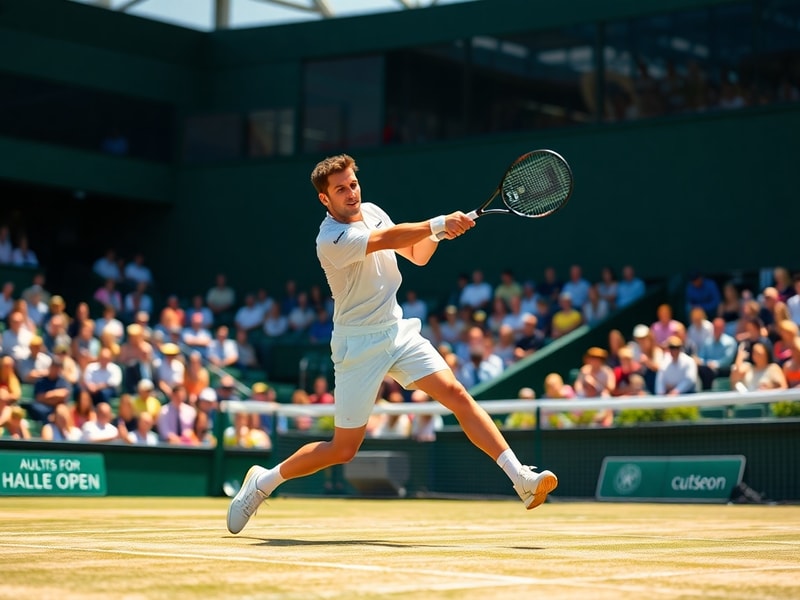
Unlike the larger Masters 1000 events, the Halle Open maintains a distinctive local flavor while drawing top-tier talent. The atmosphere in Gerry Weber Stadion—now known as the OWL Arena—reflects a blend of German efficiency and sporting passion. Fans pack the stands not only for the tennis but also for the event’s relaxed, community-oriented vibe. It’s a place where champions come to compete, and spectators come to experience tennis at its most human.
The Tournament’s Legacy and Evolution
The Halle Open was founded in 1993 as the Gerry Weber Open, named after the local clothing manufacturer who sponsored the event for nearly three decades. The tournament’s origins were humble: a small grass-court event designed to promote tennis in the region. Over time, it evolved into a key fixture on the ATP Tour, earning a reputation as a high-quality preparation ground for Wimbledon.
One of the tournament’s defining features is its unwavering commitment to grass-court tennis. While many ATP events have shifted surfaces or formats, Halle has remained a steadfast advocate for the sport’s fastest major playing field. This consistency has made it a favorite among players who appreciate its predictable bounce and quick points.
Notable champions in Halle’s history include legends like Roger Federer, who claimed his first title here in 2003, and Novak Djokovic, who has lifted the trophy multiple times. The tournament has also been a springboard for rising stars, with players like Alexander Zverev and Jannik Sinner using Halle as a launching pad toward Grand Slam success.
Key Moments in Halle’s History
- 2003: Roger Federer wins his first grass-court title at Halle, marking the beginning of his dominance on the surface.
- 2009: Tommy Haas secures his third Halle title, solidifying his status as a grass-court specialist.
- 2015: Roger Federer returns to claim his eighth Halle title, one year before his historic eighth Wimbledon crown.
- 2020: The tournament is canceled due to the COVID-19 pandemic, highlighting its vulnerability to global disruptions.
- 2023: Borna Ćorić wins his first ATP 500 title in Halle, defeating Alexander Zverev in a thrilling final.
Why Halle Matters: More Than Just a Warm-Up
The Halle Open occupies a unique position in the tennis calendar. While it lacks the prestige of a Grand Slam or the depth of a Masters 1000 event, it offers something rare: a high-stakes environment with a lower-pressure feel. Players arrive here after the clay swing but before Wimbledon, making it a critical testing ground for technique and fitness.
Grass is a surface of extremes—low bounce, fast rallies, and unforgiving serves. Halle’s courts amplify these challenges, forcing players to adapt quickly. Serving aces and finishing points at the net are premium skills here, and the tournament often becomes a masterclass in aggressive, all-court tennis.
For spectators, Halle delivers an intimate experience. The OWL Arena seats just over 12,000, creating an atmosphere where fans can feel the energy of every shot. Unlike the cavernous stadiums of bigger events, Halle allows for direct player-fan interaction, adding to its charm.
It’s also a tournament where underdogs can thrive. Players ranked outside the top 20 often make deep runs, capitalizing on the surface’s unpredictability. In 2019, Pierre-Hugues Herbert, ranked 242nd in the world, reached the semifinals as a wildcard, proving that Halle rewards grit over pedigree.
The Future of the Halle Open
As tennis continues to evolve, the Halle Open faces both opportunities and challenges. One of its biggest strengths is its stability—unlike some European events that have been relocated or rebranded, Halle has maintained its identity for nearly 30 years. However, it must now compete with newer tournaments for attention and sponsorship.
The ATP’s recent restructuring of tournament categories could impact Halle’s status. While it remains an ATP 500 event, the introduction of new Masters 1000 tournaments in Europe has diluted the field slightly. Still, Halle’s grass-court tradition and loyal fanbase give it a competitive edge.
Sustainability is another consideration. The OWL Arena has made efforts to reduce its environmental footprint, including solar panel installations and waste reduction programs. These initiatives reflect a broader trend in sports toward eco-conscious hosting, which could become a deciding factor for future tournaments.
Looking ahead, Halle’s ability to attract top players will depend on scheduling. With Wimbledon looming just weeks later, many stars prioritize rest over further competition. Yet, those who do come often leave with renewed confidence—whether it’s a new serve-and-volley technique or the mental edge needed for Wimbledon’s grass courts.
What Makes Halle Special for Players
Players consistently praise Halle for its professionalism and player-friendly amenities. The locker rooms are spacious, the practice courts are well-maintained, and the on-site medical staff is top-notch. These details matter, especially during the grueling grass-court swing.
Another draw is the tournament’s hospitality. Players often stay in nearby hotels and enjoy local cuisine, creating a home-away-from-home atmosphere. This comfort level can be a deciding factor for athletes balancing high-pressure schedules.
The Halle Open also serves as a networking hub. Coaches, agents, and sponsors mingle in the stands and hospitality suites, making it a prime opportunity for career-defining conversations. In an era where sponsorships and endorsements drive player earnings, such connections are invaluable.
How to Experience the Halle Open
For tennis fans planning a visit, Halle offers more than just world-class tennis. The city itself is a blend of modern amenities and historical charm, with cobbled streets, half-timbered houses, and a lively cultural scene. The tournament coincides with the start of summer, making it an ideal time to explore the region.
Tickets are generally affordable compared to bigger events, with options ranging from general admission to premium hospitality packages. Fans can also attend fan zones, meet-and-greets with players, and live music performances that complement the tennis action.
For those unable to attend, the Halle Open is broadcast globally, with coverage available on major sports networks. Highlights packages and player interviews are widely shared on social media, ensuring that even remote viewers can feel connected to the event.
If you’re a tennis enthusiast, Halle is a must-visit. It’s a tournament where the stakes are high, the atmosphere is electric, and the memories last a lifetime. Whether you’re there to see a future champion make their mark or to soak in the grass-court tradition, the Halle Open delivers an experience unlike any other.
For more on grass-court tennis and its biggest events, visit our Sports category. You can also explore deeper analysis of ATP tournaments in our Analysis section.