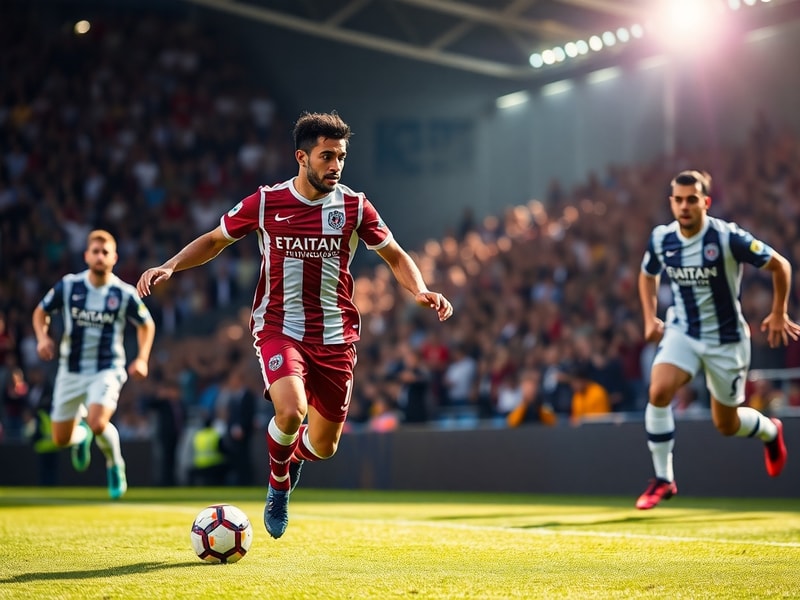
Ismael Saibari’s rise in European football reads like a modern-day underdog story. Born on January 28, 2001, in Nijmegen, Netherlands, to Moroccan parents, Saibari’s journey from local youth clubs to PSV Eindhoven’s first team reflects both raw talent and relentless work ethic. His technical skill, vision, and flair have drawn comparisons to some of the continent’s most creative midfielders. Yet beyond the headlines, his career trajectory offers a deeper look into how identity, opportunity, and ambition intersect in professional sports.
From Nijmegen to PSV: A Youth System Built on Promise
Saibari began his football journey at Quick 1888, a modest club in his hometown. It was here that coaches first noticed his ability to glide past opponents with ease, his small stature belying a powerful dribbling ability and precise passing. By age 12, he had joined the youth academy of N.E.C. Nijmegen, where his development accelerated. His performances in the under-17 and under-19 leagues caught the attention of scouts across the Eredivisie, notably from PSV Eindhoven.
In 2018, Saibari made the move to PSV’s academy, a step that would prove pivotal. The transition from amateur to elite youth football is often brutal, but Saibari adapted quickly. Under the guidance of youth coaches like Ruud van Nistelrooy, himself a PSV legend, he refined his positional awareness and decision-making. His breakthrough came during the 2019–20 season, when he starred in PSV’s under-19 team that reached the final of the UEFA Youth League. In that campaign, Saibari scored five goals and provided four assists, earning praise for his composure under pressure and ability to dictate tempo.
A Debut That Turned Heads
His professional debut for PSV’s first team arrived on August 8, 2020, in a 2–0 Eredivisie win over Heracles Almelo. At just 19, Saibari became one of the youngest debutants in the club’s history. Though his minutes were limited that season, his cameo appearances glimpsed a player with the confidence to play out from the back and the creativity to unlock defenses. Roger Schmidt, then PSV manager, began to trust him in high-pressure situations, a sign of growing belief in his potential.
By the 2022–23 season, Saibari had earned a more permanent role in the squad. His versatility—capable of playing as an attacking midfielder, winger, or even a false nine—made him a tactical asset. In a league known for its physicality, his technical gifts stood out. His assist for Johan Bakayoko in a 3–2 win over Ajax in October 2022 became a viral moment, showcasing not just his skill but the kind of creativity that defines modern Dutch football.
Playing Style: The Creative Heart of PSV’s Attack
Saibari’s game is defined by three core attributes: dribbling, vision, and timing. He excels in tight spaces, using quick feet and low center of gravity to evade challenges. His left foot is particularly dangerous, allowing him to cut inside and curl shots or deliver pinpoint crosses. But what sets him apart is his reading of the game. Saibari doesn’t just pass the ball; he anticipates where teammates will be before they even move.
His heatmaps from the 2023–24 season show him operating primarily in the left half-space, a zone where he can combine with wingers or drift into central areas to create overloads. PSV’s attacking system under Peter Bosz often relies on positional interchange, and Saibari’s fluidity fits perfectly. He’s comfortable dropping deep to link play or surging forward to finish moves, making him a nightmare for defensive midfielders to mark.
Defensively, he remains a work in progress. While he presses intelligently and intercepts passes, his physical frame and occasional lack of urgency in tracking back have drawn criticism. Yet, as he gains experience, these areas are improving. PSV’s coaching staff have emphasized structured pressing, and Saibari’s tactical discipline has visibly grown.
Standout Performances and Milestones
Among his most memorable performances:
- PSV vs. Feyenoord (February 2023): A man-of-the-match display in a 2–2 draw, where he scored and assisted, controlling the tempo in a high-stakes derby.
- PSV vs. AS Monaco (UEFA Champions League Qualifier, August 2023): His cross led to the winning goal in a 3–2 victory, marking his first major contribution in European competition.
- PSV vs. AZ Alkmaar (Eredivisie, April 2024): A brace in a 4–1 win, capping off a season where he became a first-choice starter.
These performances have solidified his reputation as one of the Eredivisie’s most exciting talents, with many tipping him for a move to a top European league within two years.
Identity and Representation in Modern Football
Saibari’s background adds another layer to his story. As a player of Moroccan descent representing the Dutch national team, he embodies the multicultural fabric of modern football. While he has represented the Netherlands at various youth levels, his eligibility for Morocco—his parents’ country—has sparked debate about his international future.
In interviews, Saibari has spoken about feeling both Dutch and Moroccan, emphasizing that football is a unifying force. His rise comes at a time when representation in European football is under scrutiny, particularly for players from immigrant backgrounds. Saibari’s success serves as an example of how talent transcends borders, but it also highlights the pressures of navigating dual identities in a globalized sport.
His social media presence reflects this duality. While he shares content celebrating Dutch culture, he also posts in Arabic and highlights Moroccan heritage, appealing to a diverse fanbase. This cultural fluency could make him a bridge between European clubs and North African markets—a valuable asset in an era where clubs increasingly target global audiences.
The Road Ahead: Potential, Pitfalls, and Expectations
The next phase of Saibari’s career will likely be defined by two factors: consistency and ambition. While his technical ability is undeniable, the step up to a top-five European league remains untested. Clubs like Arsenal, Borussia Dortmund, and Atalanta have been linked with him, but PSV’s valuation—reportedly around €50 million—could delay a move.
For Saibari, the challenge will be maintaining the high standards set in his breakthrough seasons. Injuries, tactical changes, and the pressure of expectations can derail even the most promising careers. Yet, his mental resilience, honed through years in PSV’s academy, suggests he’s prepared for the challenge.
Off the pitch, Saibari has shown an interest in philanthropy, partnering with local initiatives in Eindhoven to promote youth football and education. These efforts, while not yet widely publicized, reflect a maturity beyond his years—a trait that could define his legacy both on and off the field.
As PSV continues its push for Eredivisie dominance and European relevance, Ismael Saibari stands at the heart of that ambition. His journey reminds us that greatness isn’t just about skill; it’s about seizing opportunity, embracing identity, and evolving with each challenge. Whether he becomes the next Dutch superstar or a key figure in Morocco’s resurgence, one thing is certain: his story is only beginning.
For more on the next generation of Eredivisie talents, explore our Sports section. To read analysis on young players breaking into top leagues, visit our Analysis page.