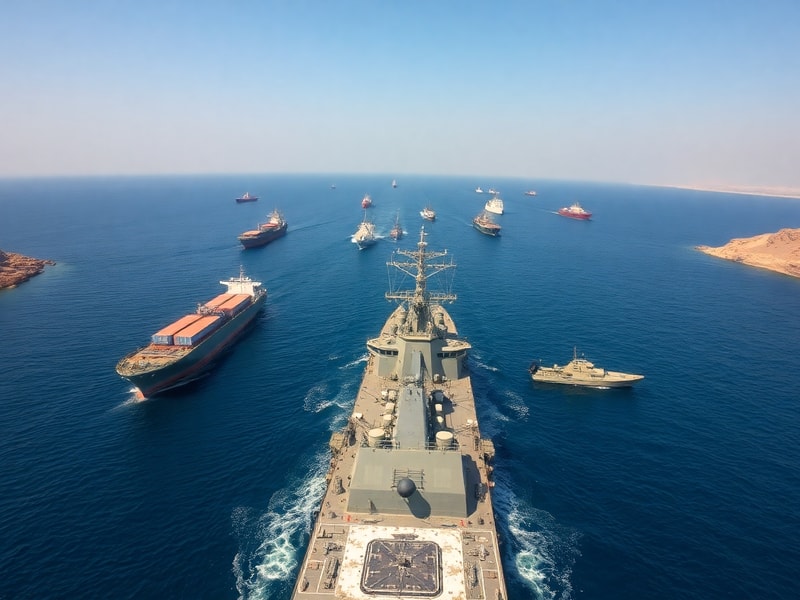
Strait of Hormuz: The World’s Most Critical Energy Chokepoint
The Strait of Hormuz: A Critical Chokepoint in Global Energy Security
The Strait of Hormuz is more than just a narrow waterway between Iran and Oman—it is the world’s most vital maritime bottleneck for oil and natural gas. Roughly 20 to 30 percent of the world’s seaborne oil passes through this 21-mile-wide passage daily, making it a linchpin in global energy markets. Any disruption here can send shockwaves through economies, trigger price spikes, and heighten geopolitical tensions. The strait’s strategic importance is not new, but its role has become even more pronounced in an era of shifting energy alliances, rising regional conflicts, and evolving military strategies.
Beyond its economic weight, the Strait of Hormuz is a flashpoint for diplomatic and military tensions. Iran has repeatedly threatened to close the strait in response to sanctions or perceived threats, while the United States and its allies maintain a strong naval presence to ensure free passage. The waterway’s shallow depth and narrow channels make it particularly vulnerable to blockades or asymmetric attacks, such as limpet mines or small boat swarms. These factors combine to create a volatile environment where a single miscalculation could escalate into a full-blown crisis.
The strait’s history is marked by past confrontations, from the 1980s Tanker War during the Iran-Iraq conflict to more recent incidents like the 2019 attacks on oil tankers and the 2021 seizure of a South Korean vessel. Each event underscores the strait’s fragility and the high stakes involved in maintaining stability. As global energy demand continues to rise, particularly in Asia, the Strait of Hormuz’s role will only grow more critical—and more contentious.
Geopolitical Significance: Why the Strait Matters Beyond Oil
The Strait of Hormuz is not just an energy corridor; it is a geopolitical chessboard where regional and global powers compete for influence. Iran’s Revolutionary Guard has long viewed control of the strait as a strategic imperative, positioning missile systems and drones along its coastlines. Meanwhile, the U.S. Fifth Fleet, based in Bahrain, patrols the waters to deter aggression and protect shipping lanes. This standoff creates a delicate balance of power, where deterrence and diplomacy are as important as military readiness.
For Iran, the strait is a bargaining chip in negotiations over its nuclear program and regional ambitions. By threatening to disrupt oil flows, Tehran can pressure Western powers to ease sanctions or make concessions. For Gulf states like Saudi Arabia and the UAE, the strait’s security is a matter of national survival, as their economies rely heavily on oil exports. Meanwhile, China and India, major importers of Middle Eastern oil, have invested in alternative routes and partnerships to reduce their dependence on the strait.
The strait’s geopolitical significance extends to broader alliances and rivalries. The U.S. has strengthened ties with Gulf partners through initiatives like the Abraham Accords, while Russia and China have sought to expand their influence in the region. Iran’s growing partnership with Moscow and Beijing adds another layer of complexity, as these powers may challenge U.S. dominance in the strait. The result is a high-stakes game where energy security, military power, and diplomatic maneuvering intersect.
Recent developments, such as the 2023 Saudi-Iranian détente brokered by China, have temporarily eased tensions, but the underlying dynamics remain unchanged. The strait’s future will depend on how these relationships evolve—and whether diplomacy can keep pace with military posturing.
Military Dynamics: The High-Stakes Game of Deterrence and Conflict
The military landscape around the Strait of Hormuz is one of the most heavily armed in the world. Iran’s Revolutionary Guard operates a mix of fast-attack boats, anti-ship missiles, and naval drones, which it has deployed in swarming tactics designed to overwhelm larger vessels. The U.S. and its allies counter with advanced naval assets, including aircraft carriers, destroyers, and submarines, alongside surveillance and mine-clearing capabilities. This balance of power creates a fragile deterrence, where both sides must carefully calibrate their actions to avoid escalation.
One of the most pressing concerns is Iran’s ability to disrupt shipping through asymmetric tactics. In 2019, attacks on four oil tankers near Fujairah and the downing of a U.S. drone demonstrated Iran’s willingness to challenge maritime security. Similarly, the 2021 seizure of the South Korean tanker Hankuk Chemi, ostensibly over environmental violations, was widely seen as a political move. These incidents highlight how quickly tensions can flare, even without direct military confrontation.
The U.S. has responded by increasing its naval patrols and conducting joint exercises with Gulf partners. For example, the 2023 International Maritime Exercise (IMX) involved 60 nations and focused on countering mine warfare and asymmetric threats. Such drills are critical for maintaining readiness, but they also risk provoking Iran if perceived as provocative. Meanwhile, Iran has expanded its ballistic missile arsenal and cyber capabilities, adding new dimensions to the conflict.
Another layer of complexity is the role of proxy forces. Groups like Yemen’s Houthis and Iraq’s Popular Mobilization Forces have launched attacks on shipping in the Red Sea and Gulf of Aden, often with Iranian support. These actions create a broader security challenge that extends beyond the strait itself. The 2023 Houthi drone and missile strikes on commercial vessels underscored how regional conflicts can spill into critical maritime routes.
Despite these tensions, direct military confrontation remains unlikely due to the high costs for all parties. Instead, the focus is on deterrence, intelligence-sharing, and de-escalation. However, the margin for error is slim, and a single misstep could trigger a crisis with global consequences.
Economic Impact: How Disruptions Reverberate Across Markets
The economic fallout from a Strait of Hormuz closure would be immediate and severe. Oil prices would likely surge, as markets react to the loss of millions of barrels per day. In 2019, the temporary disruption of 5.7 million barrels per day (around 6% of global supply) caused Brent crude prices to spike by nearly 20% in two days. A prolonged closure could lead to even steeper increases, straining economies reliant on affordable energy.
For countries like Japan and South Korea, which import nearly all their oil, the impact would be particularly acute. Even the U.S., now a net exporter, would feel the effects through higher gasoline prices and inflation. Europe, still recovering from the energy crisis sparked by Russia’s invasion of Ukraine, would face renewed pressure on its energy security. The ripple effects would extend to industries dependent on oil, from aviation to manufacturing, potentially triggering a global slowdown.
To mitigate these risks, major importers have sought alternative routes and suppliers. India, for instance, has increased its reliance on Russian oil shipped via the Arctic and overland pipelines from Central Asia. China has deepened ties with Iran through its “oil-for-goods” barter system, bypassing Western financial systems. Meanwhile, Gulf states like the UAE and Saudi Arabia have invested in pipelines that bypass the strait entirely, such as the Abu Dhabi Crude Oil Pipeline and the East-West Pipeline in Saudi Arabia.
However, these alternatives are not without limitations. Pipelines have limited capacity, and rerouting shipments adds costs and logistical complexity. For example, the East-West Pipeline can carry only 5 million barrels per day, a fraction of the strait’s daily traffic. Moreover, many of these solutions depend on stable relations with neighboring countries, which are not guaranteed.
The economic stakes are clear: the Strait of Hormuz is too critical to fail. Yet, the very factors that make it indispensable—its narrowness, strategic location, and reliance on a few key players—also make it vulnerable. The challenge for policymakers is to balance energy security with geopolitical realities, lest a crisis in the strait become a crisis for the world.
Future Outlook: Can Diplomacy Outpace Conflict?
The future of the Strait of Hormuz hinges on whether diplomacy can keep pace with the region’s volatility. Recent diplomatic breakthroughs, such as the 2023 Saudi-Iranian agreement, offer a glimmer of hope. Under this deal, mediated by China, the two rivals agreed to restore ties and reduce tensions in the Gulf. While the pact does not directly address the strait, it signals a willingness to de-escalate broader conflicts that could spill into maritime routes.
However, diplomacy faces significant hurdles. Iran’s nuclear program remains a sticking point, with negotiations stalled over sanctions relief. The U.S.’s military presence in the Gulf continues to provoke Tehran, which views it as an existential threat. Meanwhile, regional players like the UAE and Qatar are navigating a delicate balance between aligning with the U.S. and maintaining economic ties with Iran.
Another wildcard is the role of non-state actors. Groups like the Houthis and Iraqi militias operate with varying degrees of autonomy, making it difficult to control their actions. Even if Iran seeks to avoid direct conflict, its proxies may act independently, triggering unintended escalations. The 2019 attacks on Saudi oil facilities by Houthi forces demonstrated how quickly regional tensions can spiral.
Looking ahead, several scenarios could shape the strait’s future:
- Stable Détente: If diplomatic efforts succeed in reducing tensions, the strait could see a period of relative calm. This would require compromises on sanctions, nuclear programs, and military posturing.
- Incremental Escalation: Low-level conflicts, such as cyberattacks or limited blockades, could become the new normal. This would normalize disruptions but avoid all-out war.
- Sudden Crisis: A miscalculation—such as a naval confrontation or a major cyberattack—could trigger a rapid escalation. The risk of such an event is high given the region’s volatility.
- Alternative Routes: If disruptions become frequent, major importers may accelerate investments in bypass routes, reducing the strait’s dominance but creating new geopolitical dependencies.
The most likely outcome is a mix of these scenarios, where periods of calm are punctuated by crises. The key question is whether the international community can build resilience into the system. This includes diversifying energy supplies, strengthening maritime security, and fostering dialogue between rivals.
For now, the Strait of Hormuz remains a powder keg—one that the world ignores at its peril. The challenge for policymakers, energy companies, and military leaders is to ensure that when the next crisis hits, they are prepared to respond decisively.
One thing is certain: the stakes have never been higher, and the margin for error has never been smaller.