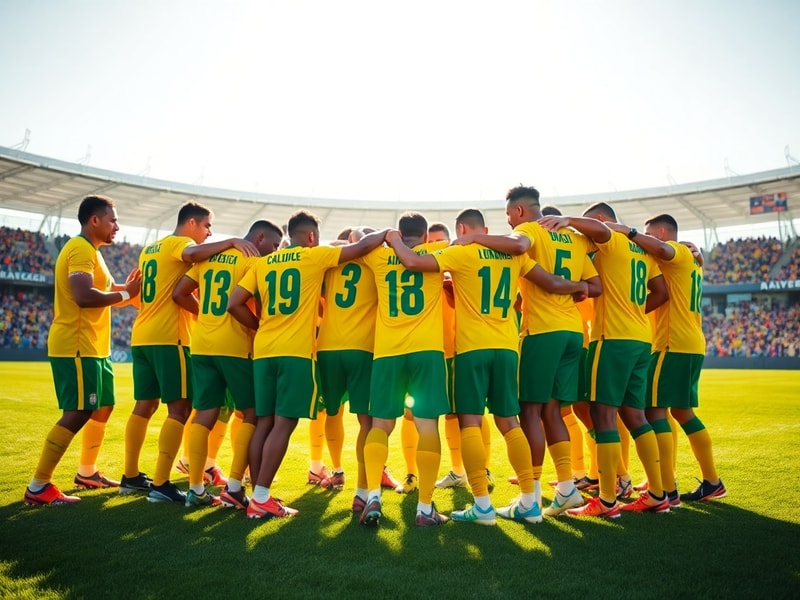
Brazil has long stood as a powerhouse in world football, producing some of the most iconic players to ever step onto the pitch. From the dazzling dribbles of Pelé to the modern flair of Vinícius Júnior, Brazilian footballers have consistently redefined what it means to play with creativity, joy, and technical brilliance. Their influence extends beyond club football, shaping global tactics and inspiring generations of players across continents. Yet, the story of Brazil’s footballers is not just one of individual brilliance but also of cultural identity, resilience, and the relentless pursuit of excellence.
The legacy of Brazilian footballers is deeply intertwined with the country’s social and economic fabric. Many of these players emerged from humble backgrounds, using football as a vehicle for upward mobility. Clubs like Santos, Flamengo, and São Paulo have served as launchpads for careers that have left indelible marks on the sport. This journey from the favelas to the world stage is a testament to both raw talent and the nurturing systems that have developed over decades.
Today, Brazil’s football pipeline remains one of the most prolific in the world. The country’s youth academies, such as those at Palmeiras and Grêmio, continue to churn out prodigious talents who are snapped up by Europe’s elite clubs. This constant flow of talent ensures that Brazil’s influence on the global game is not merely historical but very much alive and evolving.
Pelé: The King Who Defined a Generation
No discussion of Brazilian footballers would be complete without mentioning Edson Arantes do Nascimento, better known as Pelé. Born in 1940 in Três Corações, Pelé rose to prominence as a teenager, leading Santos FC to two Copa Libertadores titles and two Intercontinental Cups in the 1960s. His partnership with clubs and the Brazilian national team brought joy to millions and established him as a global icon.
Pelé’s three FIFA World Cup victories in 1958, 1962, and 1970 remain unmatched in the history of the tournament. His performances in 1958, where he scored two goals in the final at just 17 years old, showcased a blend of skill, composure, and athleticism that captivated the world. Pelé’s ability to read the game, his precise finishing, and his unshakable confidence made him a complete forward unlike any other.
Beyond his on-field achievements, Pelé became a cultural ambassador for Brazil and football itself. His name became synonymous with greatness, and his influence extended into politics, business, and philanthropy. Even decades after his retirement, Pelé’s legacy endures, serving as a benchmark for excellence and a reminder of the heights Brazilian footballers can reach.
The Golden Era: Zico, Socrates, and Romário
The 1970s and 1980s marked another golden era for Brazilian footballers, characterized by a midfield maestro, a philosopher-king, and a clinical finisher. Zico, born Arthur Antunes Coimbra, dazzled crowds with his free-kick mastery and playmaking ability. His time at Flamengo in the early 1980s saw the club dominate both domestically and internationally, winning the Copa Libertadores and Intercontinental Cup in 1981.
Zico’s vision and technique made him one of the most influential attacking midfielders of his generation. Despite never winning the World Cup, his performances in the 1978 and 1982 tournaments left an indelible mark. His rivalry with players like Diego Maradona and Michel Platini elevated the profile of Brazilian football during a time when European football was ascendant.
Socrates, the intellectual captain of Brazil’s 1982 World Cup team, brought a cerebral approach to the game. A qualified doctor, Socrates embodied the contrast between football and education, advocating for players’ rights and social justice. His leadership on and off the pitch, coupled with his elegant midfield play, made him a symbol of Brazil’s progressive footballing philosophy.
Romário, the diminutive yet lethal striker, completed this golden trio. His partnership with Brazil in the 1994 World Cup was pivotal in securing the country’s fourth title. Romário’s movement, instinct for goal, and unrelenting confidence made him a nightmare for defenders. His goalscoring exploits at Barcelona and Flamengo further cemented his status as one of Brazil’s most feared attackers.
Modern Icons: Ronaldinho, Ronaldo, and Neymar
The turn of the millennium brought a new wave of Brazilian footballers who captivated audiences with their flair and creativity. Ronaldinho Gaúcho, with his infectious smile and mesmerizing dribbling, became a global superstar during his time at Barcelona. His performances in the 2002 World Cup, where he captained Brazil to victory, showcased his ability to single-handedly change games. Ronaldinho’s legacy is not just in his trophies but in the joy he brought to football, making him one of the most beloved players of his era.
Ronaldo Nazário, often referred to as “O Fenômeno,” was a physical marvel whose combination of speed, power, and finishing redefined the role of a striker. His two World Cup victories in 1994 and 2002, along with his club successes at Barcelona, Inter Milan, and Real Madrid, solidified his place among the greatest players of all time. Ronaldo’s ability to dominate defenders and score in crucial moments made him a nightmare for any opposition.
Neymar Jr., the current face of Brazilian football, carries the weight of expectation as the heir to this legacy. His journey from Santos to Barcelona and now Paris Saint-Germain has been marked by moments of brilliance and controversy. Neymar’s dribbling, flair, and creativity have made him a global icon, though his career has also been scrutinized for his theatrics and off-field antics. Despite these criticisms, his influence on the game and his role in Brazil’s recent campaigns, including the 2016 Olympic gold and the 2021 Copa América, underscore his importance to the national team.
Rising Stars and the Future of Brazilian Football
Brazil’s conveyor belt of talent shows no signs of slowing down. Players like Vinícius Júnior, Endrick, and Rodrygo are already making waves in Europe’s top leagues, carrying the torch forward with their skill and ambition. Vinícius Júnior, in particular, has become a symbol of Brazil’s attacking prowess, his pace and dribbling drawing comparisons to Ronaldinho. His development at Real Madrid has been closely watched, as fans and pundits alike seek signs of the next Brazilian superstar.
Endrick, the teenage sensation from Palmeiras, has already broken records and drawn comparisons to Pelé. His clinical finishing and composure in front of goal have made him one of the most exciting prospects in world football. Similarly, Rodrygo’s versatility and technical ability have seen him flourish at Real Madrid, where he has become a key player in the team’s attack.
The future of Brazilian football looks bright, with a new generation of players poised to make their mark on the global stage. Clubs in Brazil continue to invest in youth development, recognizing that the country’s strength lies in its ability to produce technically gifted players who can adapt to the demands of modern football. This pipeline ensures that Brazil will remain a dominant force in world football for years to come.
However, challenges remain. The transition from domestic success to international glory has been a recurring theme in Brazilian football. While the national team boasts an embarrassment of riches in attack, questions persist about defensive solidity and tactical cohesion. The pressure to replicate the successes of past generations can be immense, and the Brazilian Football Confederation (CBF) continues to work on refining the system to ensure sustained success.
The Cultural Impact of Brazilian Footballers
Beyond their achievements on the pitch, Brazilian footballers have played a significant role in shaping global football culture. Their style of play, characterized by creativity, improvisation, and joy, has influenced coaches and players worldwide. The “joga bonito” philosophy, popularized by Nike in the mid-2000s, was a celebration of Brazilian football’s aesthetic appeal and its emphasis on skill over physicality.
Brazilian footballers have also used their platforms to advocate for social causes. Players like Raí and Rivaldo have been vocal about poverty and inequality in Brazil, using their influence to drive change. Their efforts highlight the power of football as a tool for social mobility and activism, reinforcing the idea that Brazilian footballers are more than just athletes—they are cultural ambassadors.
The influence of Brazilian footballers extends into fashion, music, and entertainment. Icons like Ronaldinho and Neymar have become global brands, their names synonymous with style and charisma. Their off-field personas have helped elevate football’s status as a cultural phenomenon, transcending the boundaries of sport.
Challenges and Criticisms
Despite their successes, Brazilian footballers often face criticism for their perceived lack of discipline and tactical awareness. The stereotype of the “Brazilian flair player” who prioritizes individualism over teamwork has been a point of contention, particularly in high-pressure tournaments like the World Cup. While this stereotype is not universally true, it has led to debates about the need for Brazilian players to adapt to the more structured styles of European football.
Another challenge is the financial lure of European football, which can sometimes disrupt the development of young Brazilian talents. The pressure to succeed abroad can lead to burnout or early retirements, as seen in the cases of players like Denílson and Robinho. Balancing the demands of club and country remains a delicate task for many Brazilian footballers, one that requires careful management and support systems.
The Brazilian Football Confederation has made strides in addressing these issues, implementing programs to better prepare players for the rigors of international football. The success of recent generations, including the Olympic gold medal in 2016, suggests that progress is being made. However, the journey to reclaiming Brazil’s status as the preeminent footballing nation is ongoing and requires continuous innovation.
Conclusion: A Legacy That Endures
Brazil’s footballers have left an indelible mark on the sport, their contributions shaping the game in ways that extend far beyond trophies and titles. From Pelé’s three World Cup triumphs to Neymar’s dazzling dribbles, each generation has added a new chapter to the story of Brazilian football. Their influence is felt not only in the statistics and accolades but in the way football is played and perceived around the world.
The future of Brazilian football is bright, with a new wave of talents ready to carry the torch. However, the true essence of Brazil’s footballing legacy lies in its ability to inspire, innovate, and unite. Whether through the artistry of Ronaldinho or the resilience of Socrates, Brazilian footballers continue to remind us of the beauty and power of the game.
As the world watches, Brazil’s footballers will undoubtedly continue to write new stories, each one adding to the rich tapestry of a nation that has given the world some of its greatest players. Their legacy is not just in the goals they score or the trophies they win, but in the joy they bring and the dreams they inspire.