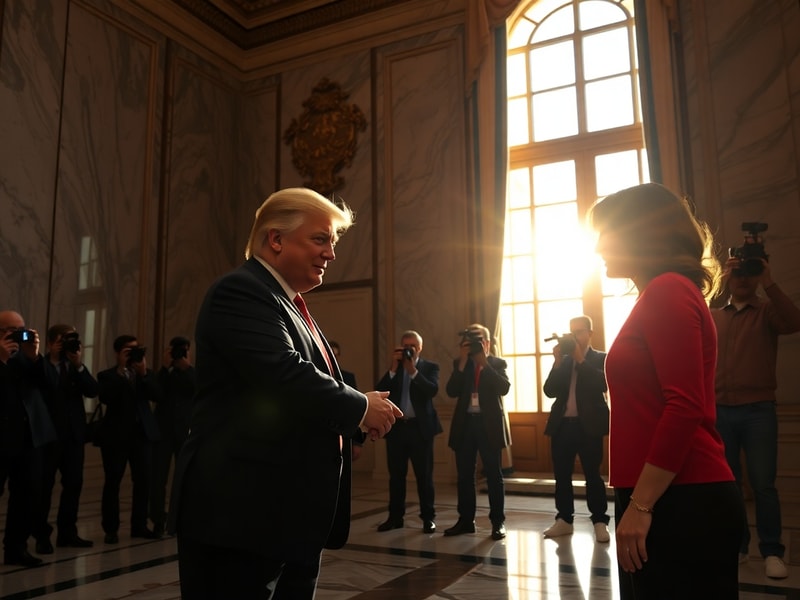
The relationship between Donald Trump and Giorgia Meloni has become one of the most scrutinized political alliances in recent years. Their connection stretches beyond mere diplomatic courtesy, evolving into a strategic partnership that reshapes transatlantic politics. Both leaders emerged from conservative movements that emphasize nationalism, sovereignty, and a skepticism of globalist institutions. Their shared worldview has created a bond that extends from personal rapport to coordinated policy positions on issues like migration, economic protectionism, and defense.
This alliance is not just about mutual admiration. It reflects a broader shift in Western politics, where traditional alliances are being redefined. Meloni, Italy’s first female prime minister, has positioned herself as a bridge between the U.S. and Europe, often aligning with Trump’s priorities while navigating the complexities of European Union politics. Their collaboration raises questions about the future of NATO, the role of populism in Western democracies, and the evolving dynamics of U.S.-EU relations.
The origins of Trump and Meloni’s political alignment
Their political kinship traces back to the rise of nationalist movements in the 2010s. Trump’s 2016 election victory emboldened right-wing leaders across Europe, including Meloni, who at the time led the Brothers of Italy party, a post-fascist movement with roots in Italy’s post-war political landscape. Meloni’s party, once marginalized, gained traction by adopting a nationalist agenda that resonated with Trump’s “America First” rhetoric.
Their relationship deepened during Trump’s presidency, particularly on issues like immigration and trade. Meloni’s vocal opposition to mass migration mirrored Trump’s policies, including the construction of border walls and strict asylum rules. Both leaders framed migration as a threat to national identity, a narrative that helped solidify their political base. While Meloni was still in opposition, she frequently praised Trump’s approach, positioning herself as a potential ally in Europe.
When Meloni assumed office in 2022, her government marked a turning point for Italy’s role in global politics. Unlike previous Italian leaders who prioritized EU integration, Meloni adopted a more independent stance, often siding with Trump on key issues. This shift was evident during Trump’s 2024 campaign, where Meloni publicly endorsed his re-election bid, a move that underscored their shared political vision.
Policy convergence and diplomatic collaboration
Their policy alignment extends across multiple domains, from defense to economics. On NATO, both leaders have emphasized the importance of military strength and burden-sharing, a stance that contrasts with more dovish European leaders. Meloni has increased Italy’s defense spending, a move applauded by Trump, who has repeatedly criticized European nations for relying too heavily on U.S. security guarantees.
Economically, their approaches share a focus on protectionism and industrial revival. Trump’s tariffs on Chinese goods found an echo in Meloni’s push for greater economic sovereignty in Italy. Both leaders have criticized the EU’s regulatory overreach, advocating for policies that prioritize domestic industries. This shared skepticism of globalization has led to closer trade negotiations, with Italy often acting as a mediator between U.S. interests and European policies.
A notable example of their collaboration is Italy’s stance on Ukraine. While Meloni has maintained Italy’s support for Ukraine against Russia’s invasion, she has also called for a negotiated peace, a position that aligns with Trump’s stated desire to end the conflict quickly. Their shared skepticism of prolonged wars reflects a broader trend in nationalist politics, where military interventions are viewed as costly and unnecessary.
Another key area of cooperation is energy policy. Both leaders have sought to reduce dependence on Russian energy, though their methods differ. Trump’s push for U.S. LNG exports found a receptive audience in Meloni, who has prioritized energy diversification as a national security issue. This alignment has strengthened U.S.-Italy energy ties, further binding their political agendas.
The cultural and ideological underpinnings of their alliance
Their partnership is not just political; it is cultural. Both leaders have cultivated an image of strong, decisive figures who challenge the status quo. Meloni’s rise from a far-right opposition leader to Italy’s prime minister mirrors Trump’s journey from a political outsider to the U.S. presidency. Their shared narrative of overcoming establishment resistance has resonated with voters disillusioned by traditional politics.
Their rhetoric often emphasizes traditional values, including opposition to progressive social policies. Meloni’s defense of “God, homeland, and family” echoes Trump’s appeals to conservative voters. This cultural alignment has made their alliance a focal point for debates about the future of Western conservatism. Critics argue that their partnership represents a retreat from liberal democratic values, while supporters see it as a necessary correction to globalist excesses.
Their influence extends beyond domestic politics. Meloni’s leadership has given Italy a more prominent voice in European politics, often amplifying Trump’s positions within the EU. This dynamic has created tensions with other European leaders, particularly those from France and Germany, who view their alliance as a threat to EU unity. Yet, it has also strengthened Italy’s role as a key player in transatlantic relations, bridging the gap between the U.S. and Europe.
Culturally, their alliance has inspired both admiration and backlash. Supporters see them as defenders of national sovereignty against unaccountable bureaucracies. Detractors, however, argue that their nationalism fosters division and undermines democratic institutions. This debate has played out in media coverage, with outlets on both sides of the political spectrum framing their relationship in starkly different terms.
Challenges and criticisms of the Trump-Meloni partnership
Despite their alignment, their partnership faces significant challenges. One of the most pressing is the divergence in their approaches to international institutions. While Trump has openly criticized NATO and the UN, Meloni has sought to maintain Italy’s role within these organizations, even as she pushes for reform. This tension highlights the limits of their shared ideology, particularly when it comes to balancing sovereignty with multilateral cooperation.
Another challenge is public opinion. In Italy, Meloni’s support has fluctuated, with critics accusing her of aligning too closely with Trump at the expense of Italy’s EU relationships. Polls have shown that while her nationalist policies appeal to a segment of the electorate, many Italians remain wary of Trump’s unpredictability. This dynamic has forced Meloni to carefully navigate her alliance with the U.S., ensuring she does not alienate Italy’s European partners.
Their partnership has also drawn criticism from human rights groups, particularly regarding migration policies. Both leaders have faced accusations of violating international law by restricting asylum seekers and deporting migrants to unsafe countries. These policies have sparked protests in Italy and abroad, raising questions about the ethical implications of their alliance. Meloni, in particular, has been accused of adopting Trump’s hardline approach without fully considering its humanitarian consequences.
Domestically, their alliance has also faced scrutiny. In Italy, Meloni’s government has been accused of undermining judicial independence and media freedom, trends that mirror concerns about Trump’s impact on U.S. democracy. While their supporters argue that these measures are necessary to restore order, critics warn that their partnership risks eroding democratic norms in both countries.
The future of the Trump-Meloni alliance
Their collaboration is likely to remain a defining feature of global politics in the coming years. If Trump wins the 2024 U.S. election, their partnership could intensify, with both leaders pushing for a more nationalist agenda. This could lead to further strain in U.S.-EU relations, particularly as Meloni continues to position Italy as a counterbalance to Brussels.
However, their alliance is not without risks. The unpredictability of Trump’s leadership style could create challenges for Meloni, particularly if his policies clash with Italy’s economic or strategic interests. Additionally, as Meloni consolidates her power, she may need to distance herself from Trump to maintain her domestic legitimacy, particularly if his controversies overshadow their shared goals.
For now, their partnership remains a powerful symbol of the resurgence of nationalist politics in the West. Whether it will lead to lasting change or eventual fracture remains to be seen. What is clear, however, is that their alliance has redefined the boundaries of transatlantic cooperation, forcing both the U.S. and Europe to reconsider their traditional alliances.
As the world watches their evolving relationship, one thing is certain: the Trump-Meloni partnership has already left an indelible mark on global politics, reshaping the contours of power in ways that will be felt for years to come.