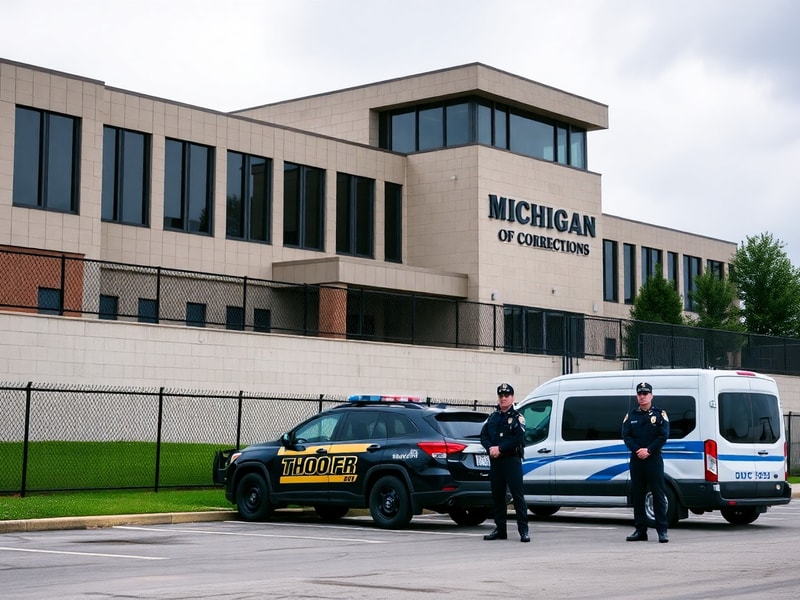
The Michigan Department of Corrections (MDOC) stands as one of the most complex and scrutinized state agencies in the United States. Tasked with overseeing the state’s prison system, rehabilitation programs, and parole policies, the MDOC plays a pivotal role in public safety while managing the challenges of incarceration and reentry. With over 30,000 individuals in its custody across 29 facilities, the department’s decisions ripple through communities, families, and the justice system itself.
Prison Population and Facility Operations
The MDOC manages a diverse network of facilities, ranging from maximum-security prisons to minimum-security camps. As of 2024, the state’s prison population hovers around 34,000, a figure shaped by sentencing laws, parole decisions, and recidivism rates. Facilities like the Richard A. Handlon Correctional Facility in Ionia and the Women’s Huron Valley Correctional Facility in Ypsilanti highlight the department’s varied approach to incarceration. Security levels dictate everything from visitation policies to educational programs, creating a tiered system designed to balance punishment with rehabilitation.
Operational challenges persist, particularly in aging infrastructure. Many MDOC facilities date back decades, leading to concerns about overcrowding and maintenance costs. The department has invested in upgrades, but budget constraints often delay critical repairs. In 2023, the MDOC allocated $50 million toward facility improvements, a step aimed at modernizing conditions while addressing long-standing complaints about living standards.
Rehabilitation and Reentry Programs
Beyond custody, the MDOC prioritizes rehabilitation through vocational training, education, and mental health services. Programs like the Vocational Village at the Richard A. Handlon facility offer incarcerated individuals certifications in high-demand fields such as welding and HVAC repair. These initiatives aim to reduce recidivism by equipping participants with marketable skills. Preliminary data suggests that graduates of such programs have a 20% lower reoffending rate compared to the general prison population.
Reentry services are equally critical. The MDOC partners with local organizations to assist individuals transitioning back into society. Initiatives include job placement assistance, housing support, and substance abuse treatment. Yet, systemic barriers—such as employment discrimination and limited access to healthcare—often undermine these efforts. Advocates argue that sustained funding for reentry programs could further lower recidivism rates and ease the burden on Michigan’s communities.
One standout program is the MDOC’s partnership with the Michigan Works! agency, which connects formerly incarcerated individuals with employers. Since its launch in 2020, the initiative has placed over 1,200 participants in jobs. Success stories, however, are tempered by statistics: nearly 40% of returning citizens remain unemployed within a year of release, underscoring the need for broader societal support.
Parole Policies and Public Safety Debates
Parole decisions are among the most contentious aspects of the MDOC’s work. Michigan’s parole board operates under a framework that balances risk assessment with public safety concerns. In recent years, the state has expanded eligibility for parole, particularly for individuals convicted of nonviolent offenses. This shift reflects a growing consensus that prolonged incarceration does not always equate to enhanced safety.
Critics, however, point to high-profile cases where parolees reoffended, fueling calls for stricter oversight. A 2022 report by the Michigan Joint Task Force on Jail and Pretrial Incarceration recommended reforms to improve the parole process, including clearer guidelines for risk evaluation. The MDOC has responded by increasing transparency, publishing annual reports on parole outcomes and recidivism trends. Still, debates rage on about the balance between redemption and accountability.
The parole board’s caseload remains a significant challenge. With hundreds of cases pending at any given time, delays in hearings can prolong incarceration for individuals who pose minimal risk. The MDOC has begun using algorithmic tools to streamline risk assessments, though concerns about bias in these systems persist. Stakeholders emphasize the need for human oversight to ensure fairness in parole decisions.
Challenges and Future Directions
The MDOC faces a trifecta of challenges: fiscal constraints, staffing shortages, and evolving public expectations. The state’s corrections budget exceeds $2 billion annually, yet rising healthcare costs and pension obligations strain resources. Staffing shortages, exacerbated by the COVID-19 pandemic, have led to increased overtime and burnout among correctional officers. The department has launched recruitment campaigns and improved training programs, but retention remains a hurdle.
Public perception of the MDOC is equally fraught. While some advocate for more lenient policies, others demand harsher measures to address crime. The department’s approach has evolved to emphasize data-driven solutions, such as reducing solitary confinement and expanding mental health care. Yet, these changes often meet resistance from lawmakers and advocacy groups alike.
Looking ahead, the MDOC’s priorities include expanding mental health services, addressing racial disparities in incarceration, and enhancing transparency. Legislative proposals, such as the 2024 Second Chance Act, aim to further reform parole and reentry programs. If successful, these efforts could position Michigan as a model for other states grappling with similar challenges. For now, the MDOC remains a microcosm of the nation’s broader struggles with justice, rehabilitation, and public safety.