Halle Open: Europe’s Premier Grass-Court Tennis Event
The Halle Open: A Rising Force in European Tennis
The Halle Open has quietly carved out its place as one of Europe’s most prestigious grass-court tournaments, blending tradition with modern flair. Held annually in Halle, Germany, this ATP 500 event draws top talent and passionate fans alike. Unlike the more crowded Grand Slam calendar, Halle offers a rare blend of high-stakes competition and intimate atmosphere, making it a favorite among players and spectators. Its compact two-week schedule and prime June timing ensure it doesn’t compete directly with other major events, allowing for undivided attention from tennis enthusiasts.
This year’s tournament lived up to its reputation, delivering dramatic matches and surprising upsets. The 2024 edition featured a field stacked with both seasoned veterans and rising stars, each vying for the coveted title. Beyond the on-court action, Halle’s reputation for hospitality and fan engagement set it apart from larger, more impersonal events. For those seeking a tennis experience that balances intensity with accessibility, Halle delivers in spades.
A Brief History of the Halle Open
The Halle Open, officially known as the Terra Wortmann Open, traces its origins back to 1993. Founded as part of the ATP Tour’s expansion into European grass-court events, it quickly became a staple on the pre-Wimbledon circuit. The tournament’s early years were marked by modest crowds and limited global recognition, but steady growth in prize money and player participation elevated its status.
By the late 2000s, Halle had established itself as a key warm-up event for Wimbledon. Its reputation as a fast-paced, high-energy tournament attracted a mix of established stars and ambitious newcomers. The introduction of indoor play during rain delays in 2019 further enhanced its appeal, ensuring matches could proceed without interruption. Today, Halle stands alongside Queen’s Club and Stuttgart as one of Europe’s top grass-court challenges, each offering a unique blend of competition and culture.
The tournament’s evolution reflects broader trends in professional tennis. As the ATP Tour seeks to diversify its calendar, events like Halle provide vital opportunities for players to fine-tune their grass-court skills. Its smaller scale allows for greater fan interaction, creating an environment where spectators feel connected to the sport in ways larger tournaments often struggle to replicate.
Key Moments and Memorable Matches
Over the years, the Halle Open has produced countless unforgettable moments. One of the most iconic came in 2015, when Roger Federer claimed his eighth Halle title, a record at the time. Federer’s dominance on grass is well-documented, but his performance in Halle showcased his unparalleled ability to adapt to the surface. His rivalry with Alexander Zverev, another German favorite, added extra spice to the event, culminating in a thrilling 2021 final won by Zverev in straight sets.
Another standout match occurred in 2019, when Pierre-Hugues Herbert and Nicolas Mahut secured the doubles title in a tightly contested final. Their precision and teamwork underscored the depth of talent in modern tennis, proving that Halle is as much about doubles excellence as it is about singles supremacy. The tournament’s format, which prioritizes competitive balance, ensures that underdogs have realistic chances to advance, leading to unpredictable and exhilarating outcomes.
Recent editions have also highlighted the rise of young players. In 2023, Holger Rune made a deep run, demonstrating the kind of explosive athleticism that defines today’s ATP Tour. His journey through the draw captivated fans, reinforcing Halle’s role as a proving ground for future champions. These moments, big and small, contribute to the tournament’s legacy as a breeding ground for excellence.
What Sets Halle Apart from Other Tournaments
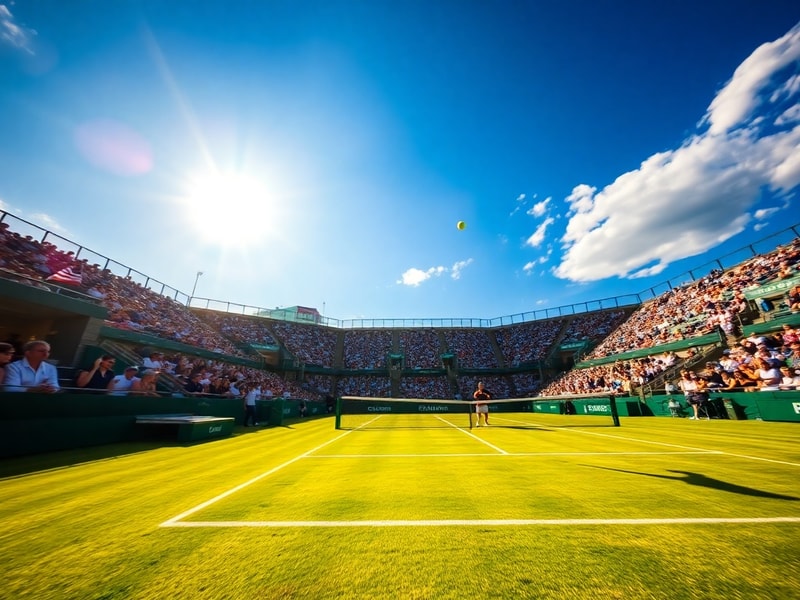
Several factors distinguish the Halle Open from its peers. First and foremost is its grass surface, which offers a faster, more aggressive style of play compared to clay or hard courts. This makes Halle a critical stop for players preparing for Wimbledon, as it allows them to test their grass-court strategies under pressure. The tournament’s scheduling also plays a key role; held the week before Wimbledon, it serves as the final major test before tennis’s most prestigious grass-court event.
Another unique aspect is the tournament’s commitment to fan engagement. Unlike larger events where spectators can feel disconnected from the action, Halle fosters a sense of community. The OWL Arena, with its open-air design and intimate seating, creates an electric atmosphere where every cheer and groan resonates. This accessibility extends to player interactions, with fans often able to meet their favorite stars in relaxed settings.
The Halle Open also stands out for its sustainability initiatives. In recent years, the tournament has implemented eco-friendly practices, from reducing single-use plastics to promoting local sourcing for food and beverages. These efforts align with broader trends in sports, where environmental responsibility is becoming increasingly important. For a tournament of its size, Halle’s commitment to sustainability sets a positive example for others to follow.
Looking Ahead: The Future of the Halle Open
As the Halle Open continues to grow, its future looks brighter than ever. The ATP’s decision to maintain its status as an ATP 500 event ensures it will remain a key fixture on the calendar. Additionally, ongoing investments in infrastructure and fan experiences promise to elevate the tournament’s prestige. With rumblings of potential expansion, including increased prize money or even a move to a larger venue, Halle is poised to take the next step in its evolution.
For players, Halle offers more than just ranking points—it’s a chance to build confidence and momentum heading into Wimbledon. The grass season is notoriously unpredictable, and success at Halle often translates to strong performances at the All England Club. This symbiotic relationship between the two tournaments underscores Halle’s strategic importance in the tennis calendar.
Off the court, the Halle Open’s cultural impact cannot be overstated. The tournament’s integration into the local community fosters a sense of pride and ownership among residents. From volunteer programs to youth tennis clinics, Halle’s organizers prioritize accessibility and inclusivity. These efforts ensure that the tournament remains more than just a sporting event—it’s a celebration of community and shared passion.
For fans planning to attend, securing tickets early is essential, as the event often sells out weeks in advance. Those unable to make the trip can follow the action via extensive television and streaming coverage, ensuring no one misses a moment of the excitement. Whether you’re a die-hard tennis enthusiast or a casual observer, the Halle Open offers an experience that’s both thrilling and unforgettable.
As tennis continues to evolve, events like the Halle Open remind us of the sport’s enduring appeal. It’s a place where tradition meets innovation, where legends are made, and where the next generation of stars takes center stage. For those who love the game, Halle is more than a tournament—it’s a must-watch spectacle.