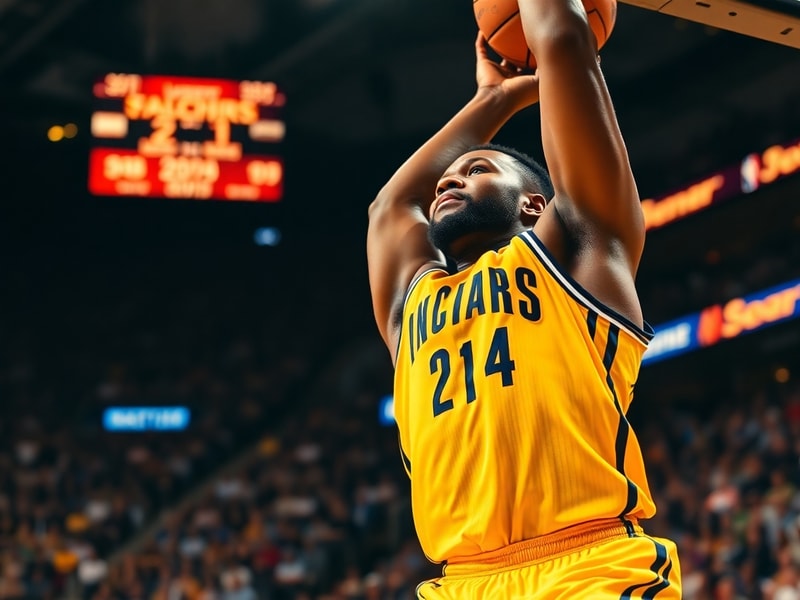
The Rise, Fall, and Reinvention of Lance Stephenson
Lance Stephenson’s career reads like a script for a sports drama—full of explosive highs, controversial lows, and moments that defy explanation. From his high school days as a basketball prodigy in Coney Island to his brief stint as an NBA All-Star, Stephenson’s journey has been anything but predictable. His ability to captivate audiences with his flair and unpredictability made him one of the most entertaining players of his generation, even if his reputation often overshadowed his undeniable talent.
Born in 1990 in Brooklyn, New York, Stephenson grew up in a neighborhood where basketball was more than a sport—it was a way of life. His early years were marked by raw talent and an unshakable confidence that sometimes bordered on arrogance. By the time he reached Lincoln High School, his reputation as a playground legend had spread far beyond New York. Scouts and coaches took notice, and it wasn’t long before he became one of the most talked-about prospects in the country.
Stephenson’s high school career culminated in a state championship and a McDonald’s All-American selection. His highlight-reel plays and trash-talking antics made him a viral sensation, long before social media became the dominant force it is today. But his time in the spotlight wasn’t without controversy. His brash demeanor and occasional on-court confrontations earned him both admirers and detractors, a duality that would follow him throughout his professional career.
From Indiana to the NBA: A Star is Born
After graduating high school, Stephenson committed to Indiana University, where he spent one season before declaring for the NBA draft. The Indiana Pacers selected him with the 40th overall pick in the 2010 draft, and it didn’t take long for him to make his presence felt. His rookie season was modest, but his energy and potential were undeniable. By his third year, Stephenson had evolved into a key contributor for the Pacers, helping them reach the Eastern Conference Finals in 2013 and 2014.
It was during this stretch that Stephenson’s reputation as a wildcard reached its peak. His viral moment came in Game 1 of the 2014 Eastern Conference Finals against the Miami Heat, when he blew in LeBron James’ ear during a crucial play. The incident became an instant meme, cementing Stephenson’s status as an NBA villain in the eyes of some fans. Yet, it also showcased his ability to disrupt opponents and inject drama into games—qualities that made him a fan favorite in certain circles.
His time in Indiana was defined by both brilliance and volatility. Stephenson’s on-court play was electric, but his off-court antics and clashes with teammates often overshadowed his contributions. Despite his flaws, he became a symbol of the Pacers’ gritty, no-nonsense style of basketball, a team that played hard and didn’t care much for polished PR narratives.
The Global Appeal of a Controversial Talent
Stephenson’s appeal extended far beyond the borders of the United States. In countries where basketball was growing in popularity, his style resonated with fans who appreciated his unfiltered approach to the game. In China, for example, his trash-talking and high-energy plays made him a social media sensation. His games were widely broadcast, and his highlight clips were shared across platforms like Weibo and Douyin, where his antics were often compared to those of NBA legends like Dennis Rodman and Allen Iverson.
His global following wasn’t just limited to Asia. In Europe, where basketball has a deep cultural roots, Stephenson’s flashy plays and larger-than-life personality made him a polarizing figure. Some European fans saw him as a breath of fresh air in a league dominated by methodical, team-first basketball. Others viewed him as a distraction, a player whose individualism clashed with the collective ethos of the sport.
Stephenson’s cultural impact was also felt in the music and fashion worlds. His on-court bravado mirrored the swagger of hip-hop artists, and his signature goggles and headbands became iconic in their own right. Brands took notice, and he briefly ventured into the world of streetwear, collaborating with designers to create limited-edition collections. His crossover appeal highlighted how athletes, particularly those with Stephenson’s personality, could transcend the boundaries of sports and influence global pop culture.
The Decline and Reinvention of a Basketball Maverick
Despite his early success, Stephenson’s NBA career took a sharp turn after his peak with the Pacers. He played for a dozen teams over the next decade, including stints with the Los Angeles Clippers, Memphis Grizzlies, and Minnesota Timberwolves. His time in the league became a cycle of brief flashes of brilliance followed by prolonged struggles. Injuries, inconsistent play, and off-court issues began to overshadow his talent, leading many to question whether he could ever recapture the magic of his Indiana days.
In 2019, Stephenson made a surprising pivot to the Chinese Basketball Association (CBA), signing with the Liaoning Flying Leopards. The move was met with skepticism by some NBA observers, but it proved to be a turning point in his career. Playing in China allowed him to rediscover his confidence and focus on the fundamentals of the game. His performances for Liaoning were impressive, averaging around 25 points per game and showcasing the all-around skills that had once made him a top prospect.
The CBA stint also reignited discussions about Stephenson’s legacy. Critics argued that his time in China was a last resort, a desperate attempt to revive a fading career. But supporters pointed out that his success in the CBA proved he still had the talent to compete at a high level. It was a reminder that Stephenson’s career was far from a straightforward rise and fall—it was a series of reinventions, each chapter adding new layers to his complex legacy.
In recent years, Stephenson has continued to carve out a niche for himself, playing in the G League, overseas leagues, and even making a brief return to the NBA with the Atlanta Hawks in 2021. His journey has been a testament to his resilience, a trait that has defined him both on and off the court. While he may never reach the heights of his Indiana days, his ability to adapt and reinvent himself has ensured that his story remains one of the most fascinating in modern basketball.
What’s Next for Lance Stephenson?
As Stephenson approaches the twilight of his career, the question on everyone’s mind is: what comes next? At 33 years old, he’s no longer a young prospect, but his experience and leadership could still be valuable to a team looking for a veteran presence. The G League remains a viable option, as does a return to overseas leagues where his global appeal could still draw crowds.
Off the court, Stephenson has hinted at exploring opportunities in sports media, coaching, or even business ventures. His larger-than-life personality would make him a natural fit for a broadcasting role, where his insights and unfiltered opinions could resonate with fans. Whatever path he chooses, one thing is certain: Lance Stephenson’s story is far from over.
His career serves as a reminder that talent alone isn’t enough to sustain success in the NBA. It takes adaptability, mental toughness, and a willingness to evolve—qualities that Stephenson has demonstrated time and time again. Whether he’s embraced as a villain, a hero, or something in between, there’s no denying that Lance Stephenson has left an indelible mark on the game of basketball.
For fans who grew up watching his highlight-reel plays and viral moments, Stephenson’s career is a reminder of a time when the NBA was as much about personality as it was about skill. In an era where players are often sanitized by corporate interests and social media expectations, Stephenson’s unapologetic approach feels refreshingly authentic. Love him or hate him, he’s a player who never failed to entertain.
As basketball continues to evolve globally, Stephenson’s story also highlights the growing influence of international leagues and the opportunities they provide for players to extend their careers. His success in China and other overseas markets underscores the shifting dynamics of the sport, where talent and charisma can transcend borders and cultures.
For those interested in the broader cultural impact of athletes like Stephenson, exploring the intersection of sports and pop culture can offer valuable insights. Platforms like Entertainment often delve into these topics, providing a deeper understanding of how athletes influence and are influenced by global trends.
Ultimately, Lance Stephenson’s career is a testament to the unpredictable nature of sports. It’s a story of talent, controversy, resilience, and reinvention—a narrative that continues to unfold even as the final chapters approach.