Oklahoma Baseball: From College Powerhouses to Youth Legends
From Dusty Diamonds to National Titles: The Legacy of Oklahoma Baseball
Oklahoma baseball carries a legacy that stretches far beyond the state’s borders. While the Sooners and Cowboys dominate headlines, the sport’s roots in the region run deep, shaped by geography, culture, and a relentless passion for the game. The state’s baseball culture isn’t just about Friday night lights or weekend tournaments—it’s a reflection of American heartland values, where community pride and athletic ambition merge on sunbaked diamonds.
Baseball arrived in Oklahoma during the late 19th century, carried by railroad workers, military personnel, and settlers moving westward. By the early 20th century, sandlot leagues flourished in towns like Tulsa and Oklahoma City, giving rise to local heroes who later starred in college and professional ranks. The Oklahoma City Indians, a minor-league team that played from 1904 to 1957, became one of the most storied franchises in the history of the American Association, drawing thousands to the old Texas League ballpark. Their success planted the seeds for what would become a statewide baseball identity—one built on grit, resilience, and a love for the game’s slower rhythms.
Today, Oklahoma baseball thrives at multiple levels: in high school stadiums packed with families on summer evenings, in college programs that compete nationally, and in collegiate summer leagues that serve as proving grounds for future stars. The state has produced over 50 Major League Baseball players, including All-Stars like Johnny Bench (who honed his skills in Binger, Oklahoma) and two-time Cy Young winner Jim Kaat. This pipeline isn’t accidental—it’s the result of decades of investment in youth programs, coaching development, and a statewide culture that treats baseball not as a pastime, but as a way of life.
The College Game: Where Tradition Meets Modern Ambition
Oklahoma’s college baseball programs have long been central to its sporting identity. The University of Oklahoma Sooners and Oklahoma State University Cowboys are perennial contenders in the Big 12 Conference, consistently ranked among the top programs in the nation. Their rivalry, known as the “Bedlam Series,” transcends athletics, drawing statewide attention and fueling regional pride.
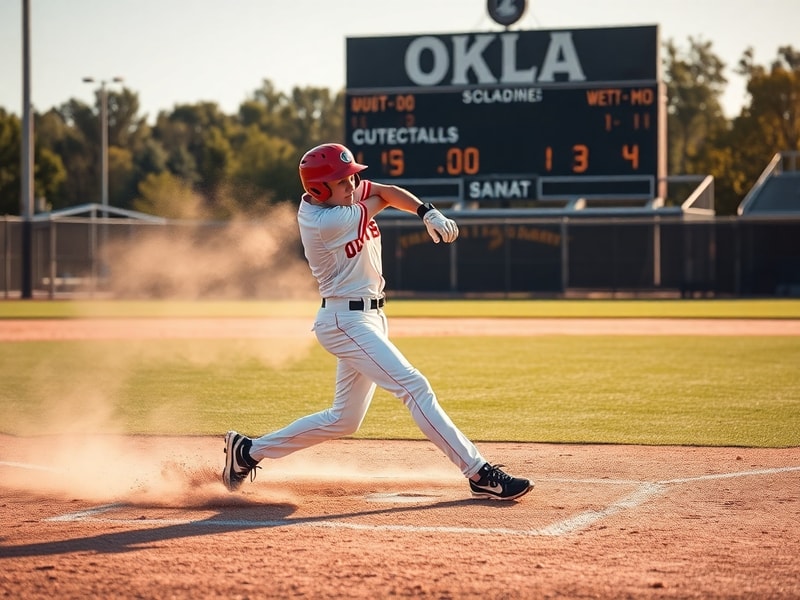
The Sooners, under the leadership of head coach Skip Johnson, have transformed from conference underdogs to national powerhouses. Since 2018, Oklahoma has appeared in five NCAA Regionals and two Super Regionals, showcasing a brand of baseball built on pitching depth, timely hitting, and a relentless work ethic. The program’s rise reflects a broader shift in college baseball, where data-driven recruiting and advanced training techniques are leveling the playing field.
Meanwhile, the Cowboys under coach Josh Holliday have carved their own legacy. OSU has claimed 17 conference titles and three College World Series appearances, including a national championship in 1959. The program’s identity is rooted in a tradition of power hitting and gritty, small-ball baseball. Legendary coaches like Gary Ward and Toby Greene instilled a culture of accountability and preparation that still defines the program today.
Both programs benefit from strong regional recruiting pipelines. Many of their stars come from Oklahoma’s high school ranks, where programs like Broken Arrow, Edmond Santa Fe, and Jenks consistently produce top-tier talent. These schools emphasize fundamentals, character development, and community engagement—values that align with the state’s broader cultural ethos.
Key Factors Driving Success in Oklahoma College Baseball
The sustained success of Oklahoma’s college baseball programs can be attributed to several key factors:
- Strong High School Systems: Oklahoma high schools annually rank among the top in the nation for baseball talent production. Programs invest in facilities, coaching, and summer development through elite travel teams.
- Summer Leagues: The Cape Cod League may be the most famous collegiate summer league, but Oklahoma’s own Sports programs like the Joplin (MO) Americans and the Enid Outlaws offer elite competition just miles from campus, allowing players to stay sharp year-round.
- Facility Upgrades: Both OU and OSU have invested millions in new stadiums and training facilities. OU’s L. Dale Mitchell Baseball Park and OSU’s O’Brate Stadium feature cutting-edge technology and fan-friendly amenities.
- Community Support: Local businesses, alumni networks, and fan bases provide financial and moral support that sustains programs through lean seasons.
These elements combine to create a developmental ecosystem that rivals larger states with more resources. It’s a model that challenges the traditional power centers of college baseball—Texas, Florida, and California—and proves that talent and preparation matter more than sheer population size.
Youth Baseball: The Engine of Oklahoma’s Pipeline
For every college or professional player who emerges from Oklahoma, dozens more cut their teeth in youth baseball. The state’s youth programs are the backbone of its baseball culture, supported by organizations like the Oklahoma Baseball Coaches Association and local leagues that operate in nearly every town.
Travel baseball has exploded in popularity across the country, and Oklahoma is no exception. Programs like the Oklahoma Elite Baseball Club and the Tulsa Storm offer year-round training, exposure to college scouts, and participation in elite tournaments. These teams travel across the Midwest and South, competing in showcase events that attract coaches from powerhouse programs.
Yet the heart of Oklahoma youth baseball still beats in its local parks and rec leagues. In towns like Weatherford, Anadarko, and Miami, Friday night games draw families who treat the diamond like a town square. The rituals are familiar: the smell of popcorn from the concession stand, the crack of a wooden bat, the sound of a fastball hitting a catcher’s mitt. These are not just games—they’re community gatherings that reinforce social bonds.
One of the most influential youth initiatives is the Oklahoma Baseball Hall of Fame’s annual induction weekend. Held in Enid, the event celebrates the state’s baseball legends while hosting clinics for young players. It’s a rare moment where past and future generations connect, passing down stories, techniques, and values.
Cultural Impact: Baseball as Oklahoma’s Unofficial Pastime
In a state known for football, basketball, and rodeo, baseball holds a unique place in Oklahoma’s cultural identity. It’s the sport that bridges generations, genders, and communities. From Native American youth leagues to senior slow-pitch tournaments, baseball in Oklahoma is inclusive in ways that few other sports are.
Baseball’s cultural footprint extends into music, literature, and art. Woody Guthrie, Oklahoma’s folk hero, often referenced baseball in his songs as a metaphor for resilience and community. The state’s literature, from Ralph Ellison to Joy Harjo, occasionally turns to baseball as a lens for examining race, class, and identity. Even the visual arts have celebrated the sport—Oklahoma City’s historic Biltmore Hotel features murals of baseball legends, and local artists frequently depict sandlot games in their work.
Baseball also serves as a cultural bridge between Oklahoma’s diverse communities. In cities like Tulsa, where more than 40% of the population identifies as Hispanic or Latino, baseball fields are spaces where language and background fade into the background. Programs like the Tulsa Hispanic Baseball League provide free clinics and equipment to underserved youth, using the game to foster inclusion and opportunity.
Moreover, baseball’s slower pace and emphasis on strategy make it a sport that appeals to all ages. Grandparents sit beside grandchildren at minor-league games, sharing stories of past heroes. Fathers teach their sons how to field a grounder or lay down a bunt. Baseball, in Oklahoma, is more than a game—it’s a shared language.
Looking Ahead: The Future of Oklahoma Baseball
The future of Oklahoma baseball is bright, but it’s not without challenges. Like many states, Oklahoma faces issues like rising participation costs in travel baseball, disparities in access to facilities, and competition from other sports for youth attention. Yet the state’s baseball community is responding with innovation.
New initiatives are emerging to democratize access. The Oklahoma City Baseball Foundation, for example, refurbishes old diamonds and builds new ones in underserved neighborhoods. The foundation’s “Field of Dreams” program has revitalized over 20 parks since 2015, giving thousands of kids a safe place to play.
Technology is also transforming the game. High school and college programs are adopting analytics platforms to track player development, while virtual reality tools help pitchers refine their mechanics. Social media has allowed Oklahoma’s baseball talent to gain visibility beyond regional borders, attracting recruits from across the country.
Perhaps most importantly, the culture of baseball in Oklahoma remains intact. The rituals—the crack of the bat, the smell of freshly mowed grass, the roar of a hometown crowd—are unchanged. In a fast-moving world, baseball in Oklahoma is a reminder of the enduring power of tradition, community, and the simple joy of playing the game.
As the sun sets over a diamond in Muskogee or Stillwater, casting long shadows across the infield, one thing is clear: Oklahoma baseball isn’t just a sport. It’s a living tradition, one that continues to shape the state’s identity and inspire the next generation of players, coaches, and fans.