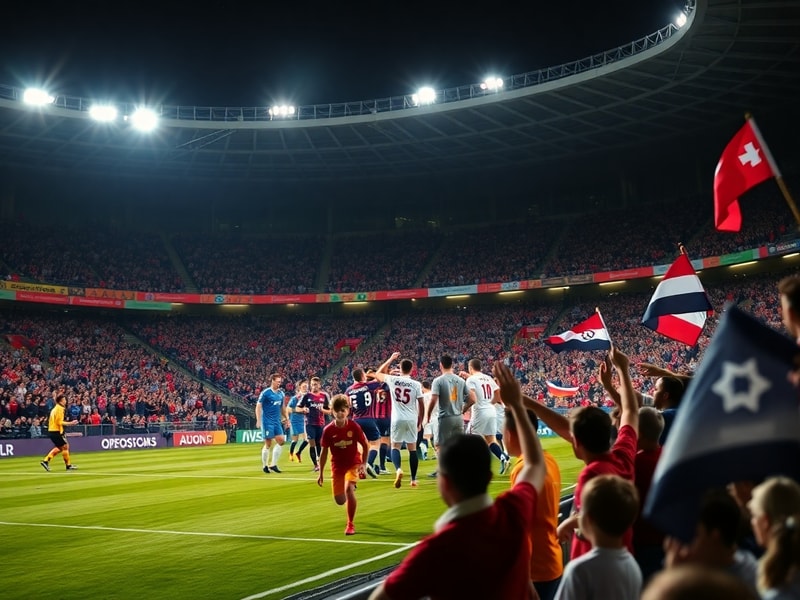
The FIFA World Cup stands as the pinnacle of international football, a tournament where nations clash not just on the pitch but in the hearts of billions of fans worldwide. With its quadrennial cycle, the Mundial generates unparalleled excitement, drama, and unforgettable moments. Beyond the spectacle, the World Cup reflects broader shifts in the sport’s global landscape, from tactical innovations to economic impacts and cultural exchanges. Understanding this tournament means examining its structure, history, and the forces shaping its future.
How the World Cup Works: Format and Evolution
The modern World Cup follows a rigorous qualification process, where 210 out of 211 FIFA member associations compete for 31 spots, alongside the host nation, which automatically qualifies. The tournament itself has undergone several format changes, most notably the expansion from 24 to 32 teams in 1998, and again to 48 teams starting in 2026. This expansion aims to include more diverse footballing nations, though critics argue it may dilute the competition’s intensity.
The group stage divides the 32 (or soon 48) teams into eight groups of four, with each team playing three matches. The top two from each group advance to the knockout rounds, which include the Round of 16, quarterfinals, semifinals, and the final. Tiebreakers in the group stage rely on points, goal difference, goals scored, and, if necessary, disciplinary records. The knockout rounds introduce single-elimination drama, where a single mistake can end a team’s campaign.
Historically, the World Cup has seen format adjustments to improve competitiveness and fan engagement. The introduction of the third-place playoff in 1934 added an extra layer of significance, though its relevance has diminished over time. Meanwhile, the Video Assistant Referee (VAR) system, introduced in 2018, has sparked debates about its role in preserving the spirit of the game while ensuring fairness.
Key Changes in World Cup Format Over the Decades
- 1930-1978: 13-16 teams, no group stage in early editions; knockout format until the final.
- 1982: Expansion to 24 teams, introducing a second group stage before the semifinals.
- 1998: 32-team format adopted, with a straightforward group stage and knockout rounds.
- 2026: Expansion to 48 teams, with 16 groups of three teams and a revised knockout structure.
Tactical Trends and the Shifting Face of World Cup Football
The World Cup has always been a laboratory for tactical innovation. In the 1950s and 60s, the WM formation dominated, while the 1970s saw the rise of Total Football, pioneered by the Netherlands. The 1980s and 90s brought defensive pragmatism, epitomized by Italy’s catenaccio and Argentina’s 1986 triumph with Diego Maradona’s genius. The 2000s introduced pressing systems, most notably under Pep Guardiola’s Barcelona and later Jürgen Klopp’s Liverpool, which influenced teams like Spain’s tiki-taka world champions in 2010.
Today, the World Cup reflects the sport’s globalized nature. European clubs dominate with their structured, possession-based systems, while South American and African teams often rely on individual brilliance and counterattacking football. The 2022 World Cup, for instance, saw Morocco’s historic run, powered by a cohesive team ethos rather than star power. Meanwhile, Asian teams like Japan and South Korea continue to push boundaries, blending technical skill with physicality.
The tactical evolution isn’t just about formations. Data analytics now play a crucial role, with teams like Germany and France using advanced metrics to scout opponents and optimize training. The rise of pressing traps, positional play, and high defensive lines has made the World Cup a showcase for modern football’s complexity. Yet, the tournament also highlights the unpredictability of football, where a single moment of magic can overshadow tactical mastery.
Economic and Cultural Impact of the World Cup
The World Cup is more than a sporting event; it’s a global economic powerhouse. Host nations invest billions in infrastructure, from stadiums to transportation, often with mixed results. Brazil’s 2014 World Cup left a legacy of unfinished projects and public disillusionment, while Russia’s 2018 tournament showcased modern stadiums but faced criticism over human rights issues. Qatar 2022, the first World Cup in the Middle East, brought controversies over migrant labor conditions, overshadowing the on-field action.
Economically, the World Cup generates revenue through broadcasting rights, sponsorships, and tourism. FIFA’s commercial deals, particularly with broadcasters and sponsors like Adidas and Coca-Cola, ensure the tournament’s financial success. However, the benefits rarely trickle down evenly. While host cities see short-term economic boosts, the long-term impact on local communities is often negligible. The 2026 World Cup, co-hosted by the U.S., Canada, and Mexico, presents an opportunity to redefine this model, with a focus on sustainability and legacy planning.
Culturally, the World Cup transcends football. It’s a stage for national pride, where victories and defeats resonate far beyond the pitch. The tournament also serves as a melting pot of cultures, with fans from around the world converging to celebrate their shared passion. In 2022, the World Cup in Qatar became a platform for discussions on inclusivity and human rights, highlighting football’s role as a social mirror. Meanwhile, the rise of women’s football, culminating in the 2023 Women’s World Cup, underscores the sport’s growing diversity and inclusivity.
The Future of the World Cup: Challenges and Opportunities
The World Cup’s future is shaped by a mix of tradition and innovation. The expansion to 48 teams in 2026 aims to globalize the tournament further, but it also raises questions about logistical feasibility and competitive balance. Hosting rights have become increasingly controversial, with allegations of corruption and human rights abuses clouding the selection process. FIFA’s response has been to implement stricter criteria, including sustainability and human rights commitments, but skepticism remains.
Technological advancements will continue to redefine the World Cup. VAR has already transformed officiating, and its role will evolve with advancements in AI and real-time data analysis. The introduction of semi-automated offside technology in 2022 demonstrated how technology can enhance fairness while preserving the game’s spontaneity. Meanwhile, the rise of esports and virtual experiences is creating new ways for fans to engage with the tournament, from interactive apps to virtual reality broadcasts.
The World Cup must also address its environmental impact. The 2022 tournament in Qatar was criticized for its carbon footprint, prompting FIFA to commit to more sustainable practices. The 2026 edition aims to be the first carbon-neutral World Cup, with initiatives like renewable energy and waste reduction. These efforts are crucial, as the tournament’s global reach demands accountability in the face of climate change.
Ultimately, the World Cup’s enduring appeal lies in its ability to unite people across cultures and continents. It’s a celebration of football’s beauty, its flaws, and its capacity to inspire. As the tournament evolves, its challenge will be to balance tradition with progress, ensuring that it remains a force for good in the world.