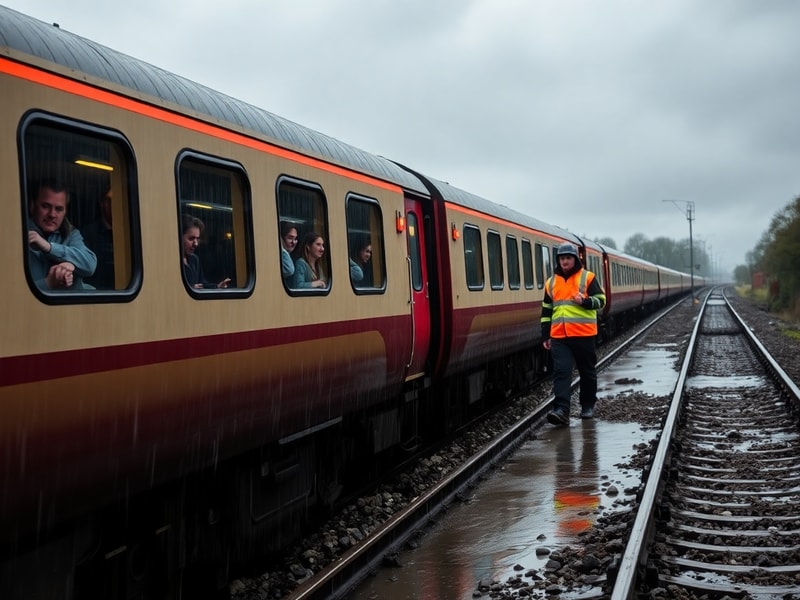
Extreme weather has become a persistent headache for UK rail passengers, turning routine commutes into endurance tests. Storm Ciara in February 2020 left 500 services cancelled across the network, while Storm Arwen the previous November stranded passengers for up to 12 hours on frozen tracks. These aren’t isolated incidents—Network Rail now classifies severe weather as its single biggest disruption factor, accounting for 40% of all delays in 2023.
The impact extends beyond inconvenience. According to the Office of Rail and Road, weather-related delays cost the UK economy £100 million annually in lost productivity. Commuters in the North West and Scotland face the highest exposure, with routes like the West Coast Main Line and Edinburgh-Glasgow line particularly vulnerable to flooding and landslips. Even routine winter weather now triggers cascade delays, where a single tree branch on live rails can paralyse an entire regional network.
How extreme weather paralyses Britain’s rail network
Heavy rainfall remains the most destructive force. Saturated ground loses structural integrity, leading to landslips that can block multiple tracks simultaneously. The Dawlish sea wall breach in 2014 severed the only rail link to Cornwall for two months, while more recent flooding in October 2023 submerged tracks between Doncaster and Leeds, stranding 2,000 passengers. High winds present a different challenge—fallen trees block lines at an average rate of 150 incidents per severe storm.
Snow and ice create their own complications. Points failure becomes the dominant issue, as frozen switches prevent trains from changing tracks. During the Beast from the East in 2018, 80% of delays originated from points icing over, forcing operators to impose speed restrictions nationwide. Even modern stock struggles with wheel slip on untreated rails, turning routine journeys into hour-long crawl sessions.
Heatwaves, often overlooked, pose growing threats. Rails expand in extreme temperatures, buckling under pressure. This forced a temporary 60mph speed limit across the Southeast in July 2022, adding 30 minutes to journeys between Brighton and London. Signals and overhead cables also overheat, while passengers face air-conditioning failures in older rolling stock—another £20 million annual cost to operators.
The human cost: Who bears the brunt of weather delays?
Commuters in major cities experience the most concentrated pain. A 2023 survey found London Waterloo passengers endure an average 47 minutes of weather-related delays monthly, with peak-hour services particularly affected. Key workers—nurses, teachers, and emergency responders—face disproportionate impacts, as their schedules often don’t accommodate extended delays. Some report missing entire shifts or arriving late to critical appointments.
Rural communities suffer even more acutely. The Cumbria Coast line, repeatedly severed by flooding, operates at just 60% reliability during winter months. Local economies dependent on tourism see bookings cancelled when visitors can’t reach destinations. Farmers in East Anglia report £50,000 annual losses when harvests can’t be transported due to blocked lines. These aren’t temporary setbacks—they’re structural disadvantages baked into the network.
The most vulnerable groups face compounded risks. Elderly passengers and those with disabilities struggle with extended waits on unheated platforms during winter storms. Parents with young children report missing connecting bus services when trains arrive unpredictably late. A 2022 study by Transport Focus found 35% of disabled passengers avoid rail travel during severe weather, citing lack of assistance and inaccessible facilities at disrupted stations.
Who’s responsible—and what’s being done?
Network Rail bears primary responsibility for infrastructure resilience, but funding constraints limit rapid upgrades. The £2.9 billion allocated for weather resilience in Control Period 7 (2024-2029) represents just 3% of total network expenditure. Critics argue this is insufficient when individual storm events cause £50 million in damage. Some routes, like the Cambrian Coast line, still rely on Victorian-era drainage systems incapable of handling modern rainfall intensity.
Train operators face mounting criticism for inadequate contingency planning. While some have invested in mobile generators and temporary shelters, others rely on reactive rather than proactive measures. Govia Thameslink Railway, for example, was forced to apologise in 2023 after passengers spent eight hours trapped on a train during Storm Agnes, with no food or water provisions. The Rail Delivery Group now mandates minimum service levels during disruptions, but enforcement remains inconsistent.
Technological solutions offer partial relief. Weather monitoring systems now provide 48-hour advance warnings, allowing proactive speed restrictions before damage occurs. Some routes use laser scanning to detect ground movement in real-time, while others trial heated points systems. However, these innovations remain concentrated on high-traffic corridors—leaving regional and rural networks exposed.
Can passengers ever escape the weather-delay trap?
Short-term strategies offer limited relief. Flexible season tickets now allow unlimited travel on adjacent routes, and some operators provide compensation for delays over 30 minutes. The industry-wide Passenger Assist app aggregates disruption data across operators, though its real-time accuracy varies. Travellers increasingly adopt “buffer day” strategies, booking extra leave for critical appointments during high-risk seasons.
Long-term solutions require systemic changes. Enhanced drainage systems could reduce flooding risks, but installation costs £1-2 million per kilometre. Raising vulnerable sections of track above flood levels offers another path, though this would take decades to implement comprehensively. Some advocate for “climate-proofing” entire routes, but funding gaps persist. Meanwhile, extreme weather events are intensifying—Met Office data shows UK rainfall intensity increasing by 17% since 2000.
Ultimately, passengers may need to rethink fundamental travel patterns. Car-sharing schemes and flexible working arrangements provide alternatives, though not all commuters have these options. The most resilient approach might involve avoiding peak disruption periods entirely—shifting to off-peak travel or embracing remote working where possible. As climate change accelerates, weather-related delays could become the new normal, forcing both operators and passengers to adapt.