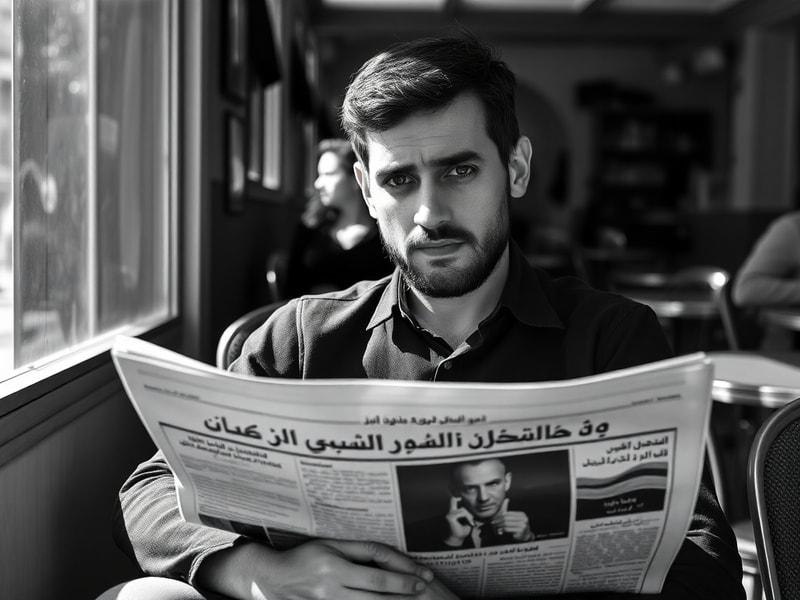
Hamza Abdelkarim: The Artist Redefining Global Music with Sudanese Roots
The Rising Voice of Hamza Abdelkarim: A New Chapter in Modern Music
Hamza Abdelkarim is carving out a distinct space in today’s musical landscape, blending traditional influences with contemporary sounds that resonate across multiple audiences. At just 26 years old, the Sudanese-American artist has already begun to redefine what it means to bridge cultural divides through music. His approach is neither forced nor superficial; instead, it feels organic, as if each melody and rhythm carries the weight of history while pushing forward into uncharted territory.
Abdelkarim’s journey is not just about musical innovation. It’s a reflection of identity, displacement, and the search for belonging. Born in Khartoum, Sudan, he moved to the United States as a child, carrying with him the echoes of Sudanese folk music, Quranic recitations, and the rhythms of the Nile. These early influences now pulse through his compositions, creating a sound that is both familiar and refreshingly new. His music doesn’t just entertain; it invites listeners into a conversation about heritage, migration, and the fluidity of culture.
What sets Abdelkarim apart is his refusal to be boxed in by genre. While some artists feel pressure to adhere to a specific sound to gain recognition, Abdelkarim thrives in ambiguity. His tracks move effortlessly from the hypnotic melodies of traditional Sudanese tahtib music to the pulsating beats of modern hip-hop and electronic production. This versatility has earned him a growing following, not just among Sudanese diaspora communities but also among listeners who crave authenticity in a world saturated with algorithm-driven pop.
From Khartoum to the Global Stage
Abdelkarim’s rise has been marked by deliberate steps rather than overnight success. After studying music at the prestigious Berklee College of Music in Boston, he began releasing singles that showcased his ability to merge genres without losing his core identity. His 2022 debut EP, Nile Blues, was a critical darling, praised for its lush instrumentation and poetic lyricism. Tracks like “Alf Leila” and “Tasnima” didn’t just climb streaming charts; they sparked conversations about the role of African artists in redefining global music trends.
One of the most striking aspects of Abdelkarim’s work is his use of language. While many artists default to English for broader appeal, Abdelkarim seamlessly incorporates Arabic, Nubian, and even occasional English phrases. This isn’t just a stylistic choice—it’s a statement. Language, for him, is a living archive of culture, and his refusal to dilute it speaks volumes about his artistic integrity. It’s a reminder that music doesn’t need to sacrifice authenticity to reach wider audiences.
Abdelkarim’s live performances further cement his reputation as an artist unafraid to experiment. His concerts are immersive experiences, often featuring live instrumentation alongside electronic elements. The result is a sensory journey that feels both intimate and expansive. Fans who attend his shows frequently describe them as transformative, a testament to his ability to connect with audiences on a deeply personal level.
Breaking Barriers in a Fragmented Industry
The music industry has long struggled with representation, particularly for artists from non-Western backgrounds. While platforms like Spotify and Apple Music have made it easier for global artists to reach new listeners, the algorithms often favor familiar sounds over innovation. Abdelkarim’s success challenges this status quo, proving that audiences are hungry for music that doesn’t conform to traditional Western pop structures.
His work also highlights the importance of cultural preservation in a digital age. As younger generations of Sudanese and other African diaspora communities seek to reconnect with their roots, artists like Abdelkarim serve as cultural ambassadors. They remind listeners that tradition isn’t a relic to be preserved in museums; it’s a living, breathing force that can evolve and thrive in contemporary contexts. This is particularly significant in the wake of Sudan’s political upheavals, where cultural identity has become both a source of resilience and a target for erasure.
Abdelkarim’s influence extends beyond music. He has become a voice for Sudanese youth, using his platform to advocate for social justice and cultural preservation. In interviews, he often speaks about the responsibility that comes with visibility. “Music can be a form of resistance,” he told OkayAfrica in 2023. “It can preserve what’s being erased and inspire what’s yet to come.” This commitment to purpose-driven artistry sets him apart from peers who prioritize commercial success over cultural impact.
What’s Next for Hamza Abdelkarim?
As Abdelkarim continues to build his discography, all eyes are on his next project. Rumors of a full-length album have been circulating for months, with fans speculating about its themes and sound. Given his penchant for surprise releases—Nile Blues dropped without much fanfare—it’s possible that his next work could arrive just as unexpectedly, catching the industry off guard.
There’s also the question of how he’ll navigate the pressures of fame. The music industry has a way of commodifying authenticity, turning rebellious artists into marketable brands. Abdelkarim seems acutely aware of this trap. In a recent interview, he emphasized the importance of staying true to his vision, even if it means sacrificing commercial opportunities. “I’d rather be a voice for my people than a voice for a brand,” he stated. This kind of integrity is rare in an industry where artists are often pressured to conform.
Looking ahead, Abdelkarim’s potential collaborations could further expand his reach. While he has already worked with producers from diverse backgrounds, a collaboration with a Western pop artist could introduce his sound to entirely new audiences. Alternatively, a project with an African giant like Burna Boy or Burna Girl could solidify his place in the continent’s burgeoning music scene. Whatever direction he takes, one thing is clear: Hamza Abdelkarim is not just an artist to watch—he’s an artist to follow closely.
Why His Music Matters
The significance of Abdelkarim’s work lies in its ability to bridge divides without diluting meaning. In an era where globalization often flattens cultural distinctions, his music does the opposite—it deepens them. By weaving together Sudanese traditions with modern production, he creates a dialogue between past and present, between the local and the global. This is more than just artistic innovation; it’s a form of cultural preservation.
His rise also reflects broader shifts in the music industry. Streaming platforms have democratized access to global sounds, but they’ve also created a paradox where diversity is celebrated in theory but often sidelined in practice. Artists like Abdelkarim prove that there’s a real appetite for music that challenges the status quo. They remind the industry that authenticity isn’t a niche—it’s a necessity.
For listeners, Abdelkarim’s music offers something equally valuable: a sense of connection. In a world where many feel uprooted or disconnected from their heritage, his work provides a sonic anchor. It’s a reminder that identity isn’t a fixed thing but a fluid, evolving process—and that music can be a guiding force in that journey.
As he continues to grow, one can only wonder what new sounds he’ll bring into the world. But one thing is certain: Hamza Abdelkarim is more than just a rising star. He’s a cultural force, and his impact will be felt for years to come.
Key Takeaways
- Hamza Abdelkarim blends traditional Sudanese sounds with modern genres, creating a unique musical identity.
- His use of multiple languages in his music reflects his commitment to cultural preservation and authenticity.
- Abdelkarim’s live performances and albums challenge industry norms around representation and commercialization.
- His work resonates with diaspora communities and global audiences alike, proving the universal appeal of rooted artistry.
- As he evolves, his next projects could further redefine what it means to be a globally relevant artist from Africa.