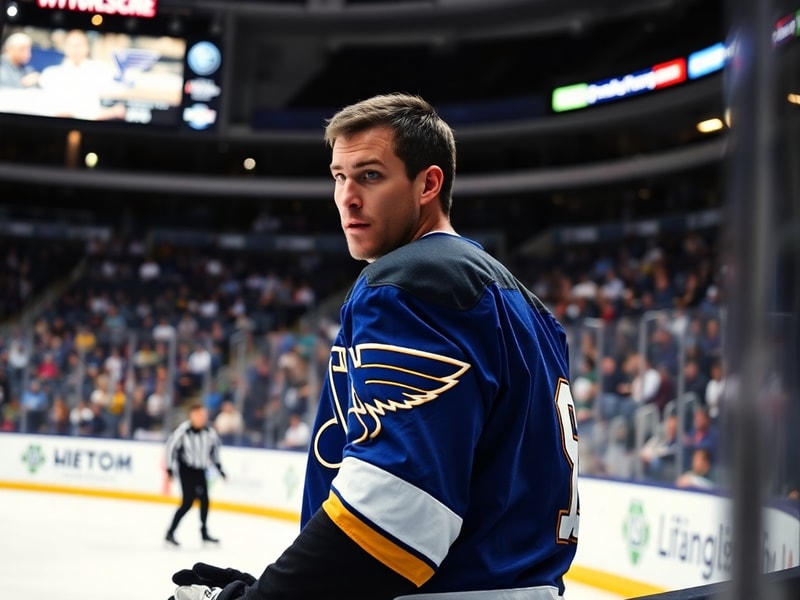
Keith Tkachuk carved out one of the most distinctive careers in NHL history, blending raw power with an unmistakable presence in every rink he played. Drafted 13th overall by the Winnipeg Jets in 1990, he quickly became synonymous with physical hockey—an identity that carried him through stops in Phoenix, St. Louis, and Atlanta before finishing with the Jets’ successor franchise in Winnipeg. His 534 goals and 1,065 points over 1,201 games remain etched in the annals of the league, but Tkachuk’s legacy extends beyond statistics. He embodied an era when toughness was as valued as talent, shaping how teams evaluated players who could dominate with both fists and finesse.
From Prospect to Powerhouse: The Rise of a Hockey Enforcer
Tkachuk’s journey to the NHL began in Boston, where he played college hockey at Boston University. His collegiate tenure showcased early signs of the player he would become—feared for his shot, relentless along the boards, and impossible to ignore in a fight. By the time he entered the NHL, he was already a polarizing figure. Scouts admired his hockey IQ and scoring touch, while opponents and teammates alike respected his willingness to stand up for himself and his linemates. His rookie season in 1992-93 saw him tally 28 goals and 50 points, but it was his physicality that left the biggest impression. That year, he racked up 187 penalty minutes, a number that would become a hallmark of his career.
His tenure with the Jets solidified his reputation. Tkachuk formed a formidable duo with center Alexei Zhamnov, creating a dynamic that balanced scoring with intimidation. The 1995-96 season was particularly notable, as he posted 41 goals and 75 points while accumulating 212 penalty minutes. That combination of production and pugilism made him a fan favorite in Winnipeg, where he was affectionately nicknamed “Walt” by the local crowd—a playful twist on his last name that stuck for years. It wasn’t just about goals or hits; it was about presence. When Tkachuk stepped on the ice, the game felt different. Opponents knew they’d have to answer not just with skill, but with grit.
The Physical Blueprint: How Tkachuk Redefined the Power Forward Role
Tkachuk’s style of play wasn’t just effective—it redefined what it meant to be a power forward in the NHL. Where many players in his era focused on scoring or toughness exclusively, Tkachuk mastered both. His shot was among the league’s most feared, with a quick release and accuracy that made him dangerous from anywhere in the offensive zone. Yet it was his physical game that set him apart. Standing at 6’3” and weighing 220 pounds, he was built like a linebacker, and he played like one too. His fights were rarely gratuitous; they often shifted momentum or protected teammates. In an era when enforcers were still a staple of NHL rosters, Tkachuk thrived by being more than just a goon—he was a goal-scoring threat who could also throw down when necessary.
His approach to the game reflected a broader trend in hockey during the 1990s and early 2000s. Teams increasingly valued players who could contribute in multiple facets of the game, and Tkachuk was a prototype of that evolution. He wasn’t the fastest skater or the most graceful handler, but his hockey sense and competitive fire made up for those limitations. He knew when to unleash his heavy shot, when to battle in the corners, and when to drop the gloves. This versatility made him a valuable commodity, particularly for teams looking to add muscle to their lineup without sacrificing offensive production.
Consider his time with the St. Louis Blues, where he played from 2001 to 2007. In his first season with the team, he scored 30 goals and added 32 assists, while accumulating 145 penalty minutes. His ability to contribute in all three zones made him a key piece of the Blues’ forward group. Even as the NHL began to shift away from the enforcer-centric model, Tkachuk remained effective because he could still score. That adaptability speaks to his longevity and relevance in a league that was rapidly changing.
The Intangibles: Leadership and Legacy Beyond the Numbers
Beyond his on-ice contributions, Tkachuk’s leadership and character left a lasting impact on every team he played for. He was the kind of player who led by example, whether it was through a timely goal, a hard check, or a willingness to stand up for a teammate. His presence in the locker room was stabilizing, a trait that earned him respect across the league. Teammates often pointed to his work ethic as a driving force behind their success, and opponents acknowledged his ability to change the tone of a game with a single shift.
His influence extended to the next generation of players as well. Young forwards who grew up watching Tkachuk saw firsthand what it meant to be a complete player—one who could dominate physically without sacrificing skill. This blueprint influenced how teams evaluated and developed talent, particularly in North American hockey systems. The rise of players like Milan Lucic and Kyle Clifford, who combined scoring ability with physical play, can trace a lineage back to the mold Tkachuk helped define.
Tkachuk’s post-retirement life has kept him connected to hockey. He has remained involved in the game through coaching and community initiatives, sharing his experiences with younger players. His son, Matthew Tkachuk, has carried on the family legacy, becoming one of the NHL’s most dynamic and polarizing players. The similarities between father and son—both physical presences with elite skill sets—highlight how Tkachuk’s approach to the game has transcended generations.
Tkachuk’s Enduring Influence on the NHL
Keith Tkachuk’s career spanned an era of transition in the NHL, a time when the league was evolving from a predominantly physical game to one that increasingly prioritized speed and skill. Yet through it all, he remained a constant—a player who could adapt without losing the essence of what made him great. His career statistics are impressive, but his true impact is measured in intangibles: the goals that shifted momentum, the hits that energized teammates, and the respect he commanded from peers and opponents alike.
In many ways, Tkachuk represents the bridge between two eras of hockey. He entered the league when enforcers were still a necessity, yet he thrived as the role began to diminish. His ability to score and hit made him a rare commodity, one that teams chased even as the league’s philosophy shifted. That adaptability is a testament to his hockey IQ and competitive spirit. Even today, coaches and scouts study players like Tkachuk to understand how to blend physicality with production—a lesson that remains relevant in a game that continues to evolve.
For fans who grew up watching him, Tkachuk is remembered as a player who made every game feel consequential. For younger hockey enthusiasts, he serves as a reminder of a time when the game was as much about grit as it was about glory. Whether it was his booming shot, his thunderous checks, or his willingness to drop the gloves, Tkachuk left an indelible mark on the NHL. His legacy isn’t just in the numbers or the highlights—it’s in the way he shaped the game itself.
As hockey continues to change, the qualities Tkachuk embodied—toughness, adaptability, and a relentless competitive drive—remain essential. He wasn’t just a player; he was a standard-bearer for a style of hockey that valued all-around excellence. In an era where specialization often trumps versatility, Tkachuk’s career stands as a reminder of what makes the sport so compelling: the ability to do it all, and do it with unmistakable intensity.
- Versatility: Tkachuk excelled in scoring, physicality, and leadership, making him a rare three-dimensional player.
- Longevity: His career spanned 19 seasons, a testament to his ability to adapt and remain effective in a changing league.
- Impact on Culture: He helped redefine the power forward role, influencing how teams evaluated and developed talent.
- Leadership: His presence in the locker room and on the ice set a standard for accountability and effort.
- Legacy: His son, Matthew Tkachuk, has carried on his father’s legacy, proving the enduring value of his approach to the game.
For those looking to explore more about the evolution of hockey roles or the careers of other power forwards, check out our Sports and News sections for deeper analysis and historical context.