From Ancient Rome to Modern Streets: The Enduring Cost of Vandalism
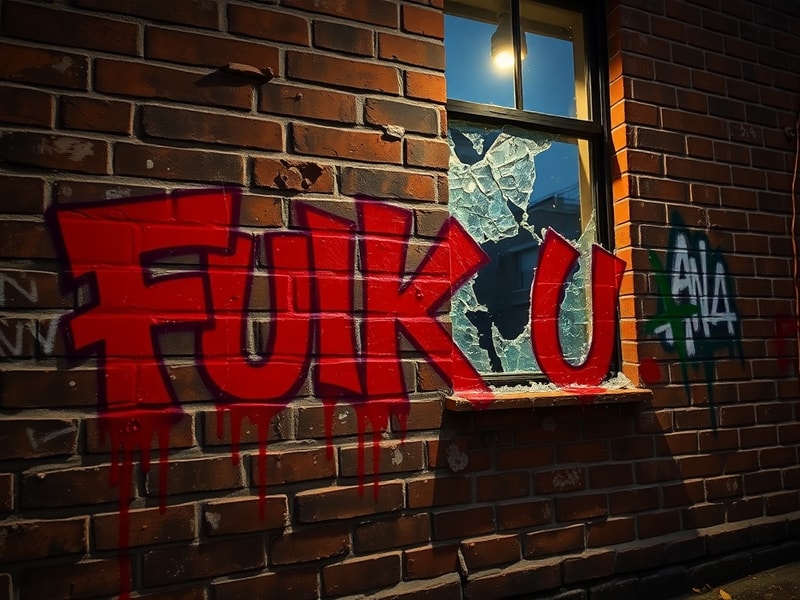
Vandalism is often dismissed as petty crime—scratches on a park bench, spray-painted walls, broken windows. Yet its impact stretches far beyond the immediate damage. Across continents, cultures, and eras, the act of willful destruction has shaped public spaces, fueled social tensions, and even influenced political movements. In Rome, the term itself originates from the Vandals, a Germanic tribe whose sacking of the city in 455 CE left such a mark that “vandalism” became synonymous with senseless destruction. Today, the motivations behind such acts—boredom, protest, art, or malice—remain as varied as the surfaces they deface.
What drives someone to etch their name into a 2,000-year-old monument or hurl a rock through a storefront window? The answers reveal deeper truths about society, identity, and the fragile balance between individual expression and collective order. From the graffiti-covered alleys of Berlin to the pristine temples of Kyoto, vandalism is both a mirror and a wound—reflecting societal frustrations while inflicting real harm on shared heritage.
The Psychology Behind the Paint: Why People Destroy
Understanding vandalism begins with recognizing its psychological roots. Not all who deface property do so out of anger or rebellion. Some are driven by a desire for recognition, others by a misguided sense of artistic expression. Studies in criminology suggest that vandalism often peaks during adolescence, when identity formation collides with impulsivity. A 2021 study by the Psychology Today network found that nearly 60% of reported vandalism cases involve offenders under the age of 21.
But age isn’t the only factor. Vandalism can also be a form of protest. In 2020, during global demonstrations against racial injustice, numerous monuments tied to colonialism and slavery were defaced or toppled. The act wasn’t mere destruction—it was a symbolic rejection of historical narratives. Similarly, in Athens during the 2011 financial crisis, spray-painted slogans and smashed bank windows became visual shorthand for public rage.
Less discussed is the role of thrill-seeking. Known in criminology as “sensational vandalism,” this form thrives in environments where surveillance is low and consequences feel distant. Abandoned buildings, isolated parks, and even digital spaces—like hacked websites—offer fertile ground for those seeking a rush of power through destruction.
A Global Canvas: Vandalism Across Cultures and Cities
The way societies respond to vandalism reveals much about their values. In Japan, where respect for public property is deeply ingrained, even minor acts of graffiti are met with swift legal action. Tokyo’s “zero-tolerance” policy toward vandalism has helped maintain the city’s reputation for cleanliness and order. Yet this approach doesn’t eliminate the urge to deface—it drives it underground. Instead of spray paint, some Japanese artists turn to “chalk art,” a temporary form that avoids legal repercussions while still making a statement.
Contrast that with Berlin, where graffiti is almost a badge of honor. The city’s once-divided streets became a canvas for political expression, and even post-reunification, the tradition persisted. The East Side Gallery, a 1.3-kilometer stretch of the Berlin Wall covered in murals, stands as one of the world’s largest open-air art galleries. Here, vandalism has been redefined—not as crime, but as cultural preservation.
In Latin America, the relationship is more fraught. Cities like São Paulo and Mexico City face rampant tagging and gang-related vandalism, often tied to drug trafficking and territorial disputes. Local governments struggle to balance enforcement with community engagement, knowing that heavy-handed crackdowns can escalate tensions rather than reduce crime. In some neighborhoods, residents have taken matters into their own hands, forming volunteer groups to clean up graffiti and deter repeat offenders.
Meanwhile, in the Middle East, vandalism has taken on a new dimension in the digital realm. During the Arab Spring, social media platforms became battlegrounds—not just for organizing protests, but for digital defacement. Hacktivist groups like Anonymous targeted government websites, replacing official content with protest messages. The line between vandalism and activism blurred, raising ethical questions about the role of disruption in social change.
The Hidden Costs: More Than Just Broken Glass
The consequences of vandalism extend far beyond the physical damage. Economically, the burden falls on taxpayers and businesses alike. According to the National League of Cities, the U.S. spends over $12 billion annually on graffiti cleanup and repairs. In urban areas, repeated vandalism can deter tourism, lower property values, and even push small businesses to close. A 2022 report from the Urban Institute found that neighborhoods with high rates of vandalism saw a 15% decline in foot traffic within two years of repeated incidents.
But the impact isn’t purely financial. Vandalism erodes a sense of safety and belonging. Residents in vandalism-plagued areas often report feeling disconnected from their community, as public spaces become symbols of neglect rather than pride. This psychological toll is especially acute in schools, where graffiti and broken fixtures can contribute to a toxic learning environment. A study by the Edutopia Foundation found that students in vandalized schools were 20% more likely to report feelings of anxiety and insecurity.
Even nature isn’t immune. In national parks across the U.S., vandalism has led to the destruction of ancient petroglyphs, carved by Indigenous peoples centuries ago. These acts aren’t just crimes—they’re erasures of cultural identity. In 2021, a viral video showed a tourist carving their initials into the rock face of Utah’s Delicate Arch, sparking outrage and renewed calls for stricter enforcement of “Leave No Trace” principles.
Can Vandalism Ever Be Justified—or Even Art?
The line between vandalism and art has always been thin and hotly debated. Banksy, the elusive street artist, built a career on defying that line. His works, often created without permission, challenge viewers to question authority, consumerism, and the very definition of art. In 2018, his painting “Girl with Balloon” famously shredded itself moments after selling at auction for over $1 million. The stunt blurred the boundaries between vandalism and high art, leaving critics and audiences divided.
Some cities have embraced this ambiguity. In Melbourne, Australia, the famous “Hosier Lane” has become a legal graffiti zone, where artists are encouraged to create murals on designated walls. The city’s approach treats graffiti as a form of urban renewal, transforming drab alleyways into cultural landmarks. Over 10,000 visitors a year now flock to the area, boosting local businesses and fostering a sense of civic pride.
Yet not all “artistic” vandalism is welcome. In 2019, a man in Paris glued himself to the base of the Eiffel Tower, defacing the landmark in the name of climate activism. While his message resonated with some, the act was widely condemned as disrespectful to both the monument and the millions who visit it annually. The incident sparked a global debate: When does protest cross the line into desecration?
Perhaps the most nuanced perspective comes from Indigenous communities. In Canada, the erasure of traditional Indigenous art and the defacement of sacred sites have been acts of cultural genocide. Yet, some Indigenous artists now reclaim public spaces through murals and installations, using the same tools once used against them. Their work transforms vandalism into reclamation—a way of saying, “This land, this story, is ours.”
Fighting Back: Strategies That Work
Preventing vandalism requires a multi-pronged approach. Urban planners and law enforcement have found success with a mix of surveillance, community engagement, and design. Cities like Copenhagen and Amsterdam use “CPTED”—Crime Prevention Through Environmental Design—to reduce opportunities for vandalism. This includes installing motion-sensor lighting, planting thorny bushes under windows, and using anti-graffiti coatings on vulnerable surfaces.
Community involvement is equally critical. Programs like “Adopt a Spot” in Los Angeles encourage residents to take ownership of public spaces, from parks to sidewalks. Participants receive supplies to maintain their adopted area, from trash removal to minor repairs. The initiative has reduced vandalism in participating neighborhoods by up to 30%, according to city data.
Technology is also playing a role. Smart cameras equipped with AI can now detect graffiti in real time and alert authorities before the damage spreads. In Barcelona, a pilot program using these cameras reduced graffiti incidents by 40% in just six months. Meanwhile, digital platforms are helping track repeat offenders, allowing law enforcement to intervene before minor acts escalate.
Yet no solution is foolproof. The most effective strategies often combine enforcement with empathy. In some cases, offenders are given the chance to “make amends” by participating in community clean-up efforts or creating public art under supervision. This approach, pioneered in parts of Europe, focuses on rehabilitation rather than punishment—a recognition that vandalism is as much a social issue as a criminal one.
A Final Thought: The Power of Shared Spaces
Vandalism is more than a crime; it’s a symptom of deeper societal fractures. Whether it’s a teenager tagging a subway car or an activist toppling a statue, the act is a cry for attention, a demand for change, or simply a release of frustration. The challenge for communities is to listen—to distinguish between mindless destruction and meaningful protest—while protecting the spaces that bind us together.
Perhaps the solution lies not in stricter laws or heavier surveillance, but in reclaiming the idea of shared ownership. When people feel connected to their environment, they’re less likely to harm it. When public spaces are celebrated rather than neglected, vandalism loses its appeal. From the ancient ruins of Rome to the digital streets of the internet, the fight against vandalism is ultimately a fight for the soul of our collective spaces.
It’s a battle that asks us to confront uncomfortable questions: Who gets to decide what’s sacred? What does it mean to belong to a place? And how do we balance the right to express ourselves with the responsibility to preserve what we’ve inherited? The answers won’t come from paint cans or sledgehammers, but from the choices we make every day—about how we treat our world, and each other.