Eduardo Camavinga: The rise of Real Madrid’s next midfield maestro
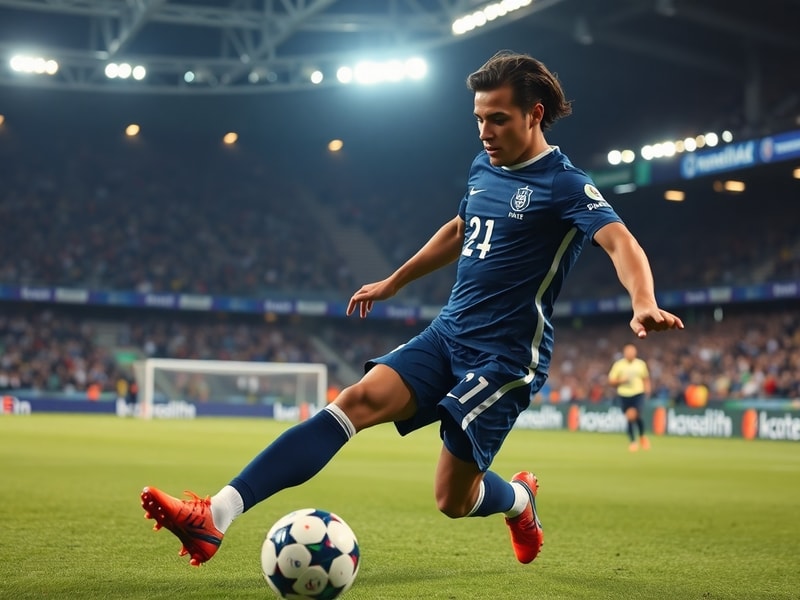
Eduardo Camavinga arrived at Real Madrid in 2021 as a slender teenager with a technical profile and an uncommon maturity for his age. The French midfielder, born in Miconge, Angola, in 2002, had already made waves at Stade Rennais in Ligue 1, where his composure on the ball and defensive awareness caught the attention of Europe’s elite clubs. By the time he signed for Los Blancos, the football world had begun to understand that Camavinga was not just another promising youngster—he was a player built for pressure, capable of dictating tempo in midfield while providing steel in duels.
His adaptation to Santiago Bernabéu was swift. Though injuries disrupted parts of his first season, Camavinga’s intelligence and adaptability allowed him to carve out a role in Carlo Ancelotti’s squad. He became the youngest foreign player to score in the Champions League for Real Madrid at 19 years and 122 days, a record that underscored his readiness for elite competition. Over time, Camavinga evolved from a transitional signing into a cornerstone of Madrid’s midfield, blending elegance with resilience in a way few expected from a player so young.
From Angola to Rennes: The early years of a prodigy
Camavinga’s journey began in Miconge, a small municipality in Angola’s Zaire Province. His family moved to France when he was two years old, settling in the Brittany region. Football ran in his veins—his father had played semi-professionally in Angola—and Camavinga showed early promise at local clubs like AS Broons and EA Guingamp before joining Stade Rennais’s academy at age 11.
What set Camavinga apart in his teenage years was his ability to play multiple roles in midfield. He could function as a deep-lying playmaker, a box-to-box destroyer, or even a progressive carrier breaking lines. His physical growth—he was already over six feet tall by 16—made him a dominant presence in duels despite his technical refinement. By 2019, at just 16 years and 11 months, he became the youngest player to debut for Rennes in Ligue 1, shattering records and signaling his arrival on the professional stage.
His performances in the 2019–20 season earned him the UNFP Young Player of the Year award, and by the time Real Madrid came calling, clubs across Europe were monitoring his progress closely. His style was reminiscent of players like N’Golo Kanté in terms of defensive work rate, but with the added dimension of a metronome’s passing range and a forward-thinking mindset. This balance made him an ideal fit for modern midfields, where control and intensity are equally prized.
The Real Madrid transition: Challenges and breakthroughs
Joining Real Madrid in August 2021 for a reported fee of €31 million, Camavinga faced the dual challenge of adapting to a new league and integrating into a team brimming with world-class talent. Los Blancos had just secured the Champions League, and expectations remained sky-high under manager Carlo Ancelotti, who valued versatility and tactical discipline.
Injuries, including a hamstring strain and later a muscle tear, disrupted his first few months. But when fit, Camavinga displayed glimpses of his potential, particularly in the Champions League. His goal against Shakhtar Donetsk in November 2021, scored with a first-time finish from distance, announced his arrival in style. The moment was symbolic: a young player announcing himself on the biggest stage, with poise and precision.
By the 2022–23 season, Camavinga had cemented his place in the starting lineup. He formed a dynamic partnership with Luka Modrić and Toni Kroos, offering energy, pressing intensity, and progressive passing. His ability to read the game—anticipating counterattacks and intercepting loose balls—made him a crucial figure in Madrid’s midfield rotation. Ancelotti often used him as a single pivot in deeper positions, trusting him to shield the defense while initiating attacks.
His development was not just technical but psychological. Camavinga matured into a leader on the pitch, taking responsibility in high-pressure moments. Whether shielding a lead in tight Champions League ties or breaking down play against pressing teams, he displayed the composure of a seasoned professional. This mental resilience has become a hallmark of his game, setting him apart from peers who may have more technical flair but less tactical maturity.
Style of play: The modern complete midfielder
Camavinga’s playing style reflects the demands of contemporary football: a blend of defensive solidity, technical elegance, and tactical intelligence. He operates primarily as a defensive midfielder or deep-lying playmaker, but his skill set allows him to transcend positional labels.
Defensively, he is relentless. His ball-winning ability is elite—he averages over two tackles and interceptions per 90 minutes in La Liga—yet his foul rates remain relatively low, indicating smart aggression rather than reckless challenges. He excels in 1v1 duels, using his strength and balance to regain possession without conceding fouls.
In possession, Camavinga is a metronome. His passing accuracy hovers around 90% in league matches, and his progressive passing—forward passes that move the ball into dangerous areas—places him among the top midfielders in Europe. He can switch play with a single touch, thread through balls between defensive lines, or carry the ball forward under pressure, using his body to shield possession.
His dribbling is underrated. While not a flashy dribbler, he averages over two successful dribbles per 90 minutes, often in high-pressure zones. This ability to break lines with his feet makes him a constant threat in transition and a key outlet when Madrid build from the back.
Camavinga also brings aerial dominance, winning over 60% of his aerial duels—a rare trait for a midfielder and invaluable in set-piece situations. His presence in the box during corners and free kicks adds another dimension to Madrid’s attacking threat.
In summary, Camavinga embodies the modern complete midfielder: a defensive wall, a playmaker, and a progressive carrier, all wrapped into one. His style aligns perfectly with the demands of elite European football, where midfielders must be both shields and swords.
The road ahead: Expectations and future potential
At 22, Camavinga is entering the prime years of a footballer’s career. His trajectory suggests he could become one of the defining midfielders of his generation. For Real Madrid, he represents not just a player of immense talent but a long-term solution in midfield, filling the void left by the eventual retirements of Modrić and Kroos.
One key area for improvement lies in his goal threat. While he has contributed important goals—including a crucial strike against Barcelona in the 2023–24 Copa del Rey—he remains more of a setup player than a prolific scorer. Developing his shooting range from distance could add another dimension to his game, especially in big matches where a single moment of quality can decide a game.
Defensively, there is room to refine his positioning. At times, he can be drawn too far forward, leaving gaps in midfield that opponents exploit. Tightening his spatial awareness in high-pressing situations will be crucial as he continues to grow into a more complete midfielder.
On the international stage, Camavinga has already made a significant impact for France. He made his senior debut in 2020 and was part of the squad that reached the 2022 World Cup final, though injuries limited his playing time. As France looks to transition from the era of Kanté and Paul Pogba, Camavinga is poised to become a central figure in Les Bleus’ midfield for years to come.
Looking ahead, the next two to three seasons will be pivotal. If he maintains his current trajectory, he could challenge for Ballon d’Or consideration, particularly if Real Madrid continue their dominance in Europe and France performs well in major tournaments. His contract situation will also be closely watched—though Madrid have shown faith by tying him down until 2027—with top clubs likely to monitor his progress for potential future bids.
What makes Camavinga particularly exciting is his consistency. Unlike some prodigies who burn brightly before fading, he has shown steady improvement season after season. His professionalism, adaptability, and humility off the pitch reflect the mindset of a player built for longevity.
For fans of football, Camavinga represents something rare: a player who combines technical brilliance with an old-school mentality. He is a throwback to the complete midfielders of the past, yet fully equipped for the demands of the modern game. Whether dictating play in midfield, breaking up attacks, or scoring crucial goals, he does so with a maturity that belies his age.
As Real Madrid and France look to the future, Eduardo Camavinga stands ready to lead. His story is still being written, but one thing is clear: he is not just a rising talent. He is a player destined for greatness.