How Boston Earned Its Reputation as the Brexit Capital
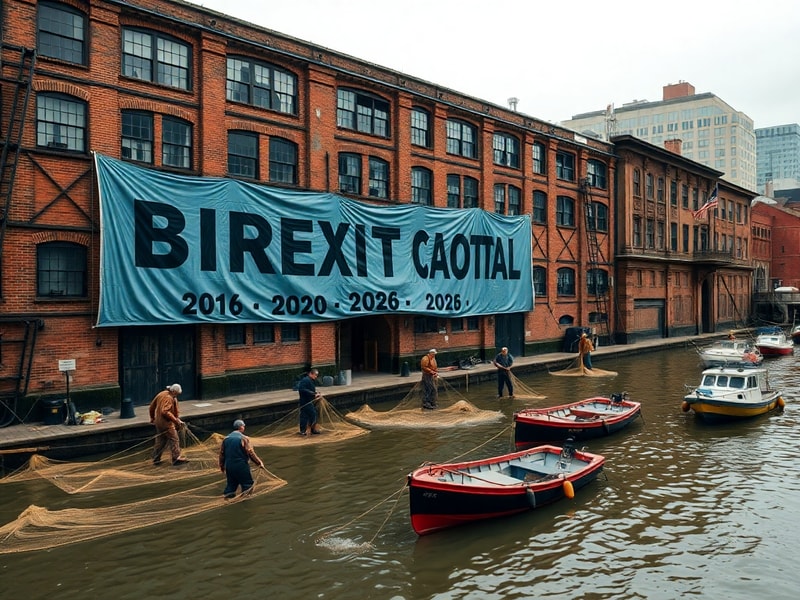
Ten years after the United Kingdom voted to leave the European Union, one American city has emerged as an unlikely symbol of the political upheaval that followed: Boston, Massachusetts. While London and other major cities saw protests and political realignment, Boston became a focal point for Brexit-related debate, investment shifts, and cultural exchanges that reshaped local industries. The city’s connection to Brexit wasn’t born from geography, but from a convergence of education, finance, and media—sectors that felt the tremors of geopolitical change long before the rest of the country.
The relationship began in 2016, when the UK’s referendum result sent shockwaves through universities and hospitals that relied on European research funding. Boston’s academic and medical institutions, including leading universities and world-renowned hospitals, suddenly faced uncertainty over grants, student exchanges, and collaborative projects. Within months, administrators were scrambling to secure alternative funding streams and reassure international faculty and students—many of whom had ties to EU nations.
This wasn’t just a logistical challenge. It was a cultural awakening. Boston’s identity as a global hub of innovation and learning collided with the reality of a fractured Europe. The city’s response—marked by adaptation, advocacy, and a surprising degree of international solidarity—helped redefine its role in the post-Brexit world.
The Economic Ripple Effect Across New England
Brexit’s impact on Boston extended far beyond academic corridors. The city’s financial sector, historically tied to transatlantic trade, felt immediate pressure. Investment firms that managed European portfolios had to restructure operations, relocate staff, or renegotiate contracts under new regulatory frameworks. Insurance companies and law firms expanded their Brexit advisory teams, turning Boston into an informal nerve center for firms navigating the UK’s departure from the single market.
Local businesses, especially those in food and hospitality, also felt the shift. Tourism from the UK dropped in the years following the referendum, particularly among older travelers who cited economic uncertainty and currency fluctuations as deterrents. Meanwhile, European entrepreneurs and professionals relocating to Boston brought new culinary influences and startup cultures, subtly transforming neighborhoods from the North End to Kendall Square.
According to a 2023 report by the Boston Planning & Development Agency, the city saw a 12% increase in European-owned businesses between 2017 and 2022, many in tech and biotech—industries that thrived on cross-border collaboration. Yet, these gains came with a cost: a persistent labor shortage in sectors like healthcare and construction, where many workers had traditionally come from EU countries.
The economic duality was stark. Boston gained prestige as a safe harbor for international talent, but it also shouldered the burden of integration, housing shortages, and rising living costs driven in part by global migration patterns.
Cultural Exchange or Cultural Divide?
Boston’s Brexit story is as much about culture as it is about economics. The city’s long-standing ties to Ireland—particularly through the Irish diaspora—gave it a unique vantage point on the UK’s departure from the EU. Irish pubs, cultural centers, and political organizations became informal meeting places for Brexit discussions, hosting debates between Irish expats, UK citizens, and American observers.
One of the most visible manifestations of this cultural exchange was the rise of “Brexit Brunch” events in South Boston and Brookline. These gatherings, often organized by expat communities, brought together people from across the political spectrum to discuss the referendum’s aftermath over coffee and pastries. While some events leaned into nostalgia and humor—mocking Boris Johnson’s gaffes or celebrating the resilience of Irish border communities—others turned into heated debates about sovereignty, identity, and belonging.
Boston’s arts scene also responded. The Institute of Contemporary Art hosted an exhibition in 2021 titled After the Wave: Art in the Age of Brexit, featuring works by European and American artists exploring themes of borders, migration, and fragmentation. Theater companies staged productions that reimagined Shakespeare’s histories in a post-Brexit Britain, drawing parallels between historical secession movements and modern nationalism.
Yet, not all cultural exchanges were harmonious. Some UK expats in Boston reported feeling increasingly isolated, caught between two cultures that had once felt compatible. Others embraced their new role as ambassadors, using their platforms to advocate for stronger US-UK-EU ties. The city became a microcosm of the broader transatlantic tension: a place where global politics played out in personal conversations, workplace dynamics, and community events.
Looking Ahead: Boston’s Role in a Fragmented World
A decade after the Brexit vote, Boston stands at a crossroads. The city has proven resilient, adapting its institutions, diversifying its economy, and fostering new international partnerships. Yet, challenges remain. The lingering effects of Brexit continue to complicate research collaborations, especially in fields like climate science and medicine, where European funding and data-sharing are critical.
Looking forward, Boston’s leaders are focused on three key priorities:
- Strengthening academic bridges: Universities are lobbying for streamlined visa processes and joint funding initiatives with EU counterparts to restore pre-2016 levels of collaboration.
- Expanding global trade networks: The city’s port authority is investing in new shipping routes to bypass potential bottlenecks in UK-EU trade, positioning Boston as a secondary hub for transatlantic commerce.
- Building inclusive communities: Nonprofits and cultural organizations are working to integrate UK and EU expats into Boston’s social fabric, ensuring that the city’s diversity becomes a strength rather than a point of division.
The city’s experience offers a lesson in resilience. While Boston didn’t choose to become the Brexit capital, it embraced the challenge with a pragmatic optimism that has defined its character for centuries. From the boardrooms of biotech firms to the classrooms of local high schools, the echoes of Brexit are still heard—but they are increasingly met with solutions rather than just questions.
As the world continues to grapple with the consequences of fragmentation, Boston’s story reminds us that even in an era of division, cities can choose to lead—not by resisting change, but by shaping it.