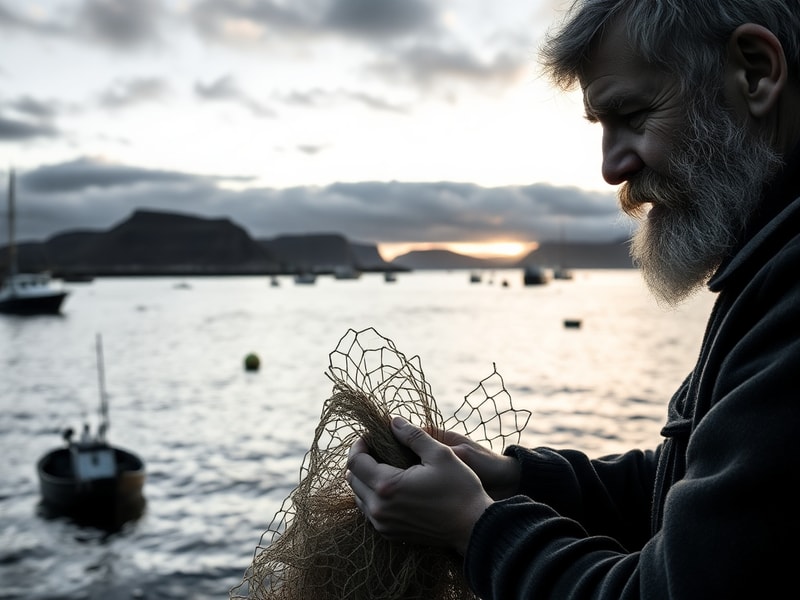
Iain Robertson’s work spans three decades of art dealing, writing, and curatorial practice, yet his influence remains understated in mainstream art discourse. Known for his sharp eye for emerging talent and uncompromising critiques, Robertson has shaped how collectors view contemporary art in Europe and beyond. His writing—published in Art journals and exhibition catalogues—often bridges the gap between academic theory and accessible commentary, making him a rare voice in the field. Whether dissecting market trends or championing overlooked artists, Robertson’s perspective is rooted in both experience and principle.
The Rise of a Quiet Observer
Born in Glasgow, Robertson began his career in the late 1980s, a time when the UK art scene was shifting from post-war austerity to a more international outlook. After studying art history at the University of Edinburgh, he cut his teeth working at Sotheby’s in London during the 1990s boom. That era saw auction houses redefine their roles, and Robertson witnessed firsthand how art became a financial asset as much as a cultural one. His early writing reflected this tension, critiquing the commercialisation of art while acknowledging its inevitability.
By the early 2000s, Robertson had transitioned from auction houses to independent curation and consultancy. His focus turned to the intersection of art and politics, particularly in former Eastern Bloc countries, where he documented how artists navigated censorship and economic transition. A notable project during this period was his collaboration with the Culture section of The Scotsman, where his essays on post-Soviet art offered readers a nuanced understanding of works that were often dismissed as too niche or political.
Writing That Challenges the Status Quo
Robertson’s critical voice is defined by its refusal to sugarcoat harsh realities. In his 2012 book The Art of the Twentieth Century: A History, he dismantled the myth of artistic genius by highlighting the systemic biases that have historically excluded women and artists of colour. The book, though academic in scope, was praised for its readability and became a staple in undergraduate courses. Critics noted that Robertson didn’t just recount art history—he interrogated it, asking uncomfortable questions about power and representation.
His journalism, too, has been unflinching. In a 2018 piece for The Art Newspaper, Robertson exposed the exploitation within artist residency programmes, revealing how financial barriers and nepotism limited access to opportunities. The article sparked debate in art schools across the UK, with some institutions revising their selection criteria in response. Robertson’s ability to blend investigative reporting with cultural analysis sets his work apart from more superficial takes on the art world.
Market Insights with a Moral Compass
Beyond criticism, Robertson has become a trusted advisor to collectors seeking art with both aesthetic and ethical value. His consultancy, launched in 2010, specialises in emerging markets, particularly in Africa and Southeast Asia, where he identifies artists poised to gain global recognition. Unlike many advisors who prioritise ROI, Robertson emphasises long-term cultural impact. “I’m not interested in flipping art,” he has said. “I want to invest in artists whose work will matter in 20 years.”
His 2020 report, The African Contemporary Art Market: Opportunities and Risks, was a landmark study that predicted the surge in demand for African art before it became a mainstream trend. Robertson argued that Western collectors were late to the game, but their interest would drive prices up—often to unsustainable levels. The report included case studies of artists like El Anatsui and Wangechi Mutu, whose markets he had tracked for years. His warnings about speculative bubbles in African art proved prescient when prices for some works dipped in 2022 amid global economic downturns.
Robertson’s approach to the market is pragmatic but principled. He advocates for transparency in pricing and provenance, two areas rife with opacity in the art world. In a 2021 interview with Artnet, he criticised auction houses for obscuring fees and commissions, which he argued distorted the true value of artworks. “The market thrives on illusion,” he noted. “My job is to pull back the curtain.”
The Next Chapter: Mentorship and Legacy
Now in his late 50s, Robertson is increasingly focused on mentoring the next generation of art professionals. He sits on the advisory board of the Education programme at the Royal College of Art and frequently lectures at universities across the UK. His teaching style is Socratic—he prefers to pose questions rather than lecture, encouraging students to think critically about their own biases and assumptions.
Robertson’s legacy will likely be defined by two things: his writing and his willingness to challenge the art world’s status quo. In an era where art fairs and Instagram aesthetics dominate the conversation, his work reminds us that art is more than a commodity or a status symbol. It is a reflection of society, a tool for resistance, and a record of human experience. As he once wrote, “Art is not a luxury. It is a necessity—like oxygen, like justice.”
For collectors, critics, and artists alike, Robertson offers a model of integrity. In a field often criticised for elitism and exclusivity, his career is a testament to the power of informed dissent. Whether through his books, articles, or advisory work, he continues to shape the conversation—one that is as rigorous as it is uncompromising.