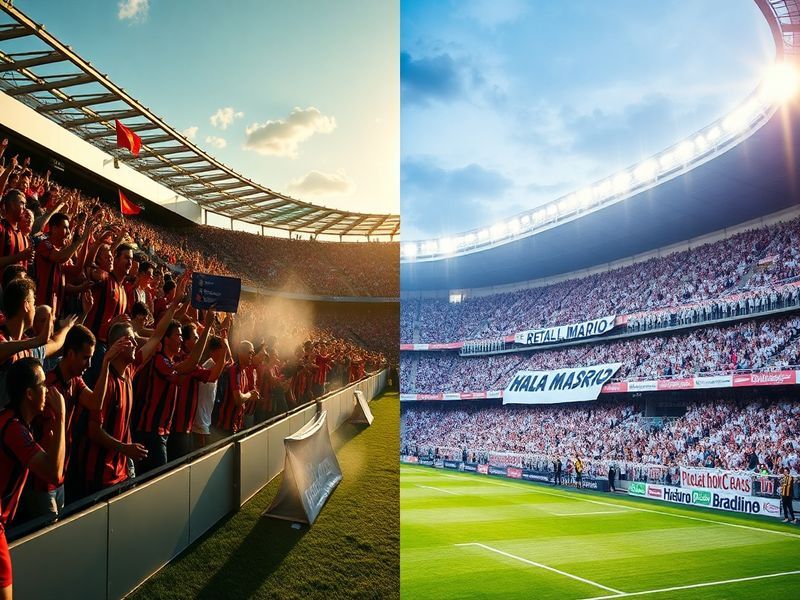
The BBC’s coverage of World Cup knockout stages has long been a benchmark for global sports broadcasting, blending raw emotion with razor-sharp analysis. As the tournament reaches its decisive phase, the public broadcaster’s approach—rooted in decades of tradition—continues to shape how millions experience football’s most intense moments. From the roar of stadiums in Qatar to the quiet intensity of commentary booths in London, the BBC’s World Cup knockout coverage is more than just a broadcast; it’s a cultural touchstone that connects disparate audiences through a shared love of the game.
How the BBC Transforms Knockouts into Unforgettable Narratives
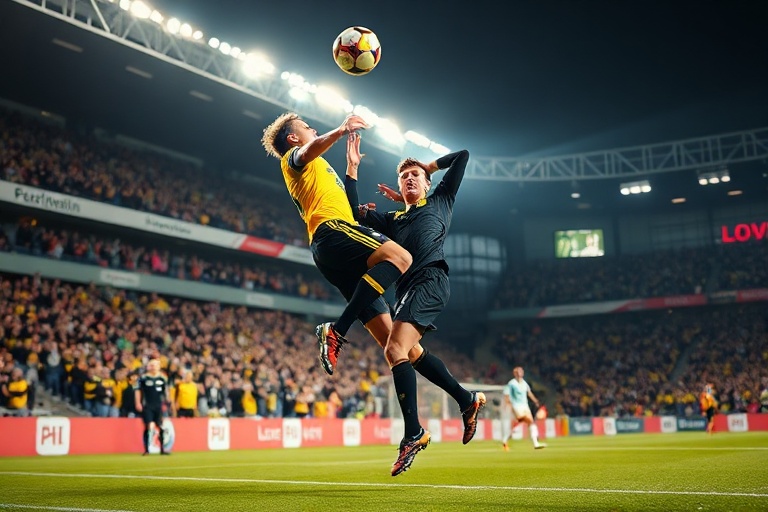
Knockout football is defined by its unpredictability, and the BBC’s coverage reflects that tension. Unlike group stages, where narratives can build gradually, the knockout rounds demand immediacy. Commentators like Guy Mowbray and Robyn Cowen pivot from descriptive storytelling to urgent, breathless delivery as penalties loom or late goals shatter dreams. This shift isn’t accidental. The BBC’s editorial team structures broadcasts to mirror the emotional arc of a match—slow buildup during regulation, escalating stakes in extra time, and explosive climax in shootouts.
The broadcaster’s signature style lies in its ability to humanize the drama. Close-up shots of players’ reactions, slow-motion replays of critical errors, and interviews with fans in stadiums create a multi-layered experience. For example, during England’s dramatic Euro 2020 penalty shootout, the BBC’s cameras lingered on Jordan Pickford’s shaking hands before the decisive save—a moment that turned a sporting event into a collective memory. Such choices aren’t just about entertainment; they’re about preserving the human element of sport in an era of algorithm-driven highlights.
Global Reach, Local Voices: The BBC’s Multilingual Approach
The World Cup knockout stages attract a global audience, and the BBC’s multilingual strategy ensures no fan is left behind. While the primary feed is in English, regional services like BBC Arabic, BBC Mundo, and BBC Afrique provide tailored commentary and analysis. This isn’t just translation—it’s cultural adaptation. Commentators in Doha, for instance, might emphasize different angles than their London-based counterparts, reflecting local football cultures. For Arabic-speaking audiences, the focus on North African teams like Morocco or Algeria adds layers of pride and pressure that resonate deeply.
The BBC’s World Service also plays a crucial role, broadcasting in over 40 languages. During the 2018 World Cup, Swahili commentary reached millions in East Africa, where football is both a passion and a unifying force. By integrating local voices, the BBC transforms a global event into a patchwork of personal stories. This approach underscores a key truth: football isn’t just a game; it’s a language that transcends borders when delivered with care.
The Role of Technology in Modern BBC Coverage
No discussion of the BBC’s World Cup knockout coverage would be complete without acknowledging technology. The broadcaster leverages cutting-edge tools to enhance viewer experience, from VAR replays dissected in real time to augmented reality graphics that explain tactical shifts. During the 2022 World Cup, the BBC’s “Super Sunday” broadcast featured a holographic pitch analysis, allowing pundits like Gary Lineker to illustrate formations in three dimensions. Such innovations aren’t gimmicks; they’re tools to help casual fans understand the nuances of high-pressure football.
Social media integration has also become central. While traditional TV remains the backbone, the BBC’s digital platforms—including Sports and live blogs—provide second-screen experiences. Fans can toggle between expert analysis and raw fan reactions, creating a feedback loop that enriches the viewing experience. For instance, during Spain’s 2022 knockout win over Morocco, the BBC’s Twitter feed highlighted cultural memes and fan chants, bridging the gap between the stadium and living rooms worldwide.
Yet, technology isn’t without its challenges. The pressure to innovate can sometimes overshadow the essence of the game. The BBC has faced criticism for over-reliance on graphics and data, with purists arguing that football’s magic lies in its unpredictability—not spreadsheets. The broadcaster’s response has been to strike a balance, using technology to illuminate rather than obscure the human drama at the heart of the tournament.
Cultural Impact: When Football Meets Storytelling
The BBC’s World Cup knockout coverage does more than report on matches; it curates cultural moments. Consider the 1990 World Cup semifinal between Italy and Argentina, where the BBC’s commentary by John Motson became the soundtrack to a generation’s heartbreak. Or the 2014 World Cup, where the broadcaster’s focus on Colombia’s James Rodríguez—who scored a stunning volley against Uruguay—turned a rising star into a global icon overnight. These aren’t just sporting highlights; they’re cultural artifacts that define eras.
The BBC’s approach also reflects broader societal shifts. In 2022, the broadcaster dedicated significant airtime to discussions about mental health, following England’s penalty heartbreak against Italy in Euro 2020. By interviewing psychologists and former players, the BBC framed football’s emotional toll as part of the narrative, prompting conversations beyond the pitch. This aligns with the modern audience’s demand for depth, not just spectacle.
Even the controversies become part of the story. The BBC’s robust editorial standards mean it doesn’t shy away from tough questions. During the 2022 World Cup, the broadcaster aired a documentary exploring Qatar’s human rights record, juxtaposing the tournament’s glamour with its ethical shadows. Such programming adds layers to the knockout stages, reminding viewers that football is never played in a vacuum.
A Legacy of Moments That Define Generations
As the BBC continues to evolve, its World Cup knockout coverage remains a testament to the power of public service broadcasting. In an era of fragmented media, the BBC offers something rare: a shared experience. Whether it’s the collective gasp during a missed penalty or the jubilant screams of a last-minute winner, the broadcaster turns 90 minutes into a communal ritual. This is the essence of the BBC’s mission—to inform, educate, and entertain, all while celebrating the universal language of football.
Looking ahead, the challenge for the BBC will be maintaining this balance in an increasingly crowded media landscape. Streaming services and social platforms offer instant gratification, but the BBC’s strength lies in its ability to weave individual moments into a larger tapestry. As long as football’s knockout stages produce drama, the BBC will be there to capture it—not just as a broadcaster, but as a storyteller.
The next time you watch a World Cup knockout match on the BBC, pay attention not just to the action, but to the layers beneath. The camera angles, the commentary choices, the cultural nods—all are deliberate. They’re the reason, decades later, we still remember where we were when a certain goal was scored or a penalty was saved. That’s the magic of the BBC’s World Cup knockout coverage: it turns fleeting moments into timeless memories.