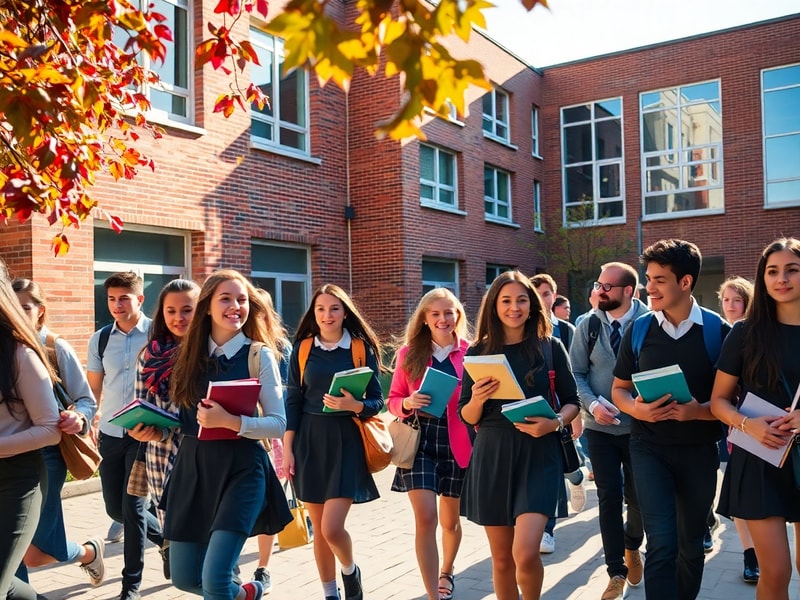
Secondary school represents a pivotal stage in education, bridging the gap between primary learning and advanced academic or vocational pathways. Globally, this phase typically spans ages 11 to 18, though the structure and emphasis vary significantly by country. From the rigorous college-preparatory systems of East Asia to the more flexible curricula of Western nations, secondary education shapes not only academic trajectories but also social and cultural development.
The Global Landscape of Secondary Education
Around the world, secondary education systems reflect distinct cultural priorities and economic needs. In many European countries, such as Germany and the Netherlands, vocational training pathways coexist with academic tracks, allowing students to specialize early. Meanwhile, countries like Finland and South Korea prioritize universal access to high-quality secondary education, often with standardized testing systems that determine university admissions. In contrast, nations like the United States and Canada operate under a more decentralized model, where local school districts influence curriculum and funding.
Cultural attitudes toward education also play a defining role. In Japan, the pressure to excel in secondary school exams is intense, often leading to long hours of study and supplementary juku (cram school) attendance. Conversely, Scandinavian countries emphasize holistic development, with less emphasis on high-stakes testing and more on student well-being. These differences underscore how secondary education is not merely an academic phase but a reflection of societal values.
Challenges and Inequities in Secondary Schooling
Despite its importance, secondary education faces persistent challenges worldwide. One of the most pressing is inequity in access and quality. In low-income regions, such as sub-Saharan Africa, secondary school enrollment rates lag far behind primary levels due to factors like poverty, gender discrimination, and inadequate infrastructure. Girls, in particular, are disproportionately affected; UNESCO estimates that 130 million girls worldwide are out of school, with many dropping out during adolescence.
Another critical issue is the digital divide. The COVID-19 pandemic exposed vast disparities in access to technology and internet connectivity, particularly in rural and underserved communities. While urban students adapted to online learning with relative ease, many rural learners struggled with inconsistent electricity and limited device availability. Even in wealthier nations, unequal distribution of resources—such as advanced placement courses or extracurricular programs—can perpetuate socioeconomic gaps.
The mental health of secondary school students has also emerged as a growing concern. Academic pressure, social media influence, and uncertain futures contribute to rising rates of anxiety and depression among adolescents. Countries like the United Kingdom and Australia have responded by integrating mental health support into school policies, but systemic change remains slow in many regions.
Curriculum and Extracurriculars: Beyond the Classroom
Secondary school curricula typically include core subjects like mathematics, science, and language arts, but the breadth of offerings varies widely. In France, the lycée system divides students into literary, scientific, or economic tracks by age 15, a model that aligns with the country’s emphasis on academic specialization. In India, the Central Board of Secondary Education (CBSE) and state boards like the Maharashtra SSC offer diverse curricula, though exam-centric learning often dominates. Meanwhile, countries like Canada and Australia adopt more flexible approaches, with elective courses in arts, sports, and technology.
Extracurricular activities play an equally vital role in shaping student experiences. Sports teams, debate clubs, and volunteer organizations provide avenues for personal growth and skill development. In the United States, high school athletics are a cultural cornerstone, with varsity teams often drawing significant community support. Similarly, in the UK, extracurriculars like the Duke of Edinburgh’s Award program encourage leadership and community engagement. These activities not only enrich education but also foster social bonds and resilience.
Technology integration is another evolving aspect of secondary education. Coding classes, digital media workshops, and robotics clubs are becoming more common, reflecting the demands of a tech-driven economy. Schools in South Korea and Estonia lead in digital literacy, offering students hands-on experience with coding and cybersecurity from an early age. However, balancing screen time with traditional learning remains a topic of debate among educators and parents alike.
Preparing for the Future: Post-Secondary Pathways
The ultimate goal of secondary education is to prepare students for their next steps, whether in higher education, vocational training, or the workforce. University preparation varies widely, with some countries relying on centralized exams—like China’s Gaokao or India’s JEE Main—while others, such as the UK, use teacher assessments and personal statements. Vocational pathways, including apprenticeships and technical colleges, offer alternatives for students who prefer hands-on learning. Germany’s dual education system, which combines classroom instruction with paid apprenticeships, is often cited as a model for bridging academic and career readiness.
Globalization has further complicated post-secondary planning. International schools and exchange programs have grown in popularity, exposing students to diverse cultures and academic systems. Programs like the International Baccalaureate (IB) and Advanced Placement (AP) courses are designed to provide globally recognized qualifications, though they can be costly and inaccessible to many. Meanwhile, the rise of online education platforms, such as Coursera and Khan Academy, has democratized access to supplementary learning, though they rarely replace traditional secondary education.
For students navigating this transition, mentorship and career counseling are invaluable. Schools that prioritize guidance counselors and alumni networks tend to see higher rates of successful post-secondary placements. Yet, in under-resourced systems, such support is often lacking, leaving students to navigate complex decisions without adequate preparation.
A Balancing Act: What Secondary School Gets Right—and Wrong
Secondary school remains one of the most formative periods of a young person’s life, offering both opportunities and obstacles. On the positive side, it provides a structured environment for intellectual and social development, exposing students to new ideas and perspectives. The friendships formed, lessons learned, and challenges overcome can shape lifelong values and aspirations. For many, secondary school is where they discover their passions, whether in sports, arts, or academics.
Yet, the system is far from perfect. The pressure to perform academically can stifle creativity and well-being, particularly in high-stakes environments. Standardized testing, while useful for measuring progress, often fails to capture the full range of a student’s abilities. Moreover, the one-size-fits-all approach to education overlooks individual learning styles and needs, leaving some students disengaged or left behind.
As secondary education evolves, policymakers, educators, and communities must collaborate to address these challenges. Emphasizing equity, mental health, and flexible learning pathways will be key to ensuring that all students—regardless of background—can thrive. For now, secondary school remains a critical, if imperfect, stepping stone toward adulthood. Its success or failure will continue to ripple through societies for generations to come.