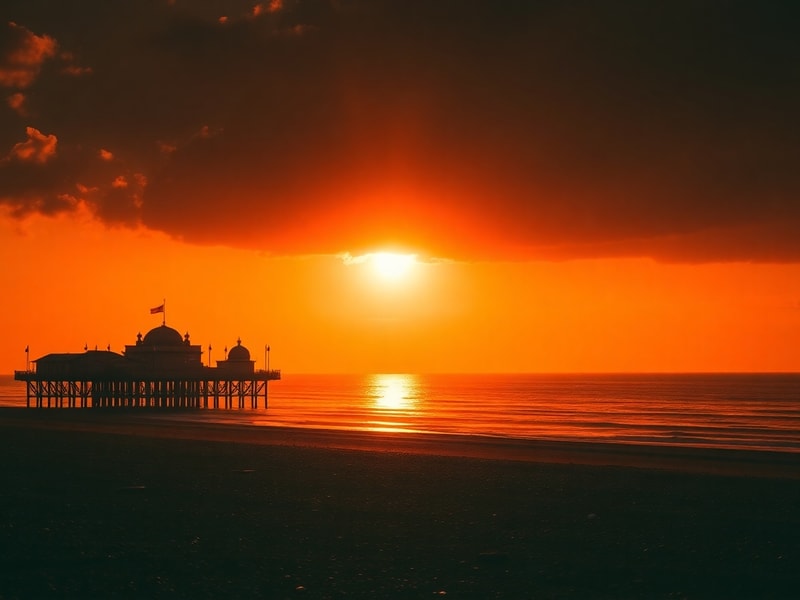
Brighton Endures First-Ever Red Heat Warning: What Happened and What’s Next
The UK’s south coast turned scarlet this week as the Met Office issued its first-ever Red Extreme Heat Warning for southern England, and Brighton bore the brunt of the mercury’s surge. Temperatures in the city climbed past 38 °C on Tuesday, shattering local records and forcing the council to open emergency cooling centres in libraries and leisure centres. While the rest of the country watched from air-conditioned living rooms, Brighton’s pebble beaches and seafront bars emptied as residents sought shade wherever they could find it.
Why Brighton felt the heat most
Brighton’s geography makes it uniquely vulnerable when tropical air masses slide north from Iberia. The city sits on a narrow coastal plain hemmed in by the South Downs, so hot air pools inland while sea breezes struggle to push it back out. On Tuesday afternoon, the air temperature at Shoreham-by-Sea, just five miles west, hit 39.1 °C—officially the hottest spot in the UK that day.
Urban heat-island effects amplified the problem. Brighton’s dense Victorian terraces, packed with dark brick and tarmac, absorb and re-radiate heat long after sunset. Night-time temperatures only dipped to 24 °C, denying residents the usual coastal reprieve. Meanwhile, the A23 trunk road acted like a heat chimney, funneling warm air straight into the city centre.
The Red Warning wasn’t just a meteorological footnote; it triggered immediate public-health responses. St John Ambulance volunteers reported a 40 % jump in heat-exhaustion call-outs, while local GPs warned that patients with chronic kidney disease and heart failure were arriving in distress. Brighton & Sussex University Hospitals cancelled non-urgent operations to free up critical care beds, a decision that echoed similar moves in London and Manchester.
Economic ripple effects on the seafront
The tourism sector, which normally injects £1.2 bn into Brighton’s economy each summer, took an immediate hit. B&B owners reported 60 % cancellation rates for the Tuesday-Wednesday window, and the Palace Pier funfair stood half-empty as families stayed inland. Yet not all businesses suffered: ice-cream vans on the seafront did a roaring trade, while local breweries reported a surge in cold-pint sales.
Transport networks also felt the strain. Southern Railway cancelled several afternoon services after trackside sensors detected buckling risks on the Brighton main line. Passengers were left stranded for up to two hours, prompting calls for better climate-proofing of the ageing infrastructure. Meanwhile, Brighton & Hove Buses switched to articulated vehicles to cope with the extra load, but still struggled with overheated engines.
The heatwave exposed a wider infrastructure fragility. Brighton’s Victorian sewers, designed for 19th-century rainfall patterns, were overwhelmed by sudden downpours that followed the extreme heat on Wednesday evening. Flash floods in the North Laine district forced shopkeepers to move stock to upper floors and left residents without power for three hours.
What comes next for Brighton’s climate resilience
Brighton & Hove City Council has already earmarked £12 m for a Climate Resilience Action Plan, but the Red Warning showed that existing measures are not enough. Key priorities include:
- Expanding street-level tree canopy from the current 15 % to 30 % by 2030, prioritising east-west routes that catch sea breezes.
- Retrofitting 2,000 homes with reflective roof coatings and external shutters through a new council grant scheme.
- Installing misting stations at major transport interchanges and hospital entrances.
- Creating a real-time heat-risk dashboard that integrates Met Office data with NHS patient records.
Brighton’s experience is a microcosm of what coastal cities worldwide can expect as global temperatures rise. The Red Warning may have been a one-off event, but climate projections suggest that by 2050 Brighton could see three to four such episodes every decade. Local leaders argue that adaptation must move faster than the mercury.
Lessons for other UK coastal cities
The episode offers broader lessons for seaside resorts from Bournemouth to Blackpool. Coastal towns often assume they are “naturally air-conditioned,” yet the Brighton case proves that urban form and infrastructure can override geography. Other cities might consider:
- Micro-climate mapping: Using thermal imaging drones to identify heat islands before they become public-health crises.
- Cool routes: Designating shaded pedestrian corridors that link homes to medical facilities during extreme heat.
- Community heat plans: Training local volunteers to recognise heat-stroke symptoms and deploy cooling packs.
- Building regulations: Mandating green roofs or solar-reflective materials in new developments within 1 km of the coast.
Brighton’s Red Warning may have faded, but the questions it raises about urban resilience are here to stay. If the city can turn this crisis into a catalyst for change, other coastal communities may follow suit before the next heatwave arrives.