The UK’s first-ever red warning for heat has been issued for southern England, and Brighton finds itself at the epicentre of the crisis. Temperatures are expected to soar above 40°C in some parts of the south-east, with the Met Office warning of “illness and danger to life.” Brighton, with its densely packed seafront terraces and limited green space, is particularly vulnerable. Residents and visitors are being urged to prepare for extreme conditions that could strain local services, overwhelm emergency responders, and push the city’s infrastructure to its limits.
Why Brighton is at the highest risk
Brighton’s geography and urban design make it especially susceptible to extreme heat. The city’s compact layout, with narrow streets and high-rise buildings, creates “urban heat islands” where temperatures can be several degrees higher than in surrounding areas. The seafront, while a draw for tourists, offers little respite—pavements and concrete absorb and radiate heat long after the sun sets. Public transport, including the overground rail lines that connect Brighton to London, is also at risk of buckling under extreme heat, potentially disrupting travel for thousands of commuters and holidaymakers.
Local health services are preparing for an influx of heat-related illnesses. Hospitals and GP surgeries in Brighton and Hove have already activated their heatwave plans, which include opening cooling centres and increasing staffing levels. But the strain on the NHS could be compounded by staff shortages and the ongoing backlog from the pandemic. Social care providers, too, are on high alert, with care homes particularly vulnerable to rising temperatures.
What to expect over the coming days
The red warning, the highest level issued by the Met Office, is in place from Sunday through Tuesday, with peak temperatures expected on Monday. The following impacts are anticipated across Brighton and the wider region:
- Road surfaces could melt, leading to potholes and potential vehicle damage.
- Rail services may be suspended or delayed due to buckling tracks and overhead power lines sagging in the heat.
- Water usage could surge by up to 20%, risking localised shortages and hosepipe bans.
- Power outages may occur as demand for air conditioning and cooling systems peaks.
- Vulnerable groups—older people, young children, and those with pre-existing health conditions—are at the highest risk of heat exhaustion or heatstroke.
Emergency services have warned that 999 calls related to heat could triple during the peak of the warning. The fire service has already announced a temporary ban on leisure fires and bonfires, while beach safety teams are preparing for an increase in drownings as people seek to cool off in the sea. The Royal Life Saving Society has issued a stark reminder: “Cold water shock can kill in seconds. Don’t risk it.”
How businesses and organisations are responding
Brighton’s hospitality sector, which relies heavily on outdoor dining and events, is scrambling to adapt. Pubs and restaurants are installing shade sails, increasing indoor seating, and offering free water to customers. Some venues are even closing early to avoid the hottest part of the day. Local breweries have reported a surge in demand for ice-cold drinks, with one telling us that sales of lollies and slushies have doubled in the last 48 hours.
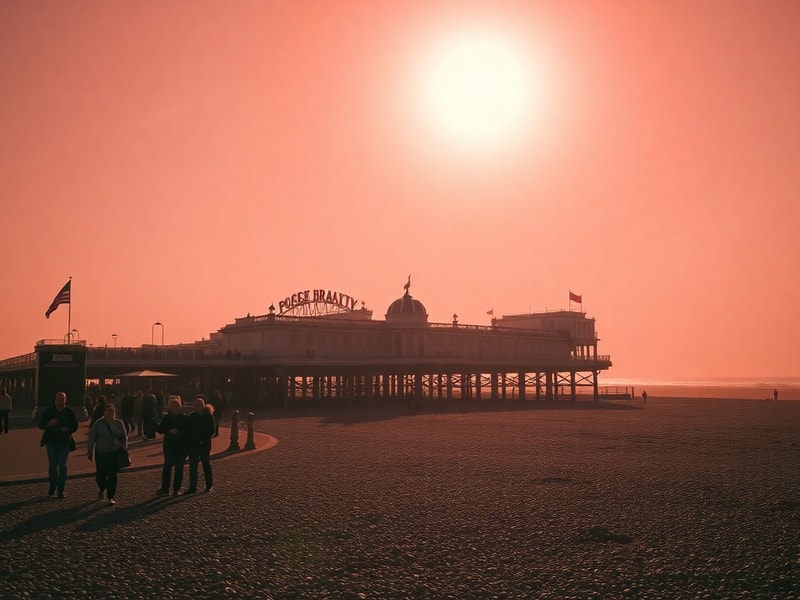
Meanwhile, cultural institutions are taking a more proactive approach. The Brighton Dome has extended its opening hours to provide air-conditioned spaces for the public, while the Royal Pavilion is offering discounted entry to those seeking refuge from the heat. Even the city’s iconic piers are stepping up: the West Pier’s ruins are being monitored for heat damage, and staff at the Palace Pier have installed misting fans to help visitors stay cool.
Retailers are also feeling the heat—literally. Supermarkets have reported a 40% increase in sales of fans, portable air conditioners, and electrolyte drinks. Pharmacies are running low on sun cream and after-sun lotion, with some reporting shortages of high-factor SPF. The local council has set up a dedicated heatwave helpline and is distributing free water bottles at key locations across the city.
Longer-term implications for Brighton’s future
This week’s red warning isn’t just a temporary crisis—it’s a glimpse into Brighton’s future. Climate projections suggest that extreme heat events will become more frequent and more intense as global temperatures rise. By 2050, Brighton could experience up to ten days per year with temperatures above 30°C, compared to just one or two today. This poses a fundamental challenge to the city’s identity as a year-round tourist destination and a desirable place to live.
Urban planners are already considering radical solutions. Ideas on the table include retrofitting buildings with green roofs, expanding shaded pedestrian networks, and increasing the number of public water fountains. The council has also floated the idea of a “cool routes” network, guiding residents and visitors through the city’s greenest and most shaded paths. But these measures require significant investment and long-term planning—something Brighton, like many local authorities, struggles to fund.
There’s also a growing debate about whether the city’s tourism-driven economy is sustainable in a warming world. Brighton’s appeal has long been its combination of coastal beauty, vibrant culture, and mild climate. But if extreme heat becomes the norm during the peak summer months, could tourists start looking elsewhere for their holidays? Some local businesses are already diversifying, shifting their focus to autumn and winter tourism or even exploring indoor entertainment options that are less weather-dependent.
The broader implications extend beyond Brighton. This week’s red warning is a wake-up call for the entire country. The UK’s infrastructure, from transport to healthcare, was not designed with extreme heat in mind. As climate change accelerates, the cost of adapting will be enormous. The government’s recent heatwave plan for England acknowledges that “urgent action” is needed, but critics argue that the response so far has been piecemeal and underfunded.
For Brighton, the immediate priority is getting through the next few days safely. But the bigger question is how the city—and the country—will adapt to a hotter, more volatile climate. One thing is clear: the red warning is not just a weather alert. It’s a sign of the challenges to come.
For those in Brighton, the message is simple: stay hydrated, check on vulnerable neighbours, and avoid unnecessary travel during the hottest part of the day. And if you’re planning to head to the beach, remember—water safety is just as important as staying cool.
For more on how extreme weather is reshaping coastal cities, visit our Travel section. To understand the broader impact of climate change on UK infrastructure, explore our News category.