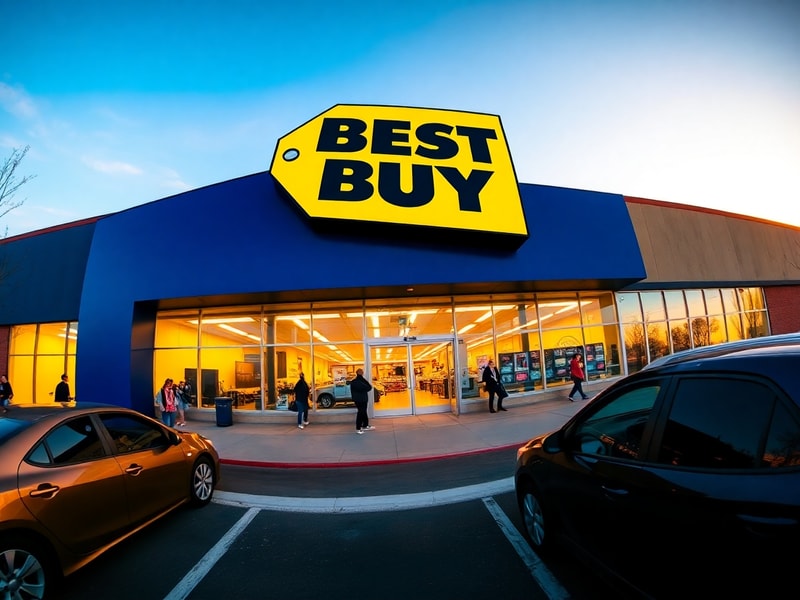
Best Buy’s journey from a modest audio equipment retailer to a retail powerhouse reshaping consumer electronics in America is a study in adaptability. Founded in 1966 as Sound of Music in Minnesota, the company rebranded in 1983 and expanded rapidly through the 1990s and 2000s. By leveraging a unique combination of in-store expertise and e-commerce integration, Best Buy defied the retail apocalypse that claimed many of its competitors. Today, it remains one of the few national electronics chains still standing, a testament to strategic pivots and customer-centric innovation.
Why Best Buy Still Matters in a Fragmented Retail Landscape
The decline of big-box retail has been well-documented, yet Best Buy stands out as an exception. Unlike Circuit City or RadioShack, which collapsed under pressure from online retailers and shifting consumer habits, Best Buy adapted. Its survival hinges on three core strategies: service differentiation, price matching, and a focus on essential tech categories like computers, appliances, and home theater systems.
Service has become Best Buy’s strongest differentiator. The Geek Squad, launched in 1994 and acquired in 2002, transformed the company from a transactional retailer into a tech partner. Customers don’t just buy a TV at Best Buy—they can have it installed, connected, and optimized. This service layer creates stickiness that pure online retailers cannot match. Geek Squad’s revenue now exceeds $1 billion annually, underscoring its role as a cornerstone of Best Buy’s business model.
Price matching also played a crucial role. In 2012, Best Buy launched its “Price Match Guarantee,” matching online competitors within 14 days of purchase. This move neutralized Amazon’s pricing advantage and reassured customers that they wouldn’t overpay by shopping in-store. The policy reinforced Best Buy’s credibility as a trusted destination, not just a showroom for online purchases.
Best Buy’s focus on essential categories has further insulated it from disruption. While standalone stores for gaming (GameStop) or consumer electronics (hhgregg) faltered, Best Buy’s broad assortment—ranging from laptops to smart home devices—kept foot traffic steady. The company also divested unprofitable segments, such as its mobile phone business, which was sold to Amazon in 2022, allowing it to concentrate on higher-margin categories.
A Look Inside Best Buy’s Business Model and Financial Health
Best Buy’s financial resilience is reflected in its recent performance. In fiscal year 2023, the company reported net earnings of $1.4 billion on $51.7 billion in revenue, with a gross margin of 25.1%. This profitability is particularly notable given the inflationary pressures and supply chain challenges that plagued retailers in 2022 and 2023.
The company’s success stems from a diversified revenue stream that extends beyond traditional retail. Key components include:
- Product Sales: Core categories like computing (28% of revenue), appliances (16%), and mobile phones (10%) drive the majority of sales.
- Services: Geek Squad and Best Buy Total Tech memberships generate recurring revenue and higher customer lifetime value.
- E-commerce: Online sales account for nearly 30% of total revenue, with curbside pickup and same-day delivery enhancing convenience.
- Private Label Brands: Products like Insignia (electronics) and Dynex (cables) offer higher margins and exclusivity.
Best Buy’s membership program, Total Tech, is a standout innovation. For $199.99 annually, members receive free Geek Squad services, extended warranties, and discounts. The program boasts over 6 million subscribers, a figure that underscores its appeal in an era of subscription fatigue. Total Tech members spend nearly three times more than non-members, highlighting the program’s effectiveness in driving loyalty.
The company’s real estate strategy also deserves attention. Unlike competitors that over-expanded, Best Buy has maintained a disciplined footprint. Its 1,000-plus U.S. stores are strategically located in high-traffic areas, often in suburban shopping centers where foot traffic remains strong. The stores are designed for efficiency, with open layouts that encourage browsing and interactive displays that showcase new technology.
Best Buy’s Role in the Broader Retail and Tech Ecosystem
Best Buy’s influence extends beyond its balance sheet. As a major retailer of technology products, it plays a pivotal role in shaping consumer behavior and industry trends. For example, Best Buy’s emphasis on sustainability has pushed suppliers to adopt greener practices. The company’s “Circular Economy” initiative encourages customers to trade in old electronics, which are then refurbished or recycled. In 2023, Best Buy collected over 100 million pounds of electronics and appliances for recycling, reinforcing its commitment to environmental responsibility.
The company also serves as a testing ground for emerging technologies. Best Buy’s stores often feature the latest gadgets, from AI-powered speakers to 8K televisions, giving consumers hands-on access to innovations they might otherwise hesitate to purchase online. This function is critical in an era where consumers are bombarded with options but crave tangible experiences before committing to high-ticket items.
Best Buy’s relationship with manufacturers is another layer of its ecosystem. The company’s scale allows it to negotiate favorable terms with suppliers, but it also wields influence as a gatekeeper to American consumers. For instance, Best Buy’s decision to prominently feature certain brands in its stores can significantly boost visibility and sales for those manufacturers. This dynamic creates a symbiotic relationship where Best Buy acts as both a retailer and a curator of consumer tech trends.
However, Best Buy’s position is not without challenges. The rise of direct-to-consumer brands, such as Apple and Tesla, has eroded its exclusivity in certain categories. Additionally, the shift toward subscription-based models for software and services (e.g., Adobe Creative Cloud) reduces the need for traditional hardware purchases. Best Buy has responded by expanding its service offerings, including home automation installations and smart home consultations, but the competitive landscape remains intense.
What’s Next for Best Buy? Emerging Opportunities and Risks
Looking ahead, Best Buy faces a dual imperative: leveraging its strengths while navigating disruptive forces. One opportunity lies in the aging housing market. As baby boomers downsize and millennials invest in home improvement, Best Buy is well-positioned to capitalize on the demand for smart home devices, appliances, and home theater systems. The company’s recent partnership with Google to sell Nest products and its expansion into appliance repair services reflect this strategic pivot.
Another growth avenue is healthcare technology. Best Buy’s acquisition of GreatCall in 2018 and its expansion into health-focused wearables and monitoring devices align with the growing demand for aging-in-place solutions. The company’s ability to integrate these products with its Geek Squad services could create a new revenue stream in a market projected to reach $280 billion by 2028.
Yet, risks loom large. The continued dominance of Amazon and Walmart in e-commerce poses a persistent threat. While Best Buy’s in-store experience is a differentiator, it must invest heavily in digital capabilities to remain competitive. The company’s recent $400 million investment in supply chain automation and its acquisition of Current Health, a remote patient monitoring company, signal a commitment to staying ahead of the curve.
Regulatory challenges also loom. The Biden administration’s focus on antitrust enforcement could impact Best Buy’s supplier negotiations or its partnerships with tech giants. Additionally, supply chain disruptions and geopolitical tensions may continue to strain inventory levels and pricing strategies.
To sustain its relevance, Best Buy must double down on its service-led model. The Total Tech membership program is a strong start, but the company could expand into subscription-based tech support or bundled service packages. It should also explore partnerships with telecom providers to offer integrated home connectivity solutions, further embedding itself in the daily lives of its customers.
Ultimately, Best Buy’s story is one of reinvention. In an era where retail is either going digital or disappearing, Best Buy has carved out a unique niche by blending physical presence with service-driven value. Its ability to evolve—whether through Geek Squad, sustainability initiatives, or healthcare tech—demonstrates that even in mature industries, innovation can redefine a company’s trajectory. For consumers and investors alike, Best Buy remains a bellwether of how traditional retail can not only survive but thrive in the 21st century.