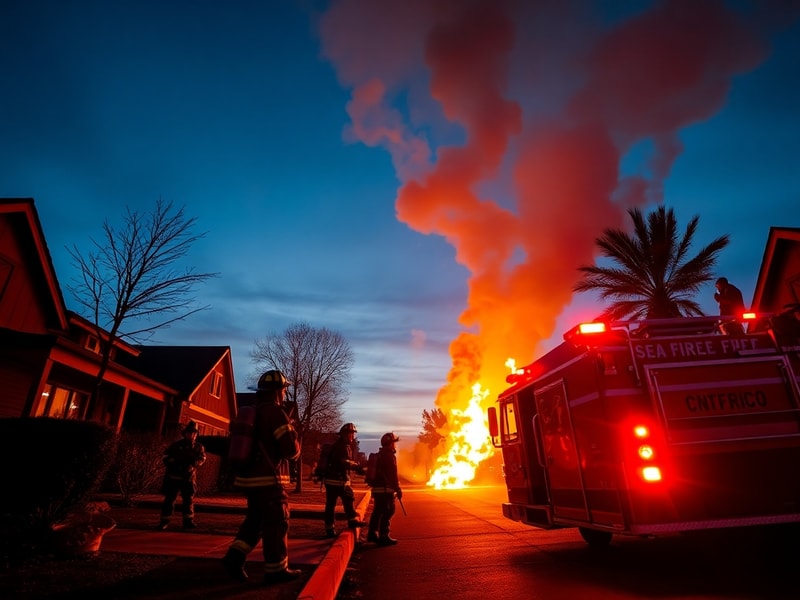
How San Jose Fire Department Adapts to Wildfires and Urban Risks
San Jose’s Firefighting Force: Behind the Blazes That Define a City
Few cities in California face the dual pressures of urban density and wildland-urban interface quite like San Jose. Nestled against the Santa Cruz Mountains and sprawling into the South Bay’s tech-laden valleys, the city sits at the crossroads of nature and development. For its fire department, that means battling both the fast-moving urban fires that can race through condominium complexes and the slow-burning vegetation fires that creep down from the hills after years of drought. The San Jose Fire Department (SJFD) isn’t just responding to emergencies—it’s navigating a changing climate, a growing population, and the legacy of decades of land-use decisions that now demand new strategies.
Over the past five years, SJFD has handled an average of 2,800 fire incidents annually, including structure fires, medical emergencies, hazardous material spills, and wildfires. While high-profile blazes like the 2020 CZU Lightning Complex fires to the south or the 2017 Coyote Creek Fire closer to home often dominate headlines, it’s the everyday calls—like the apartment fire on East Santa Clara Street in March 2023 that displaced 14 residents—that reveal the true scope of the department’s workload. These events underscore a critical truth: the fire service in San Jose is not just reactive; it’s evolving into a hybrid model that blends traditional firefighting with emergency medical care, disaster preparedness, and community resilience.
The Engine Room: How San Jose’s Fire Department Operates
SJFD operates with a fleet of 44 fire stations strategically placed across 179 square miles. Each station houses engines, trucks, and rescue units staffed by around 800 sworn personnel. The department’s leadership emphasizes a “community risk reduction” approach, which means more than just putting out fires—it’s about preventing them before they start.
Key operational features include:
- Rapid response times: SJFD aims for a four-minute response time in urban areas and six minutes in more remote zones—a benchmark it meets 90% of the time.
- Wildfire preparedness: With over 15,000 homes in the wildland-urban interface, SJFD has expanded its brush units and conducts annual fuel reduction projects.
- Medical integration: Nearly 80% of all calls are EMS-related, leading to cross-trained firefighter-paramedics who handle everything from heart attacks to car accidents.
- Technology adoption: From real-time GIS mapping to AI-driven dispatch systems, SJFD has become a testbed for innovation in emergency response.
Yet operation is only half the story. Funding, staffing shortages, and the mental health toll on firefighters are reshaping how the department functions. Budget constraints in 2022 led to station closures during peak wildfire season, forcing a reallocation of resources. Meanwhile, recruitment and retention have become pressing issues as younger generations weigh public service against the allure of Silicon Valley’s tech jobs.
Lessons from the Flames: What Recent Fires Reveal
The 2020 SCU Lightning Complex Fire burned over 396,000 acres across five counties, including parts of San Jose’s eastern foothills. Though the city itself was spared the worst, the event exposed vulnerabilities in regional coordination and evacuation planning. The fire’s rapid spread during dry lightning storms highlighted the need for better early warning systems and inter-agency communication.
The 2022 Berryessa Fire, which scorched 76 acres near Alum Rock Park, served as a reminder of how quickly urban-wildland fires can threaten homes. Despite its relatively small size, the blaze required the evacuation of 500 residents and the deployment of SJFD’s new wildland fire engines, equipped with bulldozer blades and water tenders. Fire officials later attributed the containment to aggressive initial attack—a strategy that saved structures but strained personnel.
These incidents reveal a troubling pattern: the frequency of extreme fire weather events is increasing, while the window for safe intervention is shrinking. Firefighters are now trained not just to extinguish flames, but to assess risk in real time—deciding, for example, whether to defend a home or prioritize evacuation routes. That calculus often depends on wind speed, humidity, and the availability of water sources—factors increasingly influenced by climate change.
As San Jose continues to expand, the fire department is also grappling with the consequences of unchecked development. Hillsides cleared for luxury homes now sit adjacent to dense chaparral, creating a tinderbox effect. Firebreaks and defensible space ordinances are in place, but enforcement remains inconsistent. In some cases, homeowners resist clearing vegetation due to aesthetic concerns or cost, leaving firefighters with limited options when flames approach.
Beyond the Hose: The Human Cost and Public Health Impact
The psychological toll on firefighters is rarely discussed but deeply felt. A 2023 SJFD internal survey found that 42% of personnel reported symptoms of PTSD, depression, or anxiety—rates higher than the national average for first responders. The department has since launched peer support programs and partnered with Stanford’s Wellness Initiative to provide mental health resources, but stigma persists.
Firefighters also face long-term health risks from exposure to smoke, chemicals, and extreme heat. Studies link firefighting to higher rates of cancer and cardiovascular disease, prompting SJFD to implement stricter decontamination protocols and mandatory medical screenings. Still, concerns remain that current protections lag behind scientific understanding of occupational hazards.
For the communities they serve, SJFD’s role extends beyond emergencies. Fire stations serve as emergency shelters during power outages, distribution points for N95 masks during wildfire season, and even vaccination sites during public health crises. In underserved neighborhoods like East San Jose, fire stations are often the most visible symbols of public safety—places where trust is built one interaction at a time.
Yet trust is fragile. High-profile incidents, such as the 2021 fatal shooting of a homeless man by San Jose police officers during a welfare check outside a fire station, have strained community relations. While the fire department was not directly involved, the incident highlighted the need for clearer communication between first responders and residents, especially in marginalized communities.
A New Blueprint for Firefighting in the 21st Century
The future of SJFD will be shaped by three converging forces: climate change, technological innovation, and social equity. To adapt, the department is piloting predictive modeling tools that use weather data, vegetation moisture levels, and historical fire patterns to forecast ignition risks up to 72 hours in advance. These tools could allow for targeted pre-positioning of crews and equipment, potentially saving millions in property damage.
On the technology front, SJFD is exploring drone surveillance for real-time fire mapping and robotics for hazardous material incidents. These innovations promise faster, safer responses but also raise questions about cost, training, and the potential for job displacement.
Equity remains the most complex challenge. Fire stations are unevenly distributed across the city, with some affluent neighborhoods enjoying rapid response times while lower-income areas face longer waits. SJFD has committed to a station equity analysis by 2025, aiming to close these gaps through targeted investments and staffing adjustments. Community outreach programs, such as fire safety workshops in multiple languages, are also part of the strategy to ensure no resident is left unprepared.
Ultimately, the story of San Jose’s fire service is one of adaptation. It’s a story of firefighters who are now paramedics, dispatchers who are data analysts, and a city that is learning to live with fire—not just as an enemy to defeat, but as a force to understand and manage. As temperatures rise and development sprawls, the decisions made today by SJFD will echo for decades. They won’t just determine how quickly a fire is put out—they’ll shape the kind of city San Jose becomes.