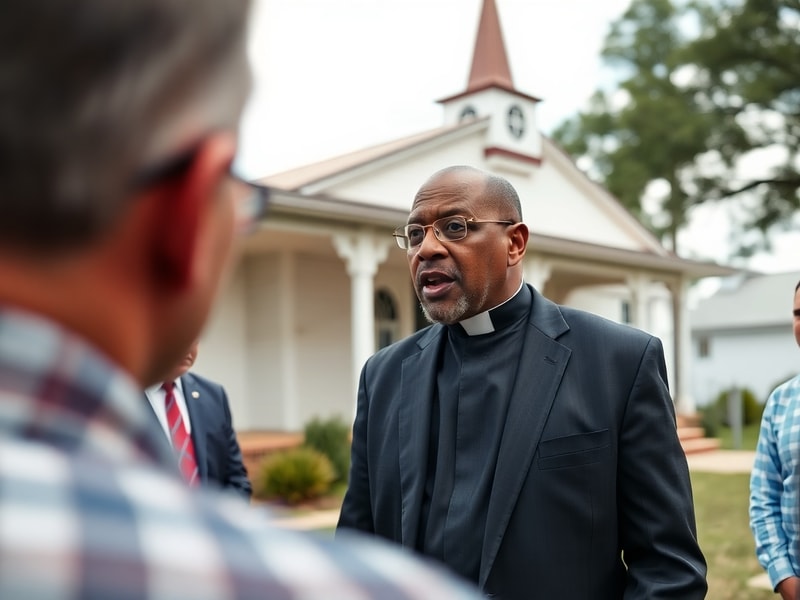
Pastor Tony Spell has become a polarizing figure in American religious and political discourse, drawing attention for his unapologetic approach to faith and his willingness to defy public health guidelines during the COVID-19 pandemic. As the pastor of Life Tabernacle Church in Baton Rouge, Louisiana, Spell’s actions—including holding large indoor services without masks—sparked national debates about the balance between religious freedom and public safety. His story reflects broader tensions between conservative Christian values and evolving social norms, particularly in the South where evangelical Christianity holds significant influence.
The Early Years and Rise to Prominence
Tony Spell was born in 1971 in Baton Rouge, Louisiana, where he grew up in a deeply religious household. His father, a Pentecostal minister, instilled in him a conviction that faith should be lived boldly and without compromise. Spell’s early ministry work began in small churches before he took over Life Tabernacle Church in the late 1990s. Under his leadership, the congregation grew from a few dozen members to a several-thousand strong assembly known for its fiery sermons and emphasis on spiritual warfare.
Spell’s preaching style—characterized by emotional intensity and a literal interpretation of biblical texts—resonated with many in Louisiana’s evangelical community. His church became a hub for charismatic worship, attracting followers who believed in divine healing and supernatural intervention. By the time the COVID-19 pandemic arrived, Spell was already a well-known figure in the region’s religious landscape, but his public defiance of pandemic restrictions would catapult him into the national spotlight.
The COVID-19 Controversies
In March 2020, as governments across the United States implemented lockdowns and social distancing measures, Pastor Tony Spell faced a moral dilemma. For him, the choice was clear: obeying public health orders conflicted with his belief that God, not science, should dictate his church’s operations. On March 15, 2020, Life Tabernacle Church held a Sunday service with over 1,000 attendees, flouting Louisiana Governor John Bel Edwards’ ban on large gatherings. Spell defended the decision, arguing that the Bible commanded believers to gather and worship, regardless of circumstances.
The service drew immediate backlash. Local officials threatened legal action, and health experts warned of the risks of unchecked viral spread. Spell countered by framing the controversy as a test of faith. “We are not going to allow fear to dictate our lives,” he declared in a sermon. “We will not bow down to the government when it tells us to stop living our faith.” His defiance mirrored that of other high-profile pastors, such as Rodney Howard-Browne of Florida, who also faced legal repercussions for holding packed services.
By April 2020, Spell had been arrested multiple times for violating COVID-19 orders. His legal battles continued into 2021, with Spell arguing that the charges infringed on his First Amendment rights. Courts, however, consistently ruled against him, upholding the government’s authority to impose restrictions during a public health emergency. Despite the legal setbacks, Spell’s stance earned him a following among those who saw his resistance as a stand for religious liberty.
Global Perspective and Cultural Impact
While Spell’s story is rooted in the American South, it reflects a broader global phenomenon: the intersection of religion and public health in times of crisis. In countries like Brazil, where President Jair Bolsonaro downplayed COVID-19’s severity, evangelical leaders also resisted lockdowns, often framing the pandemic as a spiritual rather than a medical issue. Similarly, in the Philippines, Catholic and evangelical groups clashed with government officials over mass gatherings, revealing how deeply faith influences public behavior in predominantly religious societies.
In Europe, where secularism is more prevalent, religious defiance during the pandemic was less common but still present. In Germany, for instance, some evangelical groups protested lockdown measures, arguing that state interference violated their constitutional rights. These international parallels highlight a recurring tension: when does religious practice become a public health hazard, and who gets to decide?
Spell’s case also underscores the role of social media in amplifying religious and political divides. His sermons and defiant acts were widely shared online, turning him into a symbol for those who oppose what they perceive as government overreach. Platforms like Facebook and YouTube became battlegrounds, with Spell’s videos often removed for violating misinformation policies. His supporters, however, saw the censorship as proof of a coordinated attack on Christian values.
Beyond the Pandemic: Spell’s Ongoing Influence
Even as COVID-19 restrictions eased, Tony Spell’s influence persisted. He expanded his ministry’s reach through livestreamed services, attracting viewers from across the United States and internationally. His sermons continued to emphasize themes of spiritual warfare, divine protection, and the persecution of Christians—a narrative that resonated with audiences in countries where evangelical Christianity is growing, such as Nigeria and India.
Spell’s political affiliations also drew attention. He aligned himself with conservative figures who championed religious freedom, often appearing at rallies alongside politicians like Louisiana Senator Bill Cassidy. His church became a stop for Republican candidates seeking evangelical support, further embedding him in the intersection of religion and politics.
Yet, his legacy remains contested. Critics argue that his defiance during the pandemic endangered lives, while supporters view him as a courageous defender of faith. The debate over his actions raises fundamental questions: How should religious communities navigate public health crises? Can faith and science coexist in times of collective peril?
For many, Spell’s story is a microcosm of larger societal divides—between tradition and modernity, individual rights and collective responsibility. As the world continues to grapple with pandemics, climate change, and other global challenges, figures like Tony Spell remind us that the clash between belief and governance is far from over.