Understanding the World Cup Bracket: Strategy, Upsets, and History
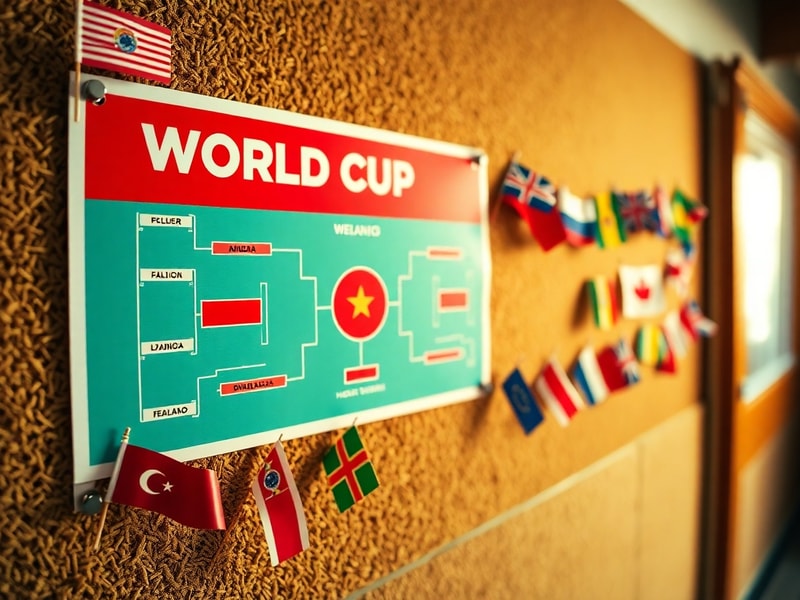
The World Cup bracket represents more than just a tournament roadmap—it’s a living, breathing entity that shifts with every match, every upset, and every penalty shootout. Unlike static league standings, the bracket evolves in real time, forcing fans to recalibrate their expectations with each passing game. Whether it’s the knockout stages or the group phase, the bracket’s structure dictates which teams advance, which players rise to the occasion, and which nations dream of lifting the trophy. Understanding its intricacies isn’t just about following scores; it’s about grasping the strategic chess match behind the brackets, where one wrong move can derail a tournament campaign in an instant.
How the World Cup Bracket Works: From Groups to Glory
The World Cup bracket begins long before the tournament starts, shaped by the group draw that takes place months in advance. The 32 participating nations are divided into eight groups of four, with each team playing three matches in a round-robin format. The top two teams from each group advance, creating a 16-team knockout stage that unfolds in dramatic fashion. The bracket’s design ensures that early upsets can drastically alter the path to the final. For example, a second-place team from a group might face a first-place team from another, setting up high-stakes clashes where momentum matters more than seeding.
The knockout rounds—Round of 16, Quarterfinals, Semifinals, and Final—introduce sudden death, where a single loss means elimination. Unlike the group stage, where draws are possible, knockout matches must produce a winner, often going to extra time or penalties. This structure amplifies pressure, turning even the most routine matches into edge-of-the-seat spectacles. The bracket also includes a third-place playoff, a consolation match that gives eliminated semifinalists one last opportunity to salvage pride, though its significance often pales compared to the main event.
The Psychology of the Bracket: Why Teams Fear Certain Paths
The bracket isn’t just a random draw; it’s a psychological minefield where geography, rivalries, and historical matchups play a silent but critical role. For instance, European teams often dread facing South American sides early in the knockout rounds, given the latter’s reputation for flair and unpredictability. The bracket’s design ensures that two teams from the same group cannot meet again until the final, but that doesn’t prevent fans from obsessing over potential “dream finals” or nightmare matchups. A team like Argentina, with its deep tournament history, might be favored against European opponents but could struggle against physical, counter-attacking sides like Morocco or Japan.
Psychology also extends to the underdog narrative. Teams that scrape through the group stage as runners-up often enter the knockout rounds with a chip on their shoulder, playing with a fearlessness that seeded teams lack. This dynamic was evident in 2018 when Belgium, a tournament favorite, struggled against Japan in the Round of 16 before a dramatic late comeback. The bracket forces teams to adapt quickly, as a perceived “easier” path can evaporate in a single match. Coaches spend months preparing for these scenarios, studying opponents’ tendencies and crafting strategies that exploit the bracket’s inherent unpredictability.
Historical Upsets and the Bracket’s Most Unforgettable Moments
Few things in sports generate as much collective memory as a bracket-defying upset. The 2002 World Cup saw South Korea, a team that had never advanced past the group stage, reach the semifinals by defeating Italy, Spain, and Portugal along the way. Their run was a masterclass in exploiting the bracket’s flaws, as they benefited from favorable draws and referee decisions. Similarly, Senegal’s victory over France in the tournament’s opening match of 2002 sent shockwaves through the bracket, proving that no team was safe. These moments reshaped how fans and pundits view the bracket’s role in shaping narratives.
Another unforgettable instance came in 2014, when Costa Rica, a nation with limited World Cup pedigree, stormed into the quarterfinals by topping a group featuring Italy, England, and Uruguay. Their path to the knockout stages was smooth, but their Round of 16 victory over Greece set up a quarterfinal clash with the Netherlands. The bracket’s structure meant that Costa Rica’s Cinderella run ended in heartbreak, but their journey inspired underdogs worldwide. These upsets highlight the bracket’s ability to turn the ordinary into the extraordinary, where a single tournament can redefine a nation’s footballing identity.
Bracket Strategy: How Coaches and Fans Game the System
For coaches, the bracket isn’t just a fixture list—it’s a puzzle to be solved. Long before the tournament begins, analysts study potential paths, identifying which groups might produce unexpected qualifiers and which knockout rounds could feature classic matchups. A coach’s preparation often hinges on flexibility, with game plans that can pivot based on who advances. For example, a team like Germany might prioritize avoiding a Round of 16 clash with Brazil, knowing that a late knockout-stage meeting could spell disaster. This strategic foresight is why some nations hire dedicated “bracketologists” to model every possible scenario.
Fans engage in their own form of bracket strategy, often filling out fantasy World Cup predictions or joining office pools to track their picks against reality. The bracket’s structure makes it a social phenomenon, with debates raging over which teams have the “easiest” or “toughest” paths. Social media amplifies this, with memes and hot takes emerging after each draw. Some fans even adopt a nihilistic approach, choosing teams based on jersey colors or arbitrary superstitions, knowing that the bracket’s chaos will render all predictions moot by the quarterfinals. Whether it’s through data-driven analysis or pure luck, the bracket turns every World Cup into a shared global experiment.
For a deeper look at how teams prepare for the tournament’s unique challenges, check out our Sports category, where we break down training regimens and tactical innovations. If you’re curious about the cultural impact of World Cup upsets, our Entertainment section explores how these moments transcend sports.
The World Cup bracket is more than a tournament roadmap—it’s a testament to football’s unpredictability and the drama that unfolds when nations collide. From the group stage’s tactical battles to the knockout rounds’ sudden-death intensity, the bracket ensures that every match matters. It rewards the prepared and punishes the complacent, creating stories that linger in the collective memory long after the final whistle. Whether you’re a die-hard fan or a casual observer, the bracket’s twists and turns are what make the World Cup the world’s most-watched sporting event. And when the next tournament rolls around, all eyes will be on the bracket, waiting to see which team will etch its name into history.