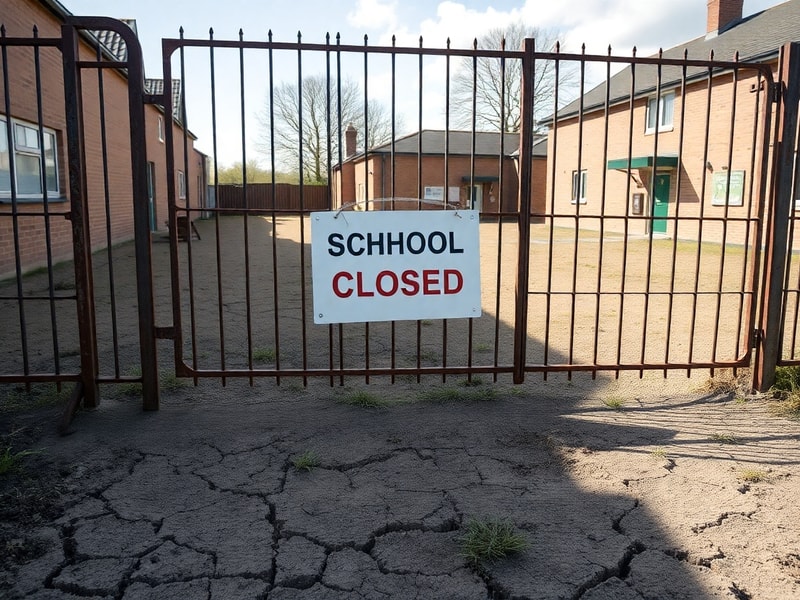
School Closures in Wales Amidst Record-Breaking Heatwave Spark Urgent Debate
Wales has joined a growing number of regions grappling with the consequences of extreme weather, as record temperatures forced a wave of school closures across the country. With classrooms shuttered for days at a time, parents, educators, and policymakers are now questioning the preparedness of Welsh schools for climate-related disruptions. The closures, which affected hundreds of thousands of students, were not just a response to heat but a reflection of broader infrastructure challenges that have long gone unaddressed.
Temperatures in parts of Wales soared above 30°C for consecutive days, surpassing previous records and pushing aging school buildings beyond their thermal limits. Many facilities lack adequate ventilation, air conditioning, or even basic shade structures. In response, local authorities and individual schools made the difficult decision to close, prioritizing student safety over attendance. While some parents supported the measure, others voiced frustration over the disruption to work schedules and childcare arrangements.
The situation has reignited discussions about the long-term resilience of Welsh education infrastructure. With climate projections warning of more frequent and intense heatwaves, the closures serve as a stark reminder that adaptation must move beyond temporary fixes. Schools built decades ago were never designed with such conditions in mind, and retrofitting these structures will require significant investment—a prospect that has left many stakeholders concerned about funding and prioritization.
The Immediate Impact: Logistics, Learning, and Uncertainty
For families across Wales, the closures created a cascade of challenges. Working parents scrambled to arrange alternative childcare, while others faced the added stress of juggling remote work with home-based supervision. In some cases, key workers—including NHS staff and emergency responders—struggled to balance their professional duties with the sudden absence of school services.
Educators, too, faced hurdles. Teachers worked overtime to adapt lesson plans for virtual delivery, but not all students had reliable internet access or suitable learning environments at home. The digital divide, already a persistent issue in rural and economically disadvantaged areas, became even more pronounced. Schools in Gwynedd and Anglesey, for example, reported that a significant portion of their student body lacked the necessary technology to participate in online classes effectively.
Local authorities have scrambled to mitigate the fallout. In Cardiff, the council issued guidance urging parents to keep children indoors during peak heat hours, while also setting up temporary cooling centers in public libraries and community centers. Meanwhile, in Swansea, officials coordinated with local businesses to offer discounted childcare for affected families. These stopgap measures, while helpful, underscore the lack of a cohesive national strategy for handling climate-related school disruptions.
The closures also disrupted critical services beyond academics. Many schools provide essential meals, mental health support, and safeguarding services for vulnerable students. When buildings shut down, these safety nets vanished overnight, leaving some families in precarious situations. Charities and food banks reported increased demand, highlighting the broader social consequences of climate-induced school closures.
Why Wales’ School Infrastructure Is Struggling to Keep Up
The current crisis is not merely a product of the heatwave—it is the result of decades of underinvestment and shortsighted planning. A 2022 report by the National Audit Office found that nearly a third of Welsh schools were in poor or mediocre condition, with maintenance backlogs totaling over £1 billion. Many of these buildings were constructed in an era when climate resilience was not a priority, and the cost of retrofitting them to modern standards is prohibitive for local budgets.
Energy efficiency is another glaring issue. Older school buildings often rely on outdated heating and cooling systems that are ill-equipped to handle extreme temperatures. In some cases, classrooms become unbearably hot within hours of sunrise, rendering them unusable. The situation is exacerbated in urban areas like Newport and Wrexham, where the urban heat island effect traps heat in dense concrete landscapes.
While some newer schools incorporate passive cooling techniques—such as cross-ventilation, reflective roofing, and shaded outdoor learning spaces—these features are far from universal. The Welsh Government has pledged £200 million toward school refurbishments over the next five years, but critics argue this is a drop in the bucket compared to the scale of the problem. With climate projections indicating that heatwaves will only intensify, the question remains: Will Wales act fast enough to future-proof its schools?
For now, the burden falls on individual schools to improvise. Some have turned to temporary solutions, such as portable air conditioning units or shaded outdoor classrooms. Others have extended the school day to avoid peak heat, a workaround that disproportionately affects students who rely on school transport or after-school programs. These measures, while creative, are not sustainable in the long run.
Broader Implications: Climate Adaptation and Educational Equity
The school closures in Wales are a microcosm of a much larger challenge: how societies adapt to a changing climate while ensuring equitable access to education. The disruption highlights three critical areas that demand urgent attention:
- Infrastructure Investment: Schools must be retrofitted to withstand extreme weather, from heatwaves to flooding. This requires a long-term funding commitment and a clear prioritization of the most vulnerable buildings.
- Policy Coordination: Local authorities, the Welsh Government, and education stakeholders must collaborate on a unified response plan. This includes protocols for school closures, remote learning standards, and support systems for affected families.
- Educational Equity: The digital divide and socioeconomic disparities must be addressed to ensure that climate-related disruptions do not exacerbate existing inequalities. This means providing devices, internet access, and alternative learning spaces for all students.
Beyond Wales, the situation serves as a cautionary tale for other regions. The UK’s education sector is not alone in its vulnerability; similar challenges have emerged in schools across Europe and North America. However, Wales’ experience is particularly instructive because it reveals the compounded effects of aging infrastructure, climate change, and social inequality.
Some advocates argue that the closures should serve as a wake-up call for systemic change. The Welsh Government has already committed to a net-zero schools program, aiming to make all educational buildings carbon-neutral by 2030. While ambitious, this goal will require unprecedented coordination between policymakers, architects, and educators. It also demands public buy-in, as retrofitting schools will inevitably involve trade-offs—whether in terms of cost, disruption, or aesthetic changes to historic buildings.
For parents and students, the immediate priority is clear: ensuring that schools can safely reopen without repeating the same mistakes. But the deeper conversation must focus on what kind of education system Wales—and the world—needs to thrive in a warming climate. Will future generations look back on these closures as a turning point, or as another missed opportunity?
What’s Next for Welsh Schools?
The Welsh Government has indicated that it will review the heatwave response to identify lessons learned. In the meantime, schools are left to navigate a patchwork of temporary solutions, from staggered start times to indoor “cool rooms” stocked with fans and water stations. Some headteachers have called for mandatory heatwave guidelines, similar to those used during the COVID-19 pandemic, to provide consistency across the country.
For now, the onus is on communities to fill the gaps. Parents are forming informal support networks, sharing resources and childcare arrangements online. Local businesses, including cafes and libraries, have stepped up by offering cooling spaces and activities for children. These grassroots efforts are commendable, but they should not be a substitute for systemic solutions.
Looking ahead, the Welsh Government faces a critical choice: Will it treat the heatwave as an anomaly to be weathered, or as a harbinger of a new normal that demands bold action? The answer will shape not just the future of Welsh education, but the resilience of its society as a whole.
For those seeking ways to stay informed or contribute, organizations like Dave’s Locker Education and News sections provide updates on school policies and climate adaptation efforts in Wales. By staying engaged, readers can help ensure that the lessons of this heatwave translate into lasting change.