The Unyielding Spirit of Accrington Stanley: More Than Just a Football Club
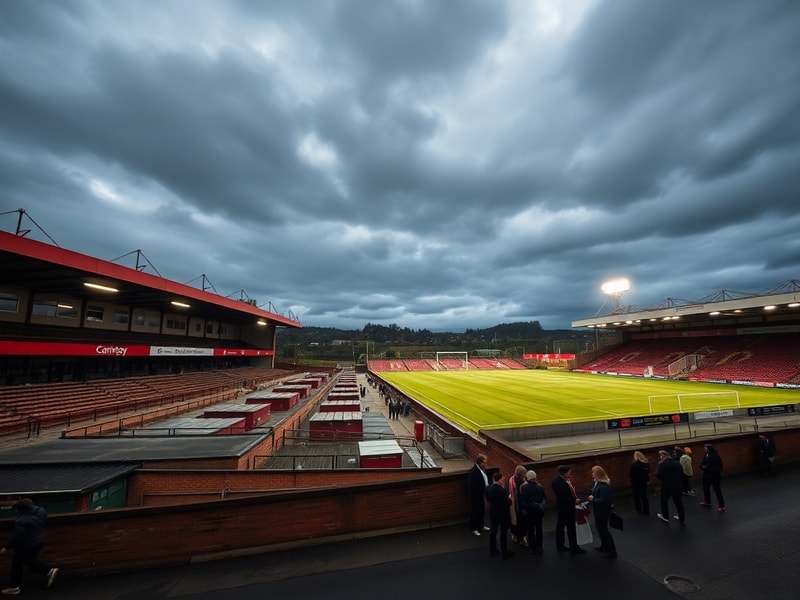
Few football clubs in England carry the weight of history and the charm of community spirit quite like Accrington Stanley. Founded in 1891, the club has navigated decades of financial struggles, near-extinctions, and triumphant resurrections. Today, it stands as a testament to resilience, not just on the pitch but in the hearts of its loyal supporters. The Crown Ground, their home since 1966, echoes with chants that have been sung for generations, each one a reminder of a club that refuses to be forgotten.
Accrington Stanley’s journey is not one of continuous glory but of survival and reinvention. The club’s most infamous moment came in 1962 when it folded due to financial collapse, only to be resurrected by local businessman Eric Whalley in 1968. This act of defiance set the tone for the club’s future—a relentless pursuit of stability amid adversity. Today, Stanley competes in League Two, the fourth tier of English football, but its influence stretches far beyond the league table. It represents the backbone of community football, where local pride often outweighs commercial ambition.
The club’s nickname, “The Stanley”, is a nod to its deep roots in the town of Accrington, Lancashire. The town itself is a microcosm of Northern England’s industrial heritage, with a working-class ethos that permeates the club’s identity. Unlike the glitzy Premier League sides with global fanbases, Accrington Stanley thrives on authenticity. Its supporters are a tight-knit group, many of whom have followed the club for decades. The atmosphere on matchdays is electric, not because of star players or massive budgets, but because of the sheer passion of the fans.
A Club Born from Resilience
Accrington Stanley’s early years were marked by modest success in non-league football. The club joined the Football League in 1921 and spent several seasons in the Third Division North, a far cry from the modern-day pyramid’s hierarchy. Financial struggles were a recurring theme, with the club often teetering on the brink of collapse. The 1960s were particularly turbulent, culminating in the club’s dissolution in 1962. Yet, the spirit of the town ensured its revival. Eric Whalley’s purchase of the club in 1968 was a turning point, though the financial challenges persisted for decades.
By the 1990s, Accrington Stanley had slipped into the Conference, the fifth tier of English football, a shadow of its former self. The club’s fortunes began to shift in the early 2000s under manager John Coleman, who took over in 2004. Coleman, a local lad who had played for the club, instilled a sense of belief that had been missing for years. His tenure saw Stanley climb back into the Football League in 2006, a moment that reignited the town’s pride. The club’s return to League Two was celebrated as a minor miracle, a triumph of community over adversity.
Coleman’s impact extended beyond the pitch. He fostered a playing style that emphasized grit and determination, qualities that resonated with the club’s identity. Under his guidance, Accrington Stanley became known for its never-say-die attitude, a trait that endeared it to neutrals and cemented its place in football folklore.
The Modern Era: Stability and Ambition
In recent years, Accrington Stanley has carved out a niche for itself in League Two. While it may not boast the financial muscle of larger clubs, it has developed a reputation for punching above its weight. The club’s recruitment strategy focuses on young, hungry players who are eager to prove themselves. This approach has yielded dividends, with Stanley often finishing in the upper half of the table and occasionally challenging for promotion.
The 2022-23 season was a case in point. Managed by Paul Cook, Stanley mounted a strong challenge for the playoffs, ultimately falling just short. The campaign highlighted the club’s progress, with standout performances from players like defender Alhagi Sosseh and midfielder Billy Devine. The team’s disciplined defensive structure and direct attacking style made it a tough opponent for any side in the division.
Off the pitch, Accrington Stanley has also embraced innovation. The club has invested in its youth academy, providing a pathway for local talent to progress to the first team. This commitment to developing homegrown players aligns with the club’s community-focused ethos. Additionally, Stanley has expanded its commercial operations, though it remains a far cry from the revenue streams of clubs in higher divisions.
The club’s social media presence has also grown, with a dedicated fanbase engaging with content that showcases the human side of the club. From behind-the-scenes footage to player interviews, Accrington Stanley has leveraged digital platforms to connect with supporters worldwide. This engagement is crucial for a club that relies heavily on its community for survival.
The Heart of Accrington: Fans and Culture
No discussion of Accrington Stanley would be complete without acknowledging its fans. The supporters’ group, known as the “Stanley Ultras”, is renowned for its vocal support and unwavering loyalty. Matchdays at The Crown Ground are a celebration of local culture, with fans donning the club’s traditional red and white stripes. The atmosphere is often described as “intimidating” by opposition players, a testament to the passion in the stands.
The club’s connection to the town is evident in its community initiatives. Accrington Stanley runs programs aimed at engaging young people, promoting healthy lifestyles, and fostering a love for the sport. These initiatives extend beyond football, reflecting the club’s role as a hub for social cohesion in Accrington. The club’s mascot, Stanley the Lion, is a beloved figure, especially among younger fans, and embodies the playful yet proud spirit of the club.
Accrington Stanley’s cultural significance is also reflected in its portrayal in media and literature. The club has been the subject of documentaries and feature articles, often cited as an example of the enduring appeal of lower-league football. Its story is one of hope, resilience, and the power of community—a narrative that resonates far beyond the confines of Lancashire.
For those looking to experience the raw, unfiltered passion of English football, a trip to The Crown Ground is a must. The club’s matches offer a glimpse into a world where football is more than just a sport; it’s a way of life. The chants, the camaraderie, and the sheer determination of the players create an environment that is both humbling and inspiring.
The Road Ahead: Challenges and Opportunities
Despite its progress, Accrington Stanley faces challenges that are common among smaller clubs. Financial constraints often limit the club’s ability to compete with larger teams for top talent. The reliance on local players and youth development is both a strength and a necessity, but it also means that Stanley must work harder to retain its best performers.
Promotion to League One would be a significant achievement for the club, offering increased revenue and exposure. However, the jump from League Two to League One is notoriously difficult, with many clubs struggling to adapt to the higher standard of play. Stanley’s recent performances suggest it is capable of competing at this level, but the road ahead will require careful planning and execution.
Another challenge is maintaining fan engagement in an era where football is increasingly commercialized. Accrington Stanley must balance its community roots with the demands of modern football, ensuring that it remains accessible and affordable for local supporters. The club’s commitment to transparency and fan involvement has been a key factor in its survival, and this approach must continue to guide its future.
Opportunities also abound for Accrington Stanley. The club’s unique story and strong fanbase make it an attractive proposition for potential investors or sponsors. Partnerships with local businesses and community organizations could provide additional revenue streams, reducing the club’s reliance on matchday income. Additionally, Stanley’s involvement in initiatives like the EFL’s “Community Club” program offers a platform to expand its social impact.
The club’s future may also involve exploring new revenue streams, such as merchandise sales or digital content. While these avenues should not compromise the club’s identity, they could provide the financial stability needed to compete more effectively. The key will be to innovate without losing sight of what makes Accrington Stanley special.
Why Accrington Stanley Matters
Accrington Stanley is more than just a football club; it is a symbol of resilience, community, and the enduring power of sport. In an era where football is often dominated by financial powerhouses and global superstars, Stanley stands as a reminder of what truly matters in the game. It is a club that has survived against the odds, not because of wealth or prestige, but because of the love and dedication of its fans.
The club’s story is one that inspires. It teaches us that success is not solely measured in trophies or league positions but in the connections we forge and the communities we build. Accrington Stanley embodies the spirit of Northern football—hardworking, unpretentious, and deeply rooted in its locality. For those who understand the soul of the game, the club’s journey is a source of pride and inspiration.
As Accrington Stanley continues to navigate the challenges of modern football, one thing is certain: its legacy is secure. The club’s history, its fans, and its community are testaments to the power of football as a force for good. Whether it’s lifting trophies or simply surviving another season, Accrington Stanley will always be a club that matters.
For fans of authentic, community-driven football, there is no substitute for the experience of supporting Accrington Stanley. The Crown Ground may not be the largest or most glamorous stadium, but it is one of the most special places in English football. It is a place where dreams are chased, where heroes are made, and where the spirit of football lives on.
- Explore more about the history of non-league football and its clubs on Dave’s Locker Sports.
- For insights into how smaller clubs compete in the modern football landscape, visit Dave’s Locker Analysis.
Accrington Stanley’s story is far from over. As the club looks to the future, one thing is certain: its journey will continue to inspire, challenge, and unite. In a world where football often feels distant and corporate, Stanley remains a beacon of hope—a club that proves that the beautiful game is still beautiful at its core.