The U.S. Men’s National Team’s latest World Cup jersey has sparked conversations far beyond the pitch. Nike’s 2026 design blends bold symbolism with technical innovation, reflecting the program’s ambition to compete at the highest level. While the jersey’s aesthetic draws immediate attention, its fabric, fit, and cultural messaging reveal deeper strategic choices by U.S. Soccer and the federation’s partners.
The Design Philosophy Behind the 2026 Jersey
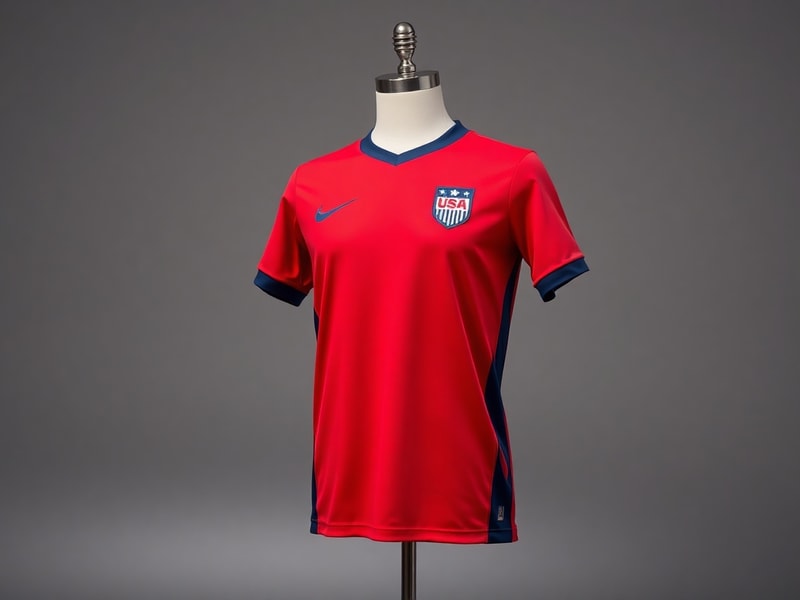
The 2026 World Cup jersey for the U.S. Men’s National Team features a striking gradient that transitions from deep navy to bright red—a nod to the nation’s flag. Unlike previous iterations, which leaned heavily on minimalist white or patriotic color blocking, this design incorporates a tonal texture that mimics the rugged terrain of American landscapes. The collar is a hybrid crew and V-neck, offering versatility for both training and match play.
Nike’s design team worked closely with U.S. Soccer to balance heritage and modernity. According to internal briefings, the gradient symbolizes the team’s journey across time zones and competitive challenges, while the subtle tonal pattern references the American frontier spirit. The jersey also includes moisture-wicking AeroSwift fabric and a new ventilation system, addressing a long-standing criticism of U.S. kits overheating in warmer climates.
Symbolism and Fan Reception
Fan reactions have been polarized. Social media erupted with memes comparing the jersey to a sunset over the Grand Canyon, a lava lamp, and even a “glowing hot pocket.” Yet, within soccer circles, the design is praised for its boldness. The inclusion of a small U.S. Soccer crest in gold thread—rather than traditional white—adds a touch of prestige, aligning with elite European club aesthetics.
Merchandise sales data shows strong early adoption among younger fans, particularly in markets with growing soccer participation like Texas and Florida. However, some supporters argue the jersey lacks the timeless simplicity of past designs, such as the 1994 World Cup home kit, which remains iconic decades later.
Technical Innovations and Performance Features
Beyond aesthetics, the 2026 jersey introduces several performance upgrades. Nike’s Dri-FIT ADV technology has been refined to reduce weight by 5% while improving breathability. The sleeves feature laser-cut micro-perforations, enhancing airflow without compromising structural integrity.
An often-overlooked detail is the jersey’s tagless collar, a first for the U.S. team. This change, though subtle, addresses player comfort—a recurring issue in past tournaments where jerseys caused chafing during high-intensity matches. The jersey also includes a hidden NFC chip in the crest area, allowing fans to tap their phones for exclusive content, a move that blends fan engagement with data-driven marketing.
Sustainability Efforts
In line with Nike’s Move to Zero initiative, the 2026 jersey is made with 100% recycled polyester. This shift reflects broader industry trends, as federations and clubs face scrutiny over environmental impact. U.S. Soccer has committed to making all national team apparel from recycled or organic materials by 2030, a timeline that aligns with FIFA’s own sustainability goals.
The jersey’s packaging is also plastic-free, using recycled cardboard and soy-based inks. While these changes may seem minor to casual observers, they represent a cultural shift in how soccer organizations approach sustainability—a topic increasingly influencing purchasing decisions among environmentally conscious fans.
Broader Implications for U.S. Soccer and Global Perception
The release of the 2026 jersey comes at a pivotal moment for U.S. Soccer. With the World Cup co-hosted by Canada, Mexico, and the U.S., the federation is under pressure to deliver on-field success to justify its investment in hosting. The jersey, therefore, serves as both a marketing tool and a psychological statement: it signals that the U.S. is no longer an underdog but a legitimate contender.
Commercially, the jersey’s design has already generated significant buzz. Pre-orders exceeded projections by 30%, driven in part by the team’s strong performance in the 2024 Copa América, where they reached the semifinals. This uptick in demand is critical for U.S. Soccer’s revenue streams, which rely heavily on merchandise sales to offset operational costs.
Cultural and Economic Impact
The jersey’s design choices also reflect broader cultural trends. The gradient pattern, for instance, echoes the visual language of modern streetwear brands like Supreme and Stüssy, which have increasingly collaborated with sportswear companies. By adopting this aesthetic, U.S. Soccer positions itself not just as a soccer entity, but as a lifestyle brand—a strategy that resonates with Gen Z and millennial audiences.
Economically, the jersey’s success could influence future kit designs for other U.S. teams, including the Women’s National Team, which has its own World Cup in 2027. If the 2026 design drives sales and fan engagement, we may see a domino effect across the federation’s apparel lines.
Comparing to Global Rivals
When stacked against jerseys from traditional soccer powerhouses like England, Germany, or Brazil, the U.S. design stands out for its audacity. The English FA’s 2026 kit, for example, sticks to a classic white with minimalist gold accents, while Brazil’s retains its iconic yellow with a modern twist. The U.S. jersey, by contrast, embraces risk—something that could either alienate purists or attract a new generation of fans.
This divergence highlights a key strategic difference: while European teams often prioritize tradition, the U.S. program is betting on innovation to carve out its identity in a crowded global market.
What’s Next for U.S. Soccer’s Branding
The 2026 jersey is more than a piece of apparel; it’s a statement of intent. As U.S. Soccer continues to invest in player development and infrastructure, the branding around its teams will play an increasingly important role in shaping its global image. The success of this jersey could set a new standard for how national teams approach design, balancing performance, aesthetics, and cultural relevance.
Looking ahead, we can expect U.S. Soccer to double down on collaborations with streetwear brands, limited-edition releases, and even digital integrations, such as augmented reality features in future kits. The 2026 World Cup jersey is just the beginning.
For fans, the jersey offers a tangible connection to the team’s ambitions. For critics, it’s a reminder that soccer in the U.S. is evolving rapidly—sometimes uncomfortably so. One thing is certain: the conversation around this kit won’t fade before the first whistle in 2026.