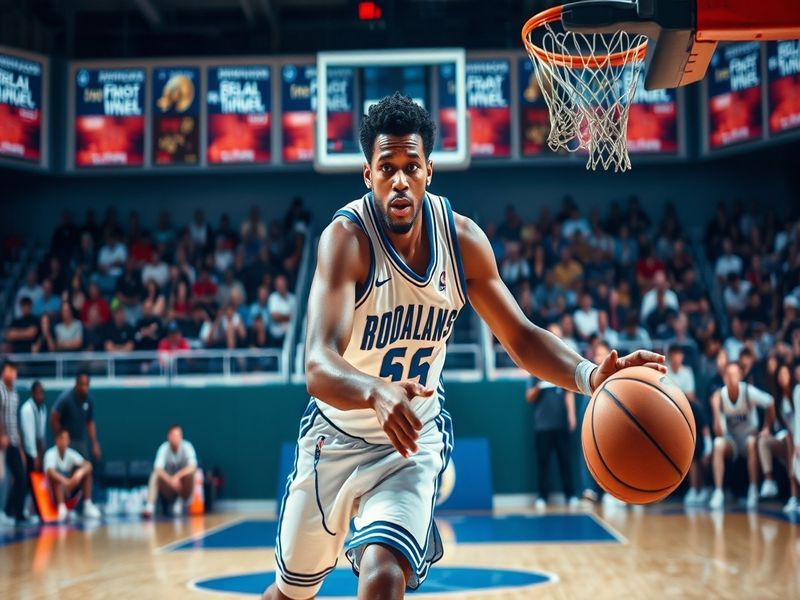
Anthony Siegler’s rise from a standout high school athlete to a college prospect with NBA potential reflects more than just individual talent—it spotlights the evolving expectations placed on young players entering the basketball ecosystem. At 6-foot-6 with a wingspan that disrupts passing lanes and a jump shot that’s already NBA-caliber, Siegler’s combination of size, skill, and basketball IQ makes him a matchup nightmare for opponents at any level. His two-way impact—averaging 15 points, six rebounds, and two steals per game as a freshman at Villanova—demonstrates why programs covet versatile wings who can defend multiple positions and generate offense without monopolizing possessions.
What sets Siegler apart isn’t just what he does on the court, but how he does it. His offensive efficiency speaks volumes: 48% shooting from the field and 39% from three-point range in limited minutes last season. That production came against high-major competition, which matters far more than gaudy stats against weaker opponents. Equally impressive is his defensive versatility, capable of guarding point guards on switches or locking down shooting guards with lateral quickness. These attributes align perfectly with the modern NBA’s emphasis on positionless basketball, where wings who can space the floor and disrupt passing lanes are increasingly valuable.
From New Jersey to the National Stage
Siegler’s journey began in Piscataway, New Jersey, where he starred at Piscataway High School. His prep career culminated in a state championship and a reputation as one of the Garden State’s most polished two-way prospects. Recruiting services quickly took notice, with 247Sports ranking him among the top 50 players in the 2023 class. Villanova secured his commitment early, a testament to both Siegler’s readiness for high-major basketball and Jay Wright’s ability to develop NBA-level talent.
His freshman season at Villanova validated those expectations. Playing behind established stars like Justin Moore and Eric Dixon, Siegler earned valuable minutes and delivered when called upon. His ability to contribute immediately without demanding the ball underscores his basketball maturity—an often-overlooked trait in young players. That discipline is especially crucial at Villanova, where offensive systems prioritize ball movement and player development over individual heroics.
Siegler’s development also reflects broader trends in college basketball. Programs now prioritize versatile wings who can impact games in multiple ways rather than traditional scorers who specialize in one area. This shift mirrors the NBA’s own evolution, where wings like Jayson Tatum and OG Anunoby have redefined positional value. Siegler’s skill set positions him perfectly to thrive in this environment, whether as a primary wing or a secondary creator in transition.
Draft Stock and Long-Term Potential
NBA scouts are already circling Siegler, with many projecting him as a late first-round pick in the 2026 draft. That timeline speaks to both his current ability and the patience required to develop into a reliable rotation player. His shooting mechanics—smooth and repeatable—suggest he can become a consistent three-point threat, while his defensive versatility could make him a valuable role player from day one.
However, Siegler’s path isn’t without challenges. At 200 pounds, he’ll need to add strength to withstand NBA-level physicality. His ball-handling, while improved, still lags behind elite wings who initiate offense regularly. These aren’t insurmountable flaws, but they’ll require targeted development over the next two seasons. The good news? Siegler has already shown he can adapt. His freshman year included stretches where he initiated offense in Villanova’s secondary break, a role he embraced to maximize his impact.
For teams drafting in the 20s, Siegler represents a high-upside gamble with relatively low risk. He projects as a 3-and-D wing who can guard multiple positions, space the floor, and contribute in transition. In an NBA where role players often determine playoff success, that profile carries significant value. His two-way potential also makes him a prime candidate for G League Ignite or overseas stints, where he could refine his game against professional competition.
Broader Implications for the Basketball Landscape
Siegler’s emergence reflects deeper shifts in how basketball talent is developed and evaluated. The traditional path—high school standout to one-and-done college star to NBA draft pick—is no longer the only route to professional success. Programs like Villanova emphasize player development over immediate production, a philosophy that benefits players like Siegler. This approach not only improves individual prospects but also strengthens college basketball’s reputation as a legitimate development pipeline.
For high school prospects, Siegler’s career offers a blueprint: prioritize versatility, embrace role clarity, and focus on two-way impact. That mindset contrasts with the “hero ball” mentality that once dominated youth basketball. Today’s NBA rewards players who can contribute in multiple ways, and Siegler embodies that evolution. His journey also highlights the importance of basketball IQ—something that can’t be taught as easily as shooting form or defensive footwork.
On a broader scale, Siegler’s success could influence how prep programs structure their development. Coaches may increasingly prioritize positionless training, where players learn to defend multiple positions and initiate offense. This shift could reduce the emphasis on traditional positions (point guard, shooting guard, etc.) in favor of skills-based evaluation. For programs like Villanova, which have built reputations on developing NBA-ready wings, Siegler’s career reinforces the value of their approach.
There’s also a financial dimension to consider. As prospects like Siegler delay the NBA draft to refine their games, the economics of college basketball become more complex. Programs that prioritize development must balance player growth with competitive success, a challenge Villanova has navigated effectively. For agents and advisors, Siegler’s career demonstrates the value of patience—both for players and their support systems.
What Comes Next?
Siegler’s sophomore season at Villanova will be critical. With Justin Moore’s departure, he’ll likely see increased responsibility, both in scoring and playmaking. His ability to step into a larger role without sacrificing efficiency will determine whether he’s viewed as a potential lottery pick or a solid mid-first-rounder. Scouts will scrutinize his three-point shooting consistency, defensive engagement, and decision-making under pressure—areas where even polished prospects can stagnate.
The Villanova system, known for its emphasis on spacing and ball movement, should highlight Siegler’s strengths. If he can improve his handle and add strength, he could become a matchup nightmare for opponents who struggle to guard versatile wings. His development will also be closely watched by NBA teams, who increasingly value wings that can guard multiple positions and space the floor.
For fans of college basketball, Siegler’s career offers an intriguing storyline. Programs like Villanova thrive on underdog narratives—players who exceed expectations and become cornerstones of championship teams. If Siegler fulfills his potential, he could lead the Wildcats to another deep NCAA Tournament run while solidifying his draft stock. His journey also serves as a reminder that elite basketball isn’t just about flashy plays or highlight-reel dunks—it’s about fundamentals, adaptability, and two-way impact.
Ultimately, Anthony Siegler represents more than just a promising prospect. He embodies the modern basketball player: versatile, intelligent, and adaptable to the game’s evolving demands. His career will be worth following not just for his on-court production, but for what it reveals about the future of basketball development.