Why Cape Verde’s Goalkeeper Has Become an Unlikely Symbol of National Pride
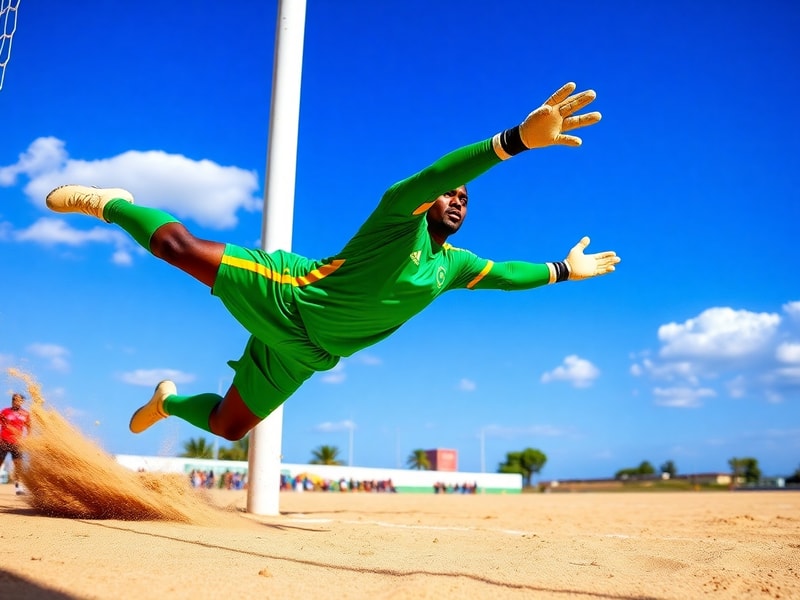
In a small island nation with fewer than 600,000 people, Cape Verde’s goalkeeper has quietly risen to prominence—not for viral saves or flashy cleansheets, but for embodying something deeper: consistency under pressure. While the national team’s recent performances have drawn attention to their defensive resilience, it’s the shot-stoppers who have become the unexpected heroes. Their story reflects how a collective effort, often overlooked, can redefine a country’s sporting identity.
Cape Verde’s football journey has been marked by steady progress. Since gaining independence in 1975, the national team—known as the Tubarões Azuis (Blue Sharks)—has climbed the FIFA rankings, peaking inside the top 30 in recent years. That ascent owes much to a generation of goalkeepers who have turned stubbornness into strength. Unlike the flamboyant forwards or midfield maestros who dominate headlines, these custodians operate in the shadows, their work measured in clean sheets rather than goals.
The Evolution of Cape Verdean Goalkeeping: From Obscurity to Reliability
For decades, Cape Verdean goalkeepers were seen as reactive rather than proactive—players who made saves only when forced into action. That perception began to shift in the 2010s, as coaches prioritized technical training and positional awareness. Clubs in Portugal, where many Cape Verdean players ply their trade, became proving grounds for young goalkeepers eager to refine their craft.
Key to this evolution was the introduction of modern goalkeeper coaching methods. Gone are the days when shot-stopping alone defined a keeper’s worth. Today, Cape Verdean goalkeepers are expected to command their penalty areas, distribute the ball with precision, and even contribute to buildup play. This shift mirrors trends seen in top European leagues, where goalkeepers are now considered an extension of the midfield.
Among the most influential figures in this transition is Vítor Silva, Cape Verde’s current head coach, who has overseen a tactical overhaul. Under his guidance, the national team’s defensive structure has tightened, with goalkeepers playing a pivotal role in transitioning from defense to attack. Their ability to play out from the back has reduced turnovers and allowed Cape Verde to control games against stronger opponents.
Meet the Goalkeepers Who Defined a Generation
The story of Cape Verdean goalkeeping is not about one individual, but a lineage of players who have each contributed to the nation’s defensive identity. Here are the most influential figures in recent history:
- Mory Toindouba – The first Cape Verdean goalkeeper to gain significant recognition abroad, Toindouba played professionally in Portugal and France. Known for his reflexes and leadership, he was a cornerstone of the team during the 2010s.
- Djéné Dakonam – While primarily a defender, Dakonam’s versatility and tactical intelligence influenced how goalkeepers approached positioning and communication.
- Vladimir Souza – A product of Cape Verde’s youth system, Souza has become a reliable presence in goal, particularly in Africa Cup of Nations qualifiers.
- Rui Palhares – Currently Cape Verde’s first-choice goalkeeper, Palhares has drawn comparisons to European-style keepers for his composure on the ball and ability to play with his feet.
Each of these players has brought something unique to the position, but their collective impact is what truly matters. By raising the standard for goalkeeping in Cape Verde, they’ve forced younger players to raise their own games. The result is a pipeline of talent that ensures the position will remain a strength for years to come.
The Broader Implications: How Goalkeeping Reflects National Identity
Cape Verde’s success as a footballing nation is often attributed to its diaspora—players born in Portugal or France with Cape Verdean roots who choose to represent the islands. Goalkeepers like Palhares, who was born in Portugal but opted for Cape Verde, exemplify this trend. Their decisions reflect a growing sense of pride in representing a nation that punches above its weight.
But the implications go beyond the pitch. Cape Verde’s goalkeeping culture has become a metaphor for the country’s broader resilience. Like the islands themselves—vulnerable to climate change, economic instability, and geographic isolation—Cape Verdean football has thrived by adapting. Goalkeepers, once seen as the last line of defense, now symbolize adaptability and calculated risk-taking.
This shift has also had economic repercussions. As Cape Verdean goalkeepers attract interest from European clubs, the financial benefits trickle down to local academies. Investments in youth development have increased, creating a virtuous cycle where success on the field fuels further growth.
What’s Next for Cape Verde’s Goalkeepers?
The future looks bright, but challenges remain. The next generation of goalkeepers must balance technical development with mental resilience. The pressure to perform at the highest level is intense, particularly as Cape Verde targets a maiden World Cup appearance. The 2026 qualifiers will be a critical test, and the goalkeeper’s role will be more important than ever.
One promising prospect is Jefferson Silva, a young goalkeeper currently playing in Portugal’s lower leagues. His performances for the under-23 national team have drawn attention, and if he continues his development, he could become the next face of Cape Verdean goalkeeping.
For now, the focus remains on consistency. Cape Verde’s goalkeepers have already proven they belong among Africa’s best. The challenge now is to elevate their game further, ensuring that the Blue Sharks’ defensive backbone remains as solid as the volcanic rock that forms the islands themselves.
As the team continues its upward trajectory, one thing is clear: the goalkeeper’s role in Cape Verde’s footballing story is far from over. It’s only just beginning.