London’s Extreme Heat Warning: Europe’s Climate Crisis Hits Home
London Braces for Record-Breaking Heat as Extreme Weather Alerts Spread Across Europe
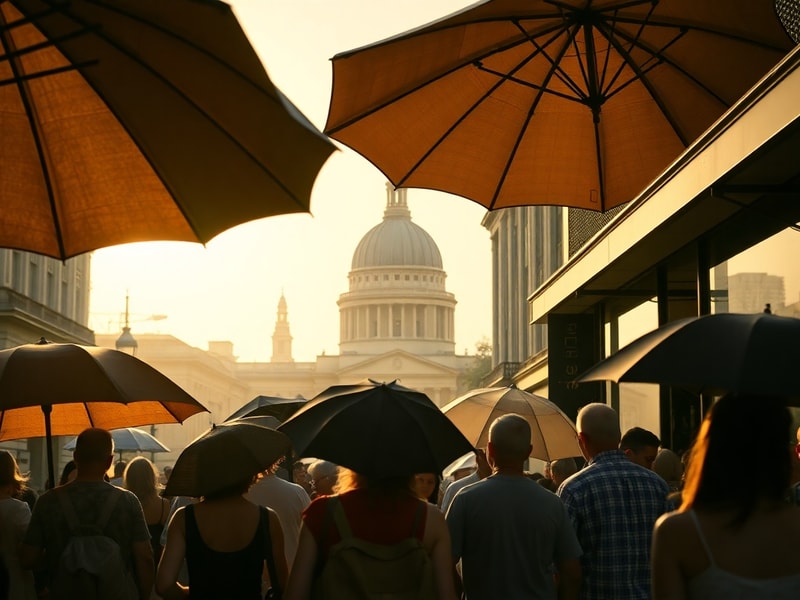
Temperatures in London are expected to soar this week as the Met Office issues its first-ever extreme heat weather warning for the capital. Forecasters predict highs of 38°C (100.4°F), shattering previous records and raising concerns about public health, infrastructure strain, and environmental resilience. While Londoners scramble for shade and air conditioning units, the warning reflects a broader trend sweeping across Europe, where heatwaves are becoming more frequent, intense, and prolonged.
This isn’t just a local issue. From Madrid to Milan, Berlin to Bucharest, cities are experiencing the same brutal conditions, each grappling with the dual challenge of adapting to a warming climate and managing the immediate risks to vulnerable populations. The extreme heat warning in London serves as a stark reminder that no region is immune to the consequences of global climate change—even those with historically temperate climates.
Why This Heatwave Is Different
What sets this heatwave apart is its duration and intensity. Unlike typical summer spikes, which might last a few days, this system is expected to linger for nearly a week, pushing temperatures beyond what many buildings, public transport systems, and healthcare facilities were designed to handle. London’s iconic red buses, for instance, are not air-conditioned, forcing operators to adjust schedules and prioritize passenger safety. Meanwhile, the Tube network, notorious for its heat-retaining tunnels, faces elevated risks of service disruptions due to track buckling—a problem that cost Network Rail £10 million annually in maintenance before the pandemic.
The Met Office’s extreme heat warning, which categorizes temperatures as “dangerous” for the general public, underscores the severity. Historically, such warnings were reserved for wildfire or flood risks, not heat. The shift signals a new era of climate adaptation, where even cities like London must rethink their infrastructure, policies, and public health strategies.
The Human Cost: Who Is Most at Risk?
The health impacts of extreme heat are often underestimated. According to Public Health England, heatwaves contribute to an average of 2,000 excess deaths per year in the UK, with older adults, young children, and those with pre-existing conditions facing the highest risks. This week’s warning is particularly concerning for London’s aging population, where nearly 20% of residents are over 65. Many live in poorly insulated housing, with limited access to cooling systems or green spaces that could provide relief.
Cultural habits also play a role. In cities where air conditioning is less common, residents may underestimate the dangers of prolonged exposure. Cafés and pubs, typically bustling in summer, are taking precautions—installing fans, offering free water, and extending opening hours to accommodate early morning or late-evening trade. Yet for outdoor workers, tourists, and homeless communities, the risks remain acute. Shelters and outreach programs are ramping up efforts, but the scale of the problem outstrips available resources.
The economic toll is another hidden consequence. The Confederation of British Industry estimates that heatwaves cost the UK economy £770 million annually in lost productivity, absenteeism, and infrastructure damage. From construction sites halting work to retail stores losing customers wary of venturing outside, the ripple effects are felt across industries.
A Global Pattern: How Europe Is Reacting
London’s heatwave is part of a larger European crisis. Spain and Portugal are battling wildfires fanned by temperatures exceeding 45°C (113°F), while Germany and France have issued warnings for agricultural droughts that threaten crop yields. In Italy, the government has declared a state of emergency in several northern regions, where rivers like the Po have receded to historic lows, disrupting hydroelectric power and shipping routes.
Governments are responding with a mix of short-term measures and long-term strategies. France, still reeling from the deadly 2003 heatwave that killed 15,000 people, has activated a national heatwave plan that includes cooling centers, hydration campaigns, and increased monitoring of elderly citizens. Meanwhile, Spain has turned to cloud-seeding experiments to induce rainfall, a controversial tactic with mixed results. These efforts reflect a broader reckoning: Europe’s preparedness for extreme weather is being tested, and the lessons learned could shape global responses.
Culturally, the heatwave is also reshaping daily life. In Italy, the traditional afternoon riposo—a midday pause to escape the heat—has seen a resurgence, with businesses closing earlier and social activities shifting to nocturnal hours. In the UK, the concept of a “siesta” is gaining traction, albeit reluctantly among those accustomed to long summer evenings. Even tourism patterns are changing, with travelers opting for coastal destinations or northern regions to avoid the worst of the heat.
Can Cities Adapt Before It’s Too Late?
The question now is whether London—and cities worldwide—can adapt fast enough. Urban planners are increasingly turning to “cooling infrastructure” as a solution. Berlin has invested in white roofs and reflective pavements to reduce heat absorption, while Paris is expanding its network of shaded pedestrian corridors and misting stations. London, too, is experimenting with “urban greening,” planting thousands of trees and creating pocket parks to create natural cooling zones.
Yet these measures require significant investment and political will. The UK’s Climate Change Committee estimates that adapting to extreme heat could cost £1 billion annually by 2030, a figure that pales in comparison to the long-term savings in healthcare and productivity. Critics argue that the current response is reactive rather than proactive, with many policies still treating heatwaves as temporary crises rather than inevitable recurrences.
For now, Londoners are left to navigate the heat as best they can. The advice is straightforward: stay hydrated, avoid the sun during peak hours, and check on neighbors. But as the planet warms, these temporary fixes won’t be enough. The extreme heat warning in London is a wake-up call—not just for the capital, but for every city facing the same challenge.
Lessons from History: How Past Heatwaves Shaped Policy
London’s current crisis echoes past disasters that forced lasting change. The 1976 heatwave, which saw temperatures hit 35.9°C (96.6°F) for 16 consecutive days, led to the creation of the Met Office’s heatwave warning system. Similarly, the 2003 European heatwave, which killed over 70,000 people across the continent, spurred France to implement its national heatwave plan—a model now being adopted by other countries.
These historical precedents highlight a critical pattern: major heatwaves often act as catalysts for policy shifts. The question is whether this week’s warning will prompt similar action. With climate projections indicating that extreme heat events could become five times more likely by 2050, the time for adaptation is now.
What’s Next for London? Preparing for a Hotter Future
As the heatwave subsides, London will face scrutiny over its preparedness. The city has made strides in recent years, such as the 2021 launch of its “London Environment Strategy,” which includes targets for reducing urban heat islands. However, critics point out that many initiatives remain underfunded or poorly implemented. For example, the “Urban Greening Factor,” a tool to measure and enhance green spaces, has struggled to gain traction outside of new developments.
Looking ahead, Londoners may need to rethink everything from architecture to public transport. Buildings designed for cold winters, like the city’s ubiquitous brick terraces, trap heat, while public spaces lack shade. Innovative solutions, such as retrofitting buildings with reflective coatings or creating “cool routes” for pedestrians, are gaining traction but require widespread adoption.
The cultural shift may be the hardest part. London’s identity is tied to its mild, unpredictable weather—a trait that has shaped everything from fashion to festivals. Embracing a hotter future will mean redefining what it means to live in one of the world’s great cities.