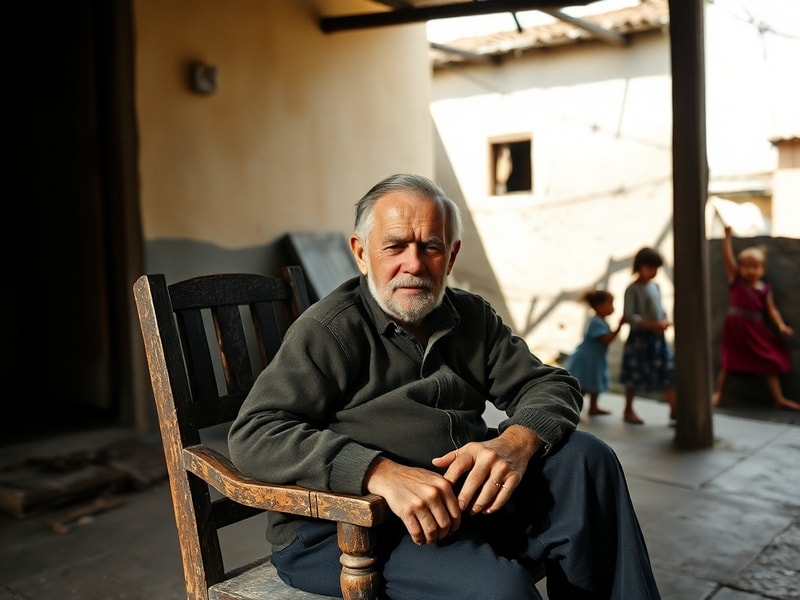
Nursulton Ruziboev stands as one of Uzbekistan’s most dynamic cultural figures, bridging traditional music with contemporary performance art. Born in Tashkent in 1992, Ruziboev quickly distinguished himself as a dombra virtuoso, captivating audiences with a blend of classical Uzbek melodies and modern experimental arrangements. His rise to prominence reflects a broader trend in Central Asian arts: the fusion of heritage with global influences without losing local identity.
A Musical Upbringing in Tashkent’s Cultural Heart
Ruziboev’s early exposure to music came from his family, where his father—a folk musician—played the dutar, a two-stringed lute central to Uzbek classical music. By age 10, he began formal training at the Republican Specialized Music School in Tashkent, where he mastered the dombra, a fretted lute with deep roots in Kazakh and Uzbek traditions. The school’s rigorous curriculum emphasized both technical precision and improvisation, skills that later defined Ruziboev’s signature style.
During his teenage years, he immersed himself in Uzbekistan’s rich oral musical tradition, learning maqams—melodic modes—and rhythmic patterns like the sher and karachi. These foundational experiences shaped his approach to performance, blending academic discipline with spontaneous creativity. By 18, he was already performing in local festivals, though his breakthrough came during the 2014 Sharq Taronalari World Music Festival, where critics praised his ability to reinterpret folk compositions with a modern sensibility.
The Breakthrough: Fusing Tradition with Innovation
Ruziboev’s artistic evolution accelerated after he moved to Istanbul in 2016 to study at the Istanbul Technical University’s Turkish Music State Conservatory. The move exposed him to a diverse range of musical influences, from Ottoman classical music to jazz and electronic beats. He began experimenting with live looping, layering dombra melodies over electronic percussion to create immersive soundscapes. This fusion caught the attention of both traditionalists and avant-garde audiences, positioning him as a bridge between cultures.
His 2019 album Yurt (“Homeland”) exemplifies this synthesis. The record features reimagined Uzbek folk songs alongside original compositions, with arrangements that incorporate traditional instruments like the rubab and sato, alongside synthesizers and drum machines. Tracks like “Zarafshon” blend the dombra’s haunting resonance with ambient textures, creating a soundscape that feels both timeless and futuristic. Critics hailed the album as a landmark in Central Asian contemporary music, noting its ability to evoke nostalgia while sounding distinctly modern.
Ruziboev’s live performances further solidify his reputation. During a 2022 concert in Samarkand, he opened with a solo dombra improvisation, then seamlessly transitioned into a collaboration with a local hip-hop artist, overlaying a traditional melody with a beatbox rhythm. The audience, spanning generations, responded with equal parts reverence and excitement—a testament to his ability to transcend cultural and generational divides.
Cultural Ambassador and Advocate for Uzbek Arts
Beyond his musical achievements, Ruziboev has become an advocate for preserving and promoting Uzbek cultural heritage. In 2021, he co-founded Navro’z Sound, a collective dedicated to documenting and revitalizing endangered Central Asian musical traditions. The group hosts workshops across Uzbekistan, teaching young musicians about maqams, regional folk styles, and the history of instruments like the qayraq and doira.
His efforts extend to digital platforms as well. Ruziboev actively shares tutorials on YouTube and Instagram, breaking down complex techniques for global audiences. His video series “Dombra in 60 Seconds” has amassed over 1.2 million views, introducing the instrument to people who might never have encountered it otherwise. “Music is a language that doesn’t need translation,” he noted in a 2023 interview. “By making these traditions accessible, we ensure they don’t fade into obscurity.”
Ruziboev also collaborates with international artists, further amplifying Uzbek culture. In 2023, he joined forces with Iranian tar player Hadi Asgari for a cross-cultural project blending Azerbaijani mugam and Uzbek maqams. The resulting album, Sadaf (“Pearl”), received praise for its delicate interplay between Persian and Turkic musical philosophies. Such collaborations highlight his role as a cultural ambassador, fostering dialogue between Central Asia and the broader world.
Challenges and the Road Ahead
Despite his success, Ruziboev faces challenges common to artists navigating the intersection of tradition and modernity. Funding for cultural projects in Uzbekistan remains limited, and securing international distribution for albums like Yurt requires navigating complex licensing agreements. Additionally, some purists criticize his experimental approach, arguing that it dilutes the authenticity of folk music. Ruziboev responds to these critiques with pragmatism. “Authenticity isn’t about stagnation,” he said in a 2023 podcast. “It’s about evolution. If the dombra can speak to a 21st-century audience, it’s fulfilling its purpose.”
Looking forward, he has several ambitious projects in the pipeline. A documentary film about his life and work is in development, slated for release in late 2024. The film will trace his journey from Tashkent to Istanbul and beyond, exploring how music can transcend borders. He’s also planning a residency in Seoul next year, where he’ll collaborate with Korean traditional musicians to explore shared Turkic musical roots.
For aspiring musicians, Ruziboev offers a simple but powerful piece of advice: “Stay curious. The moment you think you’ve mastered a tradition, you’ve lost it. The real magic happens when you let it master you.” His career serves as a blueprint for how artists can honor their heritage while embracing the future—a balance that resonates far beyond Uzbekistan’s borders.
To explore more about Uzbekistan’s vibrant music scene, visit our Entertainment category. For deeper analysis of cultural fusion in modern music, check out our Culture section.