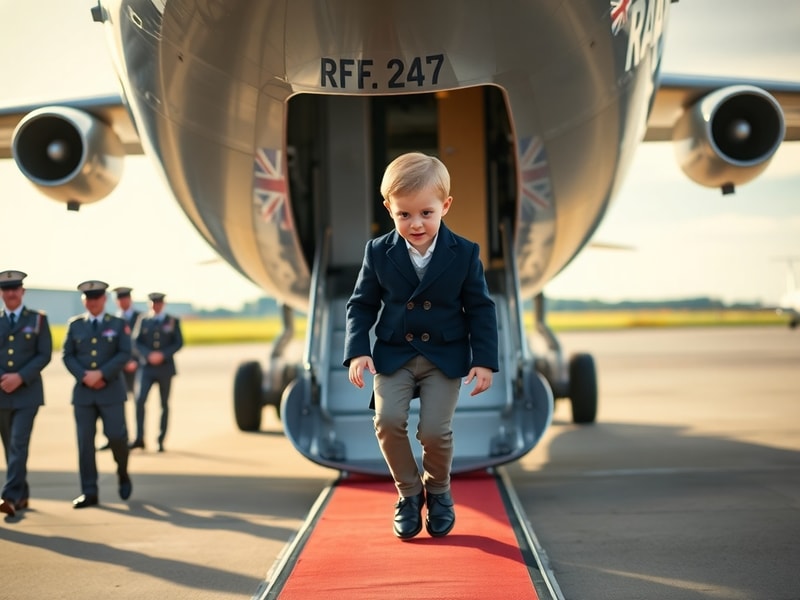
Why Prince George’s Royal Visit to the RAF Matters Beyond the Photo Ops
The arrival of Prince George at RAF Coningsby in Lincolnshire wasn’t just another royal walkabout—it was a calculated moment designed to bridge generations of service and symbolize continuity in Britain’s defense narrative. Dressed in a miniature RAF jacket, the nine-year-old prince toured the Typhoon simulator, met aircrew, and even took the controls of a jet’s throttle in a carefully choreographed display of youthful curiosity. The images flashed across global media within hours, but the significance runs deeper than public relations. This visit underscores the monarchy’s evolving role as a unifying figurehead amid shifting geopolitical realities and evolving public expectations of royalty.
The RAF Visit in Historical Context
Prince George’s engagement at RAF Coningsby follows a well-established pattern of royal visits to the armed forces, a tradition dating back to Queen Elizabeth II’s wartime service and her patronage of over 600 organizations. His grandfather, King Charles III, has similarly emphasized the monarchy’s connection to the military, often wearing service medals on public occasions. What sets Prince George’s visit apart is the generational leap it represents. At an age when most children are focused on school projects or weekend football, he is being groomed to embody the future of the institution—one that increasingly relies on digital communication and symbolic gestures to maintain relevance.
The RAF itself has undergone profound changes since its founding in 1918. From the Battle of Britain to modern drone operations in Ukraine, the service has adapted to technological revolutions while preserving its core identity. Prince George’s presence at a 21st-century RAF base—where pilots train on simulators and engineers maintain stealth aircraft—signals continuity in an era of rapid transformation. It also reflects the RAF’s ongoing efforts to attract younger recruits in a competitive job market where tech startups and cybersecurity firms often appeal more to digital natives.
Symbolism Meets Substance: What the Visit Communicates
The choice of RAF Coningsby as the venue was deliberate. As the home of the RAF’s Quick Reaction Alert (QRA) Typhoon force, Coningsby stands at the frontline of Britain’s air defense strategy. The base’s role in intercepting Russian aircraft near UK airspace in recent years has elevated its profile from operational hub to geopolitical talking point. By placing Prince George at the center of this narrative, the monarchy reinforces the RAF’s dual identity: a guardian of national security and a symbol of British resilience.
Yet the visit also carries domestic implications. In an era where trust in institutions is fragile, the monarchy’s association with the armed forces serves as a stabilizing force. According to a 2023 YouGov poll, 62% of Britons view the RAF favorably, compared to 45% for the government. This disconnect highlights the RAF’s unique position as an apolitical institution that transcends partisan divides. Prince George’s involvement subtly leverages that goodwill, positioning the royal family as guardians of national values rather than mere ceremonial figures.
There is also a subtle nod to Britain’s post-Brexit identity. While the UK navigates its new role outside the European Union, the RAF remains a key pillar of NATO and a visible projection of British power. Prince George’s visit, broadcast internationally, reinforces the idea that the UK remains a dependable ally on the global stage. It’s a message that resonates particularly in Eastern Europe, where Russia’s war in Ukraine has redrawn the continent’s security map.
Beyond the Headlines: The Broader Impact on Royalty and Defense
The ripple effects of Prince George’s RAF visit extend into three critical areas: recruitment, public perception, and the monarchy’s modernization.
Recruitment and Youth Engagement
The RAF has struggled to meet its recruitment targets in recent years, particularly among younger demographics. A 2022 Ministry of Defence report highlighted a 12% shortfall in aircrew positions. Prince George’s engagement—amplified by social media—could help shift perceptions. His presence at the Typhoon simulator, where he reportedly asked technical questions, offers a glimpse into the RAF’s high-tech future. This kind of exposure is invaluable in an era where traditional military careers compete with careers in gaming, coding, and digital content creation.
Public Trust and Institutional Relevance
The monarchy’s survival depends on its ability to remain relevant. Prince George’s RAF visit is part of a broader strategy to embed the royal family within the fabric of modern Britain. From his appearances at Wimbledon to his role as a Sea Scout, the young prince is being groomed to embody the monarchy’s adaptability. By associating the crown with institutions like the RAF—seen as both traditional and forward-looking—the monarchy reinforces its place in the national consciousness.
Modernization of the Monarchy’s Image
The RAF visit also underscores the monarchy’s shift toward a more digital-friendly public relations approach. The images from Coningsby were disseminated rapidly across platforms like Instagram and TikTok, where Prince George has over 10 million followers. This digital savviness contrasts with earlier generations of royals, who often relied on carefully staged print photographs. The RAF’s own social media channels amplified the visit, creating a feedback loop between the monarchy, the military, and the public.
Key Takeaways from Prince George’s RAF Visit
The visit may have lasted a single day, but its implications stretch far beyond the tarmac of RAF Coningsby. Here are the most consequential aspects:
- Generational Bridge: Prince George’s participation symbolizes the monarchy’s continuity, linking the wartime generation of his great-grandmother to the digital-native recruits of today.
- Defense Diplomacy: In a post-Brexit landscape, the RAF’s global role is more critical than ever. The visit reinforces Britain’s commitment to NATO and collective security.
- Recruitment Catalyst: The RAF’s struggle to attract young talent could benefit from the halo effect of a royal visit, particularly one that highlights cutting-edge technology.
- Modern Monarchy: The RAF engagement demonstrates how the monarchy is evolving—blending tradition with digital-era communication to maintain public favor.
- Symbolic Power: In an age of distrust in institutions, the RAF’s high approval ratings provide the monarchy with a ready-made ally to bolster its own legitimacy.
The Road Ahead: What Comes Next?
Prince George’s RAF visit is unlikely to be an isolated event. As he grows older, his public engagements will become more strategic, mirroring the approach of his father, Prince William, who has balanced military service with charitable work. The RAF may well become a recurring backdrop for his future appearances, particularly as the service expands its fleet of F-35 jets and invests in space and cyber capabilities.
There are, however, risks in over-relying on such symbolism. The monarchy’s strength lies in its ability to remain above politics, yet every royal engagement is scrutinized for hidden agendas. If Prince George’s RAF visit is perceived as purely ceremonial, it could backfire, reinforcing perceptions of the monarchy as an anachronism. The key will be to balance symbolism with substance—perhaps by linking future engagements to tangible outcomes, such as scholarships for RAF families or partnerships with STEM education programs.
For now, the images of Prince George in an RAF flight suit, his eyes wide with fascination, serve as a reminder that even in an era of drones and cyber warfare, the human element of service remains powerful. The monarchy, too, understands this. By placing its future face at the controls of a modern jet, it signals that tradition and innovation are not mutually exclusive—but rather, two sides of the same coin.
As the RAF adapts to 21st-century challenges, so too must the institution that has watched over it for a century. Prince George’s visit was more than a photo opportunity. It was a statement about the future—one where the past and the present fly in formation.