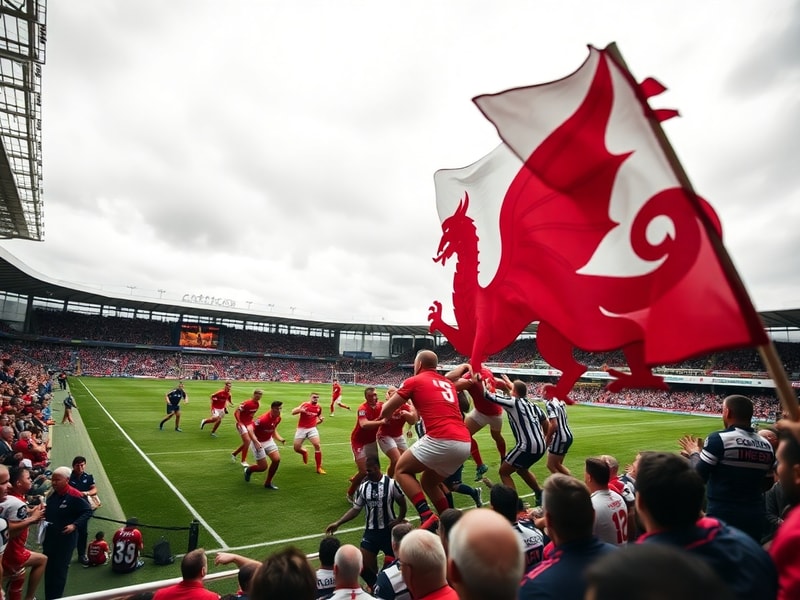
Wales vs Barbarians: Why this autumn clash revealed rugby’s shifting tides
The Wales vs Barbarians clash last weekend wasn’t just another mid-season rugby fixture—it was a statement. A statement about Wales’ depth, the Barbarians’ unpredictability, and the fine margins that separate victory from disappointment in elite rugby. In a game where possession ebbed and flowed like the tide, Wales emerged with a 49-26 scoreline, but the real story stretched beyond the scoreboard. It was about resilience, tactical nuance, and the evolving identity of a team that refuses to be pigeonholed.
Context and stakes: Why this match mattered
Wales’ autumn internationals serve multiple purposes. They’re a proving ground for emerging talent, a chance to blood youngsters in high-pressure environments, and an opportunity to test tactical innovations. The Barbarians, meanwhile, represent a different beast entirely—a team assembled for spectacle, where flair often trumps structure. This fixture was particularly significant because it fell between Wales’ November Tests against Tier 1 nations. It wasn’t a must-win scenario, but it was a litmus test for how Wales adapt when the intensity dial isn’t cranked to maximum.
For the Barbarians, the match was an exercise in controlled chaos. Their roster featured household names like Damian Penaud and Antoine Dupont alongside uncapped players eager to make an impression. Wales, on the other hand, fielded a side that balanced experience with ambition. The absence of key players like Dewi Lake and Dan Biggar due to injury forced coach Warren Gatland to shuffle his pack, testing the depth of his squad.
Key takeaways from the game
The match unfolded in waves, with both teams trading momentum. Wales started strongly, seizing early territorial dominance, but the Barbarians responded with a flurry of attacking rugby that kept the Welsh defense on its heels. By the final whistle, the scoreboard told a clear story, but the path to victory was anything but straightforward. Here’s what stood out:
- Wales’ defensive discipline: Despite conceding multiple line breaks, Wales’ ability to regroup and limit damage was impressive. Their blitz defense, a hallmark of Gatland’s tenure, forced the Barbarians into errors when they mattered most.
- Barbarians’ attacking ingenuity: The visitors’ backline sparkled at times, with Penaud and Damian Willemse combining brilliantly in midfield. Their handling under pressure was a masterclass in keeping possession alive.
- Kickoff conundrums: Both teams struggled to capitalize on turnovers in the opening exchanges. Wales’ kicking game, usually a strength, was less effective than usual, while the Barbarians’ counter-attacking threats were blunted by sharp Welsh ball-retention.
- Individual brilliance: For Wales, Louis Rees-Zammit’s electrifying runs injected pace into the attack, while for the Barbarians, Siya Kolisi’s physicality and leadership stood out in a side light on forwards.
Tactical nuances and broader implications
The Wales vs Barbarians match wasn’t just about the result—it was a microcosm of modern rugby’s tactical evolution. Wales’ game plan revolved around structured phases, with fly-half Sam Costelow marshalling the attack with precision. Yet, their inability to finish off scoring opportunities in the first half highlighted a recurring issue: converting pressure into points. The Barbarians, meanwhile, thrived in open play, their offloading game and lateral movement causing problems when Wales’ defense was stretched.
One of the most intriguing aspects of the game was the experimentation on both sides. Gatland used the match to trial new combinations, with young centers like Joe Hawkins and Mason Grady getting valuable minutes. For the Barbarians, their selection policy—mixing veterans with uncapped players—created a fascinating dynamic. It’s a model that could influence how Tier 2 nations approach mid-season fixtures, particularly as rugby’s calendar becomes more congested.
The broader implications of this match extend beyond the two teams. For Wales, it was a reminder that while their defense remains a cornerstone, their attack needs refinement if they’re to challenge consistently against the Tier 1 elite. The Barbarians, meanwhile, demonstrated that even without a unified training block, talent and creativity can produce moments of magic. Their performance will fuel debates about the future of exhibition rugby—is it a valuable spectacle or a distraction from Test rugby’s core priorities?
What’s next for Wales and the Barbarians?
For Wales, the focus now shifts to their upcoming Six Nations campaign. The autumn tests provided a snapshot of their current standing, but the real challenges lie ahead. Gatland’s side will need to tighten their attack and ensure that their defensive work isn’t in vain. The Barbarians, on the other hand, will likely regroup and target their next fixture with a similar blend of star power and innovation. Their ability to attract top players makes them a wildcard in rugby’s exhibition calendar, but their long-term relevance depends on balancing entertainment with competitive integrity.
One thing is clear: rugby’s mid-season fixtures are no longer afterthoughts. They’re arenas for tactical experimentation, player development, and cultural showcase. The Wales vs Barbarians match was a case in point—a game that delivered drama, skill, and intrigue, all while serving a purpose beyond the final whistle.
For fans of the sport, these matches are a reminder that rugby’s beauty lies in its unpredictability. Whether it’s the structured power of a Tier 1 nation or the free-flowing creativity of the Barbarians, rugby continues to evolve. And as the calendar turns toward 2024, one question lingers: just how far can these teams push the boundaries of the game?