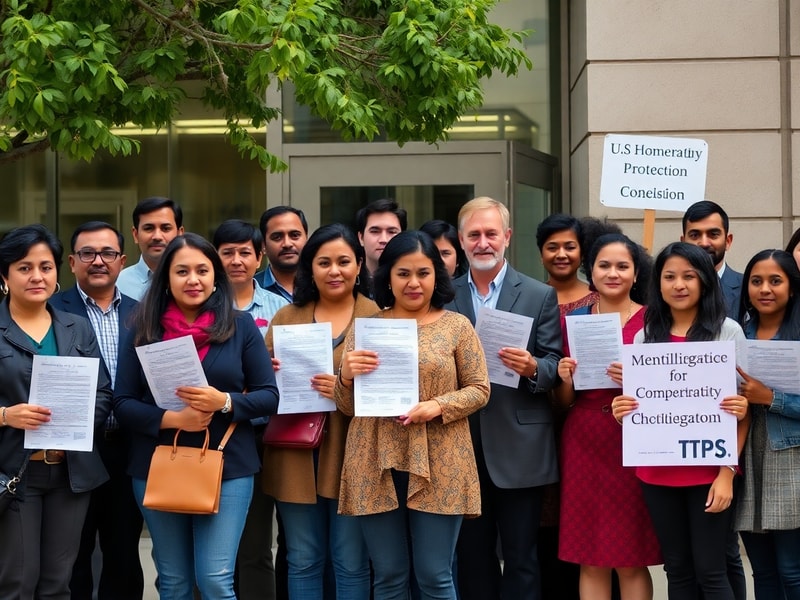
What Is Temporary Protected Status? Rules, Impact, and Human Stories
What Is Temporary Protected Status—and Why Does It Matter?
Every year, thousands of people flee their home countries because of war, natural disasters, or extreme violence. For many, the United States becomes a refuge. Temporary Protected Status (TPS) is one of the ways the U.S. offers legal protection to people from designated countries facing crises. Unlike asylum or refugee status, TPS is not a pathway to permanent residency. Instead, it provides temporary work authorization and protection from deportation for people who cannot safely return home.
TPS was created by Congress in 1990 as part of the Immigration Act. It allows the U.S. government to designate countries for TPS when conditions there temporarily prevent safe return. These conditions can include armed conflict, environmental disasters like hurricanes or earthquakes, or extraordinary circumstances like a global pandemic. Countries such as El Salvador, Haiti, and Venezuela have been on the TPS list at different times over the past three decades.
Once a country is designated for TPS, nationals of that country who are already in the U.S. can apply. They must meet strict eligibility requirements, including continuous residence and physical presence in the U.S. during the designated period. Approval grants work permits and protection from removal for renewable periods, typically 6 to 18 months at a time. However, TPS does not provide a green card or citizenship—it is strictly temporary.
The Human Stories Behind TPS
Behind every TPS designation is a person with a story. Take the case of Maria, a nurse from El Salvador who arrived in the U.S. in 2001 after two earthquakes devastated her country. She built a life in Los Angeles, raised two children, and worked in a hospital for over two decades. But when TPS for El Salvador was set to expire in 2018, she faced an impossible choice: return to a country with high gang violence or risk losing legal status.
Maria’s story is not unique. According to the Cato Institute, over 400,000 people from 16 countries currently hold TPS. Many have lived in the U.S. for more than a decade, put down roots, and contributed to local economies. In cities like Houston, TPS holders work in healthcare, construction, and service industries. Their presence is woven into the fabric of American communities.
Yet TPS recipients live with constant uncertainty. Every few years, their status must be renewed. Political changes can shift priorities overnight. For example, when the Trump administration tried to end TPS for several countries in 2017, hundreds of thousands of people faced the threat of deportation. Legal battles delayed some terminations, but the stress and instability remain a defining feature of TPS life.
For many, TPS is a lifeline—not a permanent solution. It allows families to stay together, children to finish school, and breadwinners to support their households. But it also highlights a broken immigration system that offers no clear path forward for long-term residents who contribute deeply to their adopted country.
How TPS Works: Rules, Renewals, and Reality
TPS is not automatic. The Department of Homeland Security (DHS) decides which countries qualify and for how long. The process begins when DHS, in consultation with other agencies, reviews conditions on the ground. If a country is deemed unsafe due to war or disaster, it may be added to the TPS list. Currently, 16 countries are designated for TPS, including Afghanistan, Cameroon, Haiti, and Ukraine.
Applicants must file Form I-821 and pay fees, though some qualify for fee waivers. Once approved, they receive an Employment Authorization Document (EAD) and protection from deportation. But renewal is not guaranteed. Every few years, DHS reassesses conditions. If the crisis has improved, TPS may be terminated. If it persists, the designation can be extended.
Here’s a breakdown of the key steps:
- Designation: DHS identifies a country facing a crisis and sets a registration period.
- Application: Eligible individuals apply during the open window.
- Approval: If approved, they receive work permits and protection from removal.
- Renewal: Before the current status ends, they must reapply to extend protection.
- Termination: If conditions improve, DHS can end TPS for that country.
This system creates a cycle of uncertainty. Many TPS holders have been renewing their status for over 20 years. While some courts have temporarily blocked terminations, the legal battles have taken a toll. The uncertainty affects mental health, financial stability, and family planning. Children born in the U.S. to TPS holders are American citizens—but their parents may face deportation, tearing families apart.
Global Crises and the Future of TPS
TPS was never meant to be a permanent fix. It was designed as a humanitarian tool for temporary crises. But as climate change intensifies, wars drag on, and disasters become more frequent, the temporary label is becoming harder to justify. In 2023, the United Nations estimated that over 23 million people were displaced due to weather-related disasters alone. These are the kinds of conditions that could one day lead to new TPS designations.
Countries like Haiti, where gang violence has crippled the government and earthquakes have destroyed infrastructure, have been on and off the TPS list for years. The Biden administration extended TPS for Haiti in 2021, citing the ongoing crisis. But without a broader immigration reform, TPS recipients remain in legal limbo. Bills like the SECURE Act have been proposed to offer TPS holders a pathway to permanent residency, but none have passed.
Internationally, the U.S. is not alone in using temporary protections. Canada’s Temporary Resident Permit and the European Union’s Temporary Protection Directive serve similar purposes. But the scale differs. The U.S. TPS program is one of the largest humanitarian protections of its kind, yet it lacks permanence. Many advocates argue that TPS recipients deserve a chance to become permanent residents, especially those who have lived in the U.S. for decades.
As climate change accelerates, the number of people displaced by environmental disasters will likely rise. Future TPS designations may become more common. But without legislative changes, the cycle of temporary protection will continue, leaving hundreds of thousands of people in a legal gray zone. The question is no longer just about who qualifies for TPS—it’s about what happens when temporary status is no longer temporary enough.
A Call for Reform and Compassion
TPS was created to help people survive crises, not to define their entire lives. Yet for many recipients, TPS has become a way of life. The program reflects both the best and worst of U.S. immigration policy: a humanitarian gesture that falls short of real solutions. The stories of TPS holders are stories of resilience, hard work, and deep community ties. They are neighbors, coworkers, and parents whose contributions enrich American society.
Reform is possible. Legislation like the American Dream and Promise Act has been introduced to offer TPS holders a pathway to citizenship. But political gridlock has stalled progress. In the meantime, TPS recipients continue to renew their status, hoping for a future where they no longer have to prove their worth to stay in the only country many have ever called home.
For now, TPS remains a critical but imperfect tool. It saves lives, stabilizes families, and supports communities. But it cannot replace the need for comprehensive immigration reform. Until then, the people who have been granted temporary protection will keep waiting—for safety, for stability, and for the chance to build a permanent future in the United States.