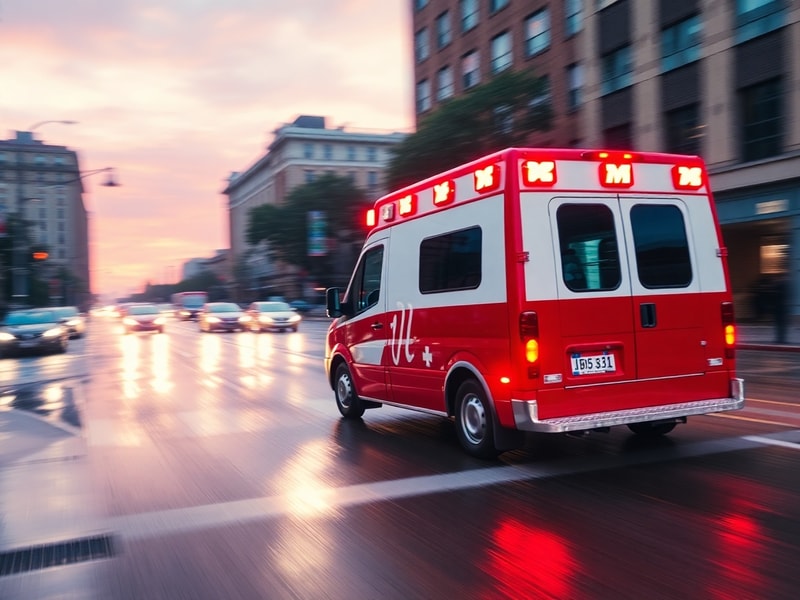
The Evolution of the Ambulance: From Horse-Drawn Carriages to AI-Powered Life-Savers
Few symbols carry the weight of urgency and care as distinctly as the ambulance. It is not merely a vehicle, but a mobile extension of emergency medical care, designed to bridge the gap between crisis and treatment. The history of the ambulance traces back centuries, evolving from rudimentary transport to the high-tech, rapid-response systems we rely on today. This journey reflects broader advancements in medicine, technology, and public health infrastructure across the globe.
While the modern ambulance is often associated with flashing lights and sirens, its origins were far more humble. The concept of transporting the sick or injured is ancient, but the idea of a dedicated, organized emergency response system is a relatively recent development. The transformation of the ambulance from a slow, often improvised means of transport to a sophisticated medical lifeline offers a fascinating window into human innovation and societal priorities.
The Birth of the Ambulance: From Battlefields to City Streets
The earliest documented ambulances were not civilian vehicles but military innovations. During the Napoleonic Wars in the early 19th century, Dominique-Jean Larrey, a French military surgeon, introduced flying ambulances—light, horse-drawn carts designed to quickly remove wounded soldiers from the battlefield. These carts were revolutionary because they prioritized speed, allowing medical personnel to reach and treat the injured sooner than traditional methods.
Yet, the first civilian ambulance service didn’t appear until 1865 in Cincinnati, Ohio. Operated by commercial hospitals, these early ambulances were horse-drawn wagons equipped with little more than stretchers and basic supplies. Their primary purpose was to transport patients to care, not to provide treatment en route. The vehicles were slow, often unreliable, and access to them was limited to those who could afford hospital care.
By the late 19th century, as cities grew and public health crises intensified, the demand for organized emergency response systems increased. The introduction of the telephone in 1876 allowed people to call for help, but there was still no standardized system for dispatching ambulances. In London, the Metropolitan Asylums Board began using ambulances to transport infectious disease patients to isolation hospitals, marking one of the first public health applications of the vehicle.
A Global Transformation: How Different Countries Adapted the Ambulance
The adoption of ambulances varied widely across the world, shaped by local resources, infrastructure, and cultural attitudes toward health and emergency care. In Japan, for instance, ambulance services were introduced in the early 20th century but remained under municipal control. Unlike in Western countries, ambulances in Japan were not always staffed with paramedics. Instead, they were often operated by firefighters who had basic first aid training. This system prioritized rapid response over advanced care, reflecting Japan’s emphasis on community-based emergency services.
In contrast, Germany developed one of the world’s first organized emergency medical services (EMS) systems in the 1950s, influenced by the post-war need to rebuild public health infrastructure. German ambulances were equipped with trained emergency physicians, setting a precedent for pre-hospital care. This model later inspired systems in other European nations, including France and the Netherlands, where ambulances became integral to national health strategies.
In developing nations, the evolution of ambulances has been slower and more uneven. In many parts of Africa and South Asia, access to ambulances remains limited due to economic constraints and geographic challenges. However, innovative solutions have emerged. In rural India, for example, community-based ambulance services often rely on modified vans or motorcycles equipped with basic medical kits. These vehicles are staffed by locally trained volunteers, demonstrating how necessity drives adaptation. Similarly, in parts of sub-Saharan Africa, organizations like the Red Cross have introduced motorcycle ambulances to navigate rough terrain, proving that even modest resources can save lives when deployed effectively.
The Modern Ambulance: Technology and Training at the Core
Today’s ambulances are technological marvels, integrating advanced medical equipment, real-time communication systems, and data-driven navigation tools. The transition from horse-drawn wagons to high-speed response vehicles reflects a broader shift in emergency medicine toward rapid intervention and patient stabilization. Modern ambulances are typically stocked with defibrillators, ventilators, advanced airway management tools, and even portable ultrasound machines. Some are now equipped with telemedicine capabilities, allowing paramedics to consult with doctors remotely during critical moments.
The interior layout of a modern ambulance is designed for efficiency. A typical setup includes:
- Patient Compartment: Spacious enough to accommodate one or two patients, with medical equipment mounted securely to prevent movement during transit. Oxygen tanks, IV poles, and monitoring devices are strategically placed for quick access.
- Driver’s Area: Separated from the patient compartment to minimize distractions. Equipped with GPS, two-way radios, and emergency lighting systems.
- Advanced Life Support (ALS) Equipment: Includes defibrillators, cardiac monitors, and medications for advanced interventions such as intubation and IV therapy.
- Lighting and Communication Systems: Bright, adjustable LED lights ensure visibility at night, while integrated communication systems allow seamless coordination with hospitals and dispatch centers.
Training for ambulance personnel has also evolved. In many countries, paramedics now undergo rigorous education programs that include anatomy, pharmacology, and hands-on clinical rotations. In the United States, the National Registry of Emergency Medical Technicians (NREMT) sets standards for certification, ensuring a baseline of competence across the country. Meanwhile, in the United Kingdom, the ambulance service is a fully integrated part of the National Health Service (NHS), with paramedics holding degrees in paramedic science.
The Ambulance in Pop Culture: Symbolism and Representation
Beyond its functional role, the ambulance has become a potent symbol in media and culture. It represents urgency, heroism, and the immediacy of life-and-death decisions. In films and television, ambulances often serve as backdrops for dramatic rescues and tense confrontations. Shows like ER and Chicago Fire have dramatized the high-stakes environment of emergency medical response, shaping public perceptions of what paramedics do.
Yet, the portrayal of ambulances is not always accurate. In many depictions, ambulances are shown racing through empty city streets with no traffic, which is rarely the case in real life. Moreover, the emotional toll on paramedics—who often deal with traumatic scenes—is frequently overlooked. This gap between reality and representation can distort public understanding of the challenges faced by emergency responders.
In music, the ambulance has been referenced in songs like Ambulance Blues by Neil Young and Ambulance Man by The Clash, using it as a metaphor for urgency, decay, or societal neglect. These artistic interpretations highlight how the ambulance transcends its practical function to become a cultural icon, reflecting broader anxieties about health, mortality, and social responsibility.
The Future of the Ambulance: Autonomous Vehicles and AI Integration
The next frontier in ambulance innovation lies in autonomy and artificial intelligence. Several countries are now testing self-driving ambulances, designed to navigate traffic and reach patients faster without the risks associated with human error. In China, for example, the city of Shenzhen has piloted autonomous ambulances equipped with AI-powered navigation systems that can reroute in real time based on traffic conditions and emergency severity.
AI is also being integrated into dispatch systems. Machine learning algorithms can predict high-traffic areas and allocate ambulances accordingly, reducing response times. In some cities, predictive analytics are used to identify high-risk areas for cardiac arrests, allowing ambulances to be pre-positioned before incidents occur. This proactive approach is reshaping emergency response from reactive to predictive.
Another emerging trend is the use of drones to deliver medical supplies to remote or inaccessible areas. In Rwanda, Zipline has deployed drone ambulances to deliver blood and vaccines to rural clinics, cutting delivery times from hours to minutes. While these drones are not direct replacements for traditional ambulances, they complement existing systems by bridging critical gaps in access.
The future may also bring ambulances that can perform life-saving procedures autonomously. Imagine a vehicle equipped with robotic arms capable of administering CPR or defibrillation while en route to the hospital. While this may sound like science fiction, advancements in robotic surgery and AI diagnostics are making such possibilities increasingly plausible.
The Ambulance as a Mirror of Society
More than just a vehicle, the ambulance is a reflection of a society’s values, resources, and priorities. In wealthy nations, ambulances are highly regulated, well-equipped, and integrated into comprehensive health systems. In developing regions, they are often makeshift but vital tools of survival. The disparities in ambulance access highlight global inequities in healthcare, where the difference between life and death can hinge on the availability of a single vehicle.
As technology advances, the ambulance will continue to evolve, becoming faster, smarter, and more connected. Yet, its core mission remains unchanged: to save lives in the most critical moments. Whether it’s a horse-drawn carriage in 19th-century Cincinnati or an AI-driven emergency pod in 2040, the ambulance stands as a testament to humanity’s enduring commitment to caring for one another in times of crisis.
For those who work in emergency services, the ambulance is more than a job—it’s a calling. For patients, it represents hope in their darkest hour. And for society as a whole, it is a reminder that health and safety are not luxuries, but fundamental rights that must be accessible to all.