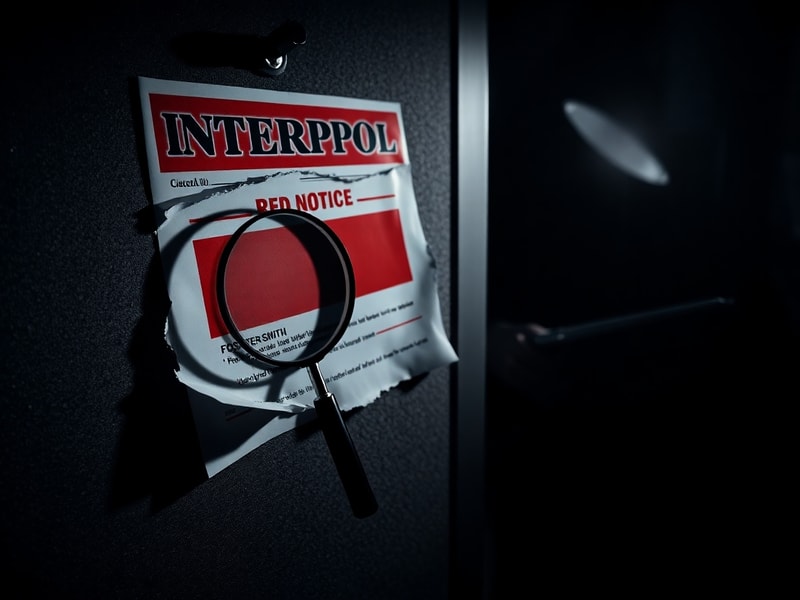
Interpol’s Red Notice system has once again thrust itself into the spotlight, this time through an unexpected intersection with international football. Matthew Foster-Smith, a lesser-known figure outside niche legal and sports circles, has become a focal point in discussions about the use of global policing tools in professional sports. His case highlights how Red Notices—which serve as international arrest requests—can disrupt careers, reputations, and lives, even when the underlying allegations remain unproven in court.
The controversy began when Foster-Smith, a former football agent with ties to several European clubs, found himself the subject of an Interpol Red Notice in mid-2023. The notice was reportedly issued at the request of authorities in a Southeast Asian jurisdiction, though specifics of the allegations have not been fully disclosed in public records. What makes this case particularly intriguing is the lack of criminal proceedings in Foster-Smith’s home country, the United Kingdom, raising questions about the transparency and proportionality of such global enforcement actions.
How Interpol’s Red Notice System Works
The Interpol Red Notice is often described as the closest thing the world has to an international arrest warrant. It’s not an arrest warrant itself but rather a request to law enforcement worldwide to locate and provisionally arrest a person pending extradition, surrender, or similar legal action. Once issued, a Red Notice can trigger travel restrictions, freeze assets, and complicate professional engagements across borders.
Not all Red Notices are created equal. Interpol classifies notices based on color codes, with Red being the most urgent. However, the system relies heavily on the cooperation of member countries, and political motivations can sometimes influence requests. Critics argue that some countries use Red Notices as tools to pursue individuals abroad without sufficient evidence or due process in their home jurisdictions.
A 2022 report by the News section of Dave’s Locker revealed that over 13,000 active Red Notices exist worldwide, with only a fraction resulting in actual extraditions. Many remain unexecuted for years, lingering like digital shadows over the lives of those targeted. Foster-Smith’s case fits this pattern, with no public record of an arrest or extradition attempt despite the notice’s global circulation.
Matthew Foster-Smith: A Career in the Crosshairs
Matthew Foster-Smith’s career in football agency spanned over a decade, during which he represented players in multiple European leagues and worked with clubs in England, Portugal, and Greece. Known for his aggressive negotiation style and extensive network, he was often described by insiders as a “fixer”—someone who could get deals done behind the scenes. But his reputation took a sharp turn when the Red Notice surfaced.
Former colleagues describe him as meticulous about compliance, though his involvement in several high-profile transfers that later faced scrutiny—particularly in Portugal’s top flight—raised eyebrows. While no direct link has been established between those transfers and the Red Notice, the timing has fueled speculation. In football, where trust is currency, a single allegation can erode years of credibility. For Foster-Smith, the notice became a professional death sentence before any legal process could unfold.
His case also underscores a growing concern in sports governance: the weaponization of legal tools against individuals in an industry already rife with opacity. Football’s transfer market operates with minimal transparency, and agents often work in gray areas where financial flows are hard to trace. When allegations of misconduct arise, the response from authorities is not always proportionate—and that’s where Interpol’s role becomes controversial.
The Broader Implications for Sports and Global Policing
The Foster-Smith case is not an isolated incident. Over the past five years, several football agents and executives have found themselves ensnared by Red Notices or similar Interpol alerts, often in connection with financial crimes, match-fixing investigations, or corruption probes. These cases rarely conclude with convictions, yet the damage to reputations is irreversible. For a profession where reputation is everything, the stigma of a Red Notice can be more punishing than any court sentence.
This raises ethical questions about the use of Interpol’s tools in sports-related disputes. Should global policing mechanisms be employed in cases that are essentially civil or contractual in nature? Football’s governing bodies, including FIFA and UEFA, have historically been slow to intervene in such matters, preferring to let legal systems run their course—even when that course circumvents due process.
Furthermore, the lack of public access to the full details of Foster-Smith’s case is troubling. Interpol does not publish the reasons behind a Red Notice, and member countries are not legally obliged to disclose them. This opacity fuels conspiracy theories and erodes public trust in the system’s fairness. It also prevents those accused from mounting an effective defense, as they’re often left responding to rumors rather than formal charges.
Here are key takeaways from the Matthew Foster-Smith and Interpol Red Notice saga:
- Opacity in Global Enforcement: The lack of transparency around Red Notices allows allegations to linger without resolution, damaging lives and careers.
- Sports Industry Vulnerability: Football’s opaque transfer ecosystem makes agents and executives prime targets for politically or commercially motivated legal actions.
- Proportionality Concerns: The use of international arrest tools in non-violent, financial disputes disproportionately punishes individuals before any legal judgment.
- Career Collateral Damage: In high-stakes industries like football, a single allegation can terminate a career, regardless of eventual legal outcomes.
- Need for Reform: Calls are growing for Interpol to implement stricter review processes for Red Notices, particularly in cases with no imminent threat of flight or violence.
Where Do We Go From Here?
The Foster-Smith case is a cautionary tale about the unintended consequences of global policing in an interconnected world. It exposes the vulnerabilities of individuals who operate at the fringes of power—neither fully protected by their home jurisdictions nor fully insulated from foreign legal systems. For someone like Foster-Smith, whose professional identity was built on discretion and influence, the public exposure of a Red Notice was a body blow with no clear path to recovery.
As of early 2024, Foster-Smith has not been arrested or extradited, and no charges have been filed in the UK. His legal team continues to challenge the Red Notice through Interpol’s internal review process, a slow and often opaque mechanism that offers little recourse. Meanwhile, the football world has largely moved on, with few willing to risk their reputations by associating with someone now labeled a “fugitive” by Interpol’s database.
This case should prompt a broader conversation about the balance between global justice and individual rights. Interpol’s mission to combat transnational crime is vital, but when its tools are wielded inappropriately, the collateral damage extends far beyond the accused. It erodes trust in institutions, stifles careers, and undermines the very principles of fairness that global policing is meant to uphold.
For now, Matthew Foster-Smith remains in legal limbo—a modern-day ghost in the machine of international law. His story is a reminder that in a world where information travels faster than justice, the line between allegation and conviction has never been thinner.