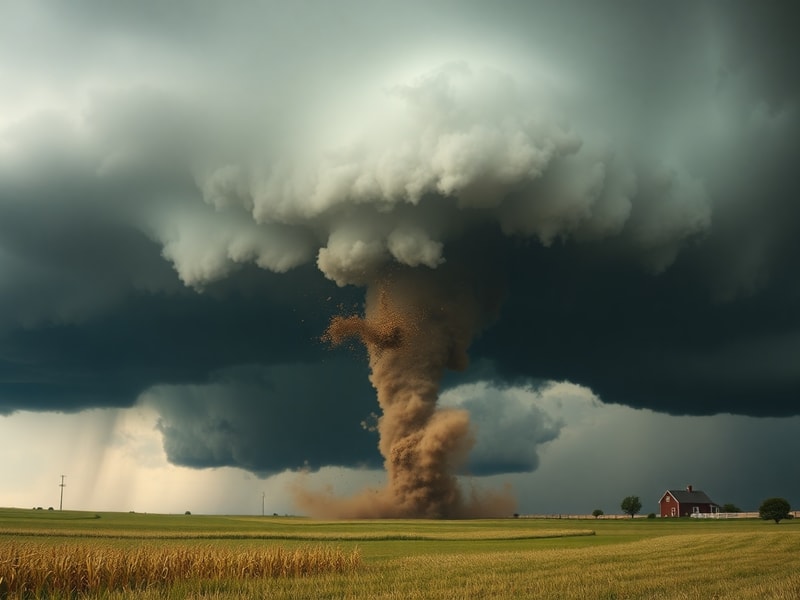
Tornado Warning: What It Means and How to Stay Safe
When the sky darkens and the air grows still, a tornado warning isn’t just a weather alert—it’s a moment that demands immediate action. Unlike a watch, which signals the possibility of severe weather, a warning means danger is imminent. Tornadoes can form within minutes, leaving little time for hesitation. Understanding the difference between a watch and a warning, recognizing the signs, and knowing how to respond can save lives. This isn’t about fear; it’s about preparedness.
What Triggers a Tornado Warning?
A tornado warning is issued by meteorologists when a tornado has been spotted on the ground or is detected by Doppler radar. The National Weather Service (NWS) is the authority that releases these warnings, often after receiving reports from trained storm spotters or analyzing radar data. The process begins with a tornado watch, which covers a broader area and a longer timeframe. If conditions worsen, the watch escalates to a warning, narrowing the focus to specific counties or communities.
Radar technology plays a critical role in modern warnings. Meteorologists look for telltale signs like a hook echo or a debris ball on radar scans. These indicators suggest a tornado is either forming or already on the ground. In some cases, weather apps and emergency alerts on smartphones push warnings directly to residents. The speed of these warnings has improved over the years, but the margin for error remains tight.
The Science Behind the Warning
Tornadoes thrive in environments where warm, moist air collides with cool, dry air. This clash creates instability, fueling thunderstorms that can spawn twisters. The most violent tornadoes often emerge from supercell thunderstorms, which are characterized by a rotating updraft called a mesocyclone. When conditions are ripe, a funnel cloud may descend, touching the ground to become a tornado. The warning system relies on predicting these conditions before the funnel forms.
Doppler radar, specifically the WSR-88D system used by the NWS, measures the velocity of precipitation particles. This helps meteorologists detect rotation within a storm, even if a tornado hasn’t yet formed. The Enhanced Fujita (EF) Scale, which rates tornadoes from EF0 to EF5 based on damage, guides the severity of warnings. An EF4 or EF5 tornado—capable of leveling well-built homes—demands the most urgent response.
How to Respond When a Warning Is Issued
Seconds count when a tornado warning is active. The first step is to seek shelter immediately. The safest place is a basement or an interior room on the lowest floor of a sturdy building, away from windows. If you’re in a mobile home, evacuate to a nearby structure or designated storm shelter. Vehicles are particularly dangerous; if you can’t reach a building, lie flat in a ditch or low-lying area and cover your head.
Have a plan in place before severe weather hits. This includes identifying your safe room, gathering emergency supplies like water, non-perishable food, a flashlight, and a weather radio, and ensuring your phone is charged. If you’re in a public space like a mall or school, follow the building’s emergency protocols. Do not wait for visual confirmation of a tornado—if a warning is issued, act now.
After the storm passes, stay cautious. Downed power lines may still be live, and debris can hide sharp objects or unstable structures. Check for injuries and report them to emergency services. Use your phone sparingly to keep lines open for critical communication. Once you’ve accounted for your safety, avoid sightseeing; roads may be blocked, and additional storms could follow.
Common Misconceptions About Tornado Warnings
One of the most dangerous myths is that tornadoes won’t strike certain areas. No place is entirely safe, though some regions are more prone than others. Tornado Alley in the central U.S. sees the highest frequency, but tornadoes have occurred in every state. Another misconception is that tornadoes always move in a predictable path. While many follow a southwest-to-northeast trajectory, they can change direction abruptly, especially in complex terrain.
Some people assume that the size of a tornado correlates with its strength. In reality, a small EF0 tornado can still cause significant damage, while a large EF2 might be less destructive if it passes through open fields. Another pitfall is relying solely on outdoor sirens. These sirens are designed for outdoor alerting and may not be heard indoors or in urban areas with noise pollution. Always have multiple ways to receive warnings, such as a NOAA Weather Radio or a smartphone app.
Preparing Your Home and Community
Long-term preparedness reduces the chaos when a warning is issued. Start by reinforcing your home’s structure. Garage doors are particularly vulnerable; consider installing a wind-rated door or reinforcing it with a bracing system. If you live in a high-risk area, invest in a storm shelter or reinforce a closet or bathroom to serve as a safe room. Keep important documents in a waterproof, portable container for quick evacuation.
Community efforts also play a role in reducing tornado risks. Neighborhoods can organize storm spotter training sessions, where volunteers learn to identify severe weather patterns. Schools and workplaces should conduct regular tornado drills, ensuring everyone knows the safest routes and shelter locations. Local governments can improve infrastructure by designating and publicizing storm shelters in public buildings like libraries or community centers.
Technology continues to advance warning systems. Projects like the Warn-on-Forecast initiative aim to provide even earlier and more precise warnings by using high-resolution models to predict tornado formation up to an hour in advance. These innovations could give communities precious extra minutes to react, potentially saving more lives.
The Human Impact of Tornado Warnings
Behind every warning is a community that must respond. For some, the stress of severe weather leads to long-term anxiety, particularly for those who’ve experienced loss. Children may struggle with fear, requiring reassurance and clear communication about safety plans. Elderly residents or individuals with disabilities may need additional support to evacuate or shelter in place. The psychological toll of living in tornado-prone areas is real and often overlooked.
Recovery from a tornado can take years. Communities like Joplin, Missouri, and Moore, Oklahoma, have faced multiple devastating tornadoes, each leaving a lasting imprint on residents. The rebuilding process isn’t just about restoring buildings; it’s about restoring a sense of normalcy. Support systems, from local charities to federal disaster relief, are crucial in these times. Mental health resources and community outreach programs help residents cope with the aftermath.
A tornado warning is more than a weather alert—it’s a reminder of nature’s unpredictability. Yet, it’s also a testament to human resilience. From meteorologists tracking storms to neighbors helping each other find shelter, the response to these warnings showcases the best of community spirit. Preparing for the worst doesn’t mean living in fear; it means living with awareness and readiness.