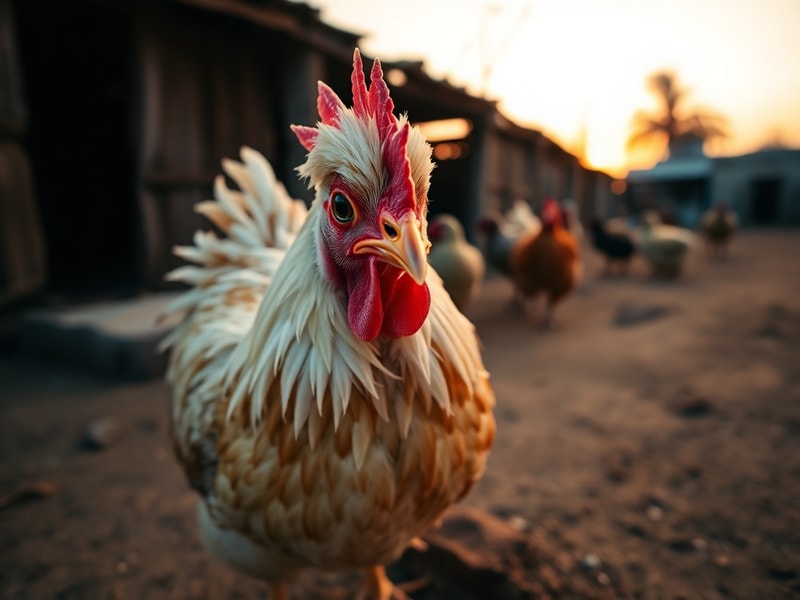
The latest viral sensation isn’t a dance challenge or a meme format—it’s a simple three-word phrase that has taken over social feeds, group chats, and even office break rooms: “Chicken alert.” What began as a niche inside joke among certain online communities has evolved into a full-blown cultural shorthand, popping up in unexpected places from TikTok captions to late-night talk show monologues. But how did something so absurd become so widely recognized, and why does it resonate with such a broad audience?
From Meme to Mainstream: The Rise of Chicken Alert
The origins of “Chicken alert” trace back to a 2022 TikTok trend where users would dramatically announce “chicken alert” before revealing something unexpected—often unrelated to poultry. The phrase itself was a playful twist on emergency alert systems, replacing urgency with absurdity. Creators like @memelord99 and @chaoticdoodle used it in skits where a bowl of chicken wings would suddenly appear, or where a chicken would photobomb a serious moment.
What made it catch on wasn’t just the randomness, but the flexibility of the phrase. It could be a setup for a punchline, a meta-commentary on viral trends, or even a sarcastic response to mundane news. By early 2023, the hashtag #ChickenAlert had amassed over 12 million views across platforms, with users remixing the concept into everything from parody news broadcasts to ASMR videos featuring clucking sounds.
The phrase’s rise mirrors the lifecycle of many internet phenomena: a small group adopts it, content creators amplify it, and brands eventually co-opt it. Fast-food chains like KFC and Wendy’s have flirted with the trend in social media posts, while clothing brands have sold “Chicken Alert” T-shirts. This commercialization hasn’t killed the joke—it’s only made it more visible. Even mainstream media outlets like The New York Times and BBC News have covered the trend, framing it as a symptom of Gen Z’s love for irony and chaos.
The Psychology Behind the Absurd
Why does “Chicken alert” work? At its core, the phrase taps into a universal human response: the thrill of the unexpected. Psychologists call this the “violation of expectation” phenomenon, where our brains light up when something defies logic or predictability. In a digital landscape saturated with algorithmically curated content, unpredictability is a rare commodity.
There’s also a social bonding aspect. Using “Chicken alert” signals membership in an in-group that understands the joke, creating a sense of camaraderie. It’s the modern equivalent of a secret handshake, but with more feathers. The absurdity lowers the barrier to participation—anyone can drop the phrase in a conversation and instantly become part of the joke, regardless of their background or interests.
Another layer is the meme’s ability to transcend language barriers. Unlike wordplay that relies on puns or cultural references, “Chicken alert” is visual and auditory. The mental image of a chicken (or the sound of clucking) is universally recognizable, making it easy to adapt across languages and cultures. This has led to global variations, from Japanese users pairing it with anime characters to German creators using it in absurd poetry recitals.
Chicken Alert in Unexpected Places
The phrase’s versatility has led to its infiltration into professional and institutional spaces. Emergency alert systems have jokingly incorporated “Chicken alert” into test messages, causing confusion and amusement among recipients. Schools and universities have used it in student orientations as a way to break the ice during presentations about campus safety protocols.
Even corporate culture hasn’t been immune. During a 2023 earnings call, a tech CEO jokingly interrupted a serious discussion to announce a “chicken alert,” prompting laughter from investors and analysts. The moment went viral, with financial news outlets debating whether it was a brilliant PR move or a sign of corporate culture gone mad. Either way, it proved that “Chicken alert” had evolved beyond meme status—it was now a tool for managing workplace stress and fostering creativity.
Perhaps most surprisingly, the trend has inspired real-world events. “Chicken alert” meetups have popped up in cities worldwide, where attendees gather to share absurd stories, perform improv comedy, and, of course, eat chicken. These gatherings often feature competitions for the most creative “chicken alert” scenarios, ranging from interpretive dance performances to silent film recreations. The events blend online culture with offline community, proving that internet humor can have tangible social benefits.
Is Chicken Alert a Passing Fad or Here to Stay?
Skeptics argue that “Chicken alert” is just another in a long line of short-lived internet trends, destined to fade as quickly as it rose. They point to the cyclical nature of memes, where today’s viral sensation becomes tomorrow’s cringe. However, the phrase’s adaptability suggests it may have legs beyond its initial hype.
Several factors support its longevity. First, it’s become a linguistic meme—a word or phrase that enters the lexicon rather than remaining a niche reference. Words like “yeet,” “rizz,” and “sigma” have followed similar trajectories, transitioning from internet slang to dictionary entries. “Chicken alert” could be next.
Second, the trend has spawned derivative content that keeps the concept fresh. Spin-offs include “Chicken alert: The Game,” a mobile app where players trigger absurd alerts to prank friends, and “Chicken alert: The Musical,” a community theater production that premiered in Los Angeles last summer. These adaptations ensure the phrase remains relevant across multiple media formats.
Of course, no trend lasts forever. The key to “Chicken alert’s” survival may lie in its ability to remain self-aware. The most enduring memes are those that acknowledge their own absurdity, like “This is fine” dog or “All your base are belong to us.” By embracing its silliness, “Chicken alert” could avoid the fate of trends that take themselves too seriously.
How to Use Chicken Alert Responsibly
As with any viral trend, context matters. While “Chicken alert” can be a fun way to lighten the mood, it’s important to recognize when and where it’s appropriate. Overusing the phrase in professional settings, for example, could undermine credibility or come across as unprofessional.
Here are some tips for using “Chicken alert” thoughtfully:
- Know your audience: Reserve it for casual conversations or creative settings where humor is expected.
- Keep it fresh: Avoid overusing the phrase in the same context—variety keeps the joke alive.
- Embrace the absurd: The best “Chicken alert” moments are those that lean into the chaos rather than trying to force a punchline.
- Respect the origin: While the trend is now mainstream, it’s worth acknowledging its roots in meme culture and giving credit where it’s due.
For brands and content creators, the key is to participate without overshadowing the community’s ownership of the trend. Attempts to commercialize it too aggressively often backfire, as seen with other viral sensations that lost their authenticity.
Ultimately, “Chicken alert” is more than just a joke—it’s a reflection of how internet culture continues to shape our collective sense of humor and community. In a world that often feels divided, it offers a rare moment of shared absurdity. Whether it fades into obscurity or becomes a permanent fixture of our digital lexicon, its impact is undeniable.