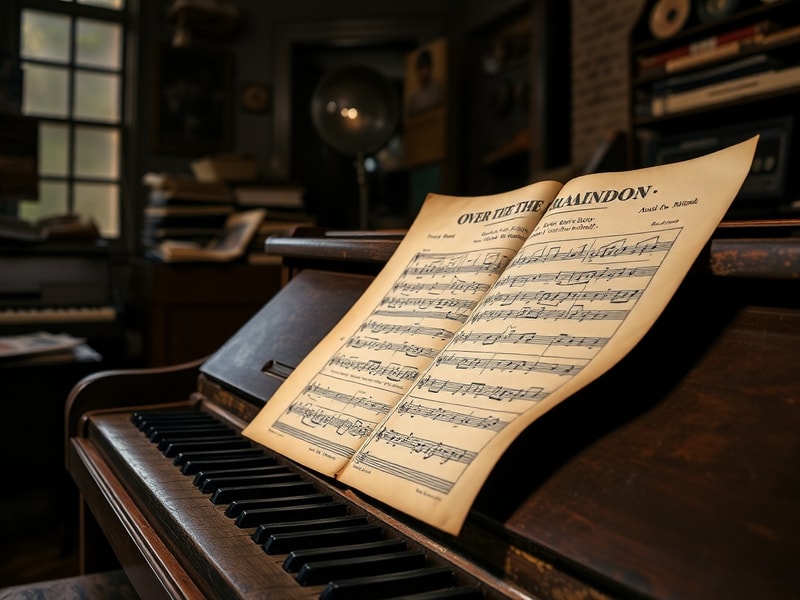
The Essential American Songbook: A Global Anthem of Identity and Influence
The American Songbook is more than a collection of musical compositions—it’s a cultural time capsule that has shaped global music for nearly a century. Rooted in the early 20th century, this body of work emerged from Tin Pan Alley’s songwriting factories, Broadway stages, and Hollywood studios, evolving into a universal language that transcends borders. Its melodies and lyrics have become embedded in the collective consciousness, heard in jazz clubs from Tokyo to Buenos Aires, performed in symphony halls from London to Sydney, and reimagined by artists across genres and generations.
What makes the American Songbook “essential” isn’t just its longevity or commercial success—it’s its ability to articulate universal human experiences: love, loss, hope, and longing. These songs have soundtracked historical moments, from the Great Depression to the Civil Rights Movement, and continue to serve as emotional touchstones in an increasingly fragmented world. While American in origin, their resonance is undeniably global, reflecting how music can bridge cultural divides and foster shared understanding.
The Foundations: Tin Pan Alley, Broadway, and Hollywood
The American Songbook’s origins trace back to New York City’s Tin Pan Alley in the late 19th and early 20th centuries. This was a hub of sheet music publishers and songwriters who crafted catchy, accessible tunes designed for mass appeal. Composers like Irving Berlin, George Gershwin, and Cole Porter became household names, churning out hits that dominated radio airwaves and sheet music sales. Their work laid the groundwork for the Great American Songbook, a term later coined to describe the most enduring compositions from this era.
Broadway and Hollywood amplified the Songbook’s reach in the 1920s through the 1950s. Musicals like Show Boat (1927) and Oklahoma! (1943) introduced complex narratives and sophisticated scores that blurred the line between popular and classical music. Meanwhile, Hollywood’s golden age turned songwriters into superstars—think of Judy Garland belting “Over the Rainbow” in The Wizard of Oz (1939) or Gene Kelly dancing through “Singin’ in the Rain.” These films didn’t just entertain; they exported American culture to every corner of the globe, embedding these melodies into the international psyche.
This era also saw the rise of jazz standards, many of which originated from Broadway or Hollywood but were reimagined by jazz musicians. Songs like “Summertime” (from Porgy and Bess) and “My Funny Valentine” became vehicles for improvisation, allowing artists worldwide to reinterpret them with personal flair. The Songbook’s adaptability is one of its defining traits—whether played as a waltz, a bebop tune, or a torch song, its emotional core remains intact.
A Global Legacy: How the Songbook Crossed Oceans and Cultures
The American Songbook’s influence extends far beyond the United States, thanks in part to its adoption by international artists and the global reach of American entertainment. In Europe, for instance, the Songbook became a staple of jazz clubs during the post-World War II era. British jazz musicians like George Melly and George Shearing honed their craft by studying American standards, while French singers like Yves Montand and Édith Piaf incorporated Songbook tunes into their repertoires. Piaf’s rendition of “My Funny Valentine” remains a touchstone in French chanson, proving that cultural exchange is a two-way street.
In Latin America, the Songbook found fertile ground in the bolero and tango traditions. Mexican crooners like Luis Miguel and Brazilian bossa nova icons like João Gilberto reworked standards like “Smoke Gets in Your Eyes” and “Corcovado (Quiet Nights of Quiet Stars)” into lush, rhythmic interpretations. Meanwhile, in Asia, the Songbook became a symbol of modernity and sophistication. Japanese jazz singers like Izumi Yukimura and piano virtuosos like Yosuke Yamashita kept the tradition alive, often blending it with local musical elements. In India, Bollywood filmmakers borrowed melodies from the Songbook, creating hybrid songs that fused American swing with Indian classical music.
This global adoption speaks to the Songbook’s universal themes. A Ukrainian folk singer, a Congolese rumba band, or a Swedish pop artist can all connect with the same lyrics about heartbreak or resilience. The Songbook’s simplicity—its reliance on strong melodies and relatable lyrics—makes it accessible, while its depth allows for endless reinterpretation. It’s a testament to how music can transcend language and geography, uniting people through shared emotion.
The Modern Custodians: Keeping the Songbook Alive in the 21st Century
Today, the American Songbook faces both challenges and opportunities. Younger generations are less familiar with its original context, yet its songs persist in unexpected ways. Contemporary artists like Norah Jones, Diana Krall, and Esperanza Spalding have brought the Songbook into the 21st century, infusing it with jazz, soul, and even hip-hop influences. Even pop stars like Lady Gaga and Bruno Mars have dipped into the Songbook’s well, proving its enduring relevance.
Technology has also played a role in preserving and disseminating the Songbook. Streaming platforms like Spotify and Apple Music make it easier than ever to explore original recordings alongside modern covers. Educational initiatives, such as jazz education programs in public schools and online courses on American musical theatre, are introducing new audiences to the Songbook’s history and significance. Meanwhile, revivals of classic musicals—like the 2016 film La La Land, which paid homage to the Golden Age of Hollywood—keep the visual and narrative traditions alive.
Yet, the Songbook’s future isn’t guaranteed. As musical tastes shift and genres fragment, there’s a risk that its cultural weight could fade. That’s why institutions like the Library of Congress and organizations such as the Songbook Foundation are working to archive, digitize, and promote these works. Their efforts ensure that future generations can access the original manuscripts, recordings, and stories behind the songs that defined an era.
For those looking to dive deeper into the Songbook’s legacy, exploring its connections to other musical traditions can be illuminating. For example, the fusion of jazz and Latin rhythms in the works of artists like Dizzy Gillespie and Machito offers a fascinating parallel to the Songbook’s global journey. Similarly, the influence of the Songbook on modern music can be traced in the songwriting of artists like Paul Simon and Burt Bacharach, who blended its sophistication with contemporary styles.
Why the American Songbook Still Matters
The American Songbook endures because it reflects a shared human experience. In an era of algorithm-driven playlists and short-form content, its melodies offer something rare: depth, craftsmanship, and timelessness. Whether it’s the bittersweet nostalgia of “I’ll Be Seeing You” or the defiant hope of “This Land Is Your Land,” these songs provide a soundtrack for life’s most poignant moments.
Globally, the Songbook serves as a reminder of America’s cultural exports—not just its economic or political influence, but its ability to inspire and connect. It’s a legacy that belongs to the world as much as it does to the United States, a testament to music’s power to transcend borders. As long as artists continue to reinterpret these songs and audiences continue to listen, the American Songbook will remain essential.
For those eager to explore further, consider starting with a curated playlist of essential standards, or attend a live performance of a classic musical. The songs are waiting—all you need is an open heart and a willingness to listen.