From Diwali to New Year’s Eve: The Global Love Affair with Fireworks
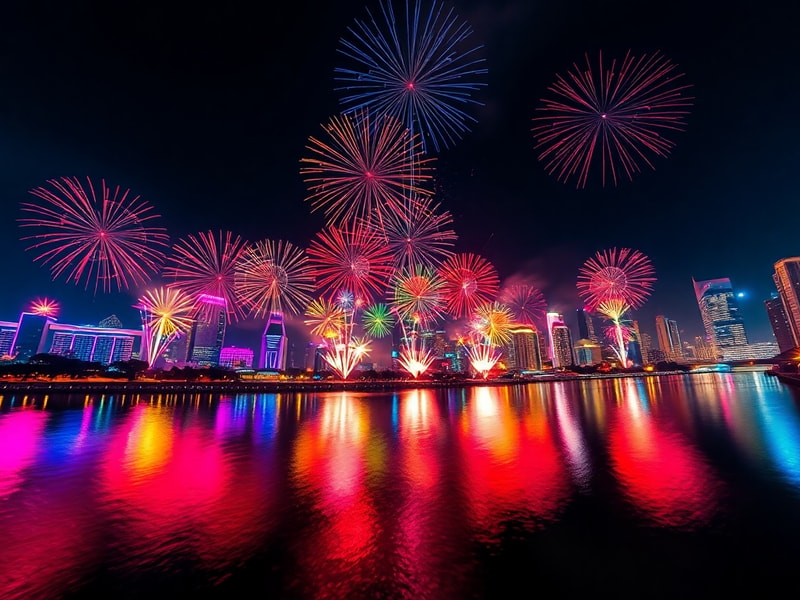
Fireworks are more than just colorful explosions in the sky—they are a universal language of celebration, marking everything from religious festivals to national pride. Whether it’s the crackle of firecrackers during China’s Lunar New Year, the dazzling pyrotechnics of sports championship victories, or the quiet sparkle of a local summer festival, fireworks have a way of uniting communities in awe. But why do humans across cultures and continents remain so enchanted by these fleeting bursts of light? The answer lies in their deep-rooted symbolism, their power to evoke emotion, and their ability to transform ordinary moments into extraordinary memories.
In recent years, the search for “fireworks near me” has surged as people seek out public displays, private celebrations, and even DIY alternatives. This trend reflects a broader cultural shift—one where shared experiences and sensory overload take center stage. But the story of fireworks is far older than Google searches. It’s a story of innovation, tradition, and the human desire to illuminate the darkness, both literally and metaphorically.
The Science and History Behind the Boom
Fireworks trace their origins to 7th-century China, where alchemists accidentally discovered gunpowder while searching for an elixir of immortality. By the 10th century, the Chinese were launching bamboo tubes filled with gunpowder into fires to scare away evil spirits—a practice that evolved into the first aerial fireworks. The technology spread along the Silk Road, reaching the Middle East and Europe by the 13th century. By the Renaissance, fireworks had become a staple of European royal celebrations, with kings and queens commissioning elaborate displays to flaunt their wealth and power.
The science behind fireworks is as precise as it is poetic. Modern pyrotechnics rely on a carefully balanced mix of chemicals: oxidizers to fuel the reaction, fuels to create heat and light, and metals to produce color. Strontium carbonate yields red, copper sulfate produces blue, and magnesium creates brilliant white. The shape of a firework—whether it’s a chrysanthemum, peony, or palm—depends on how the explosive charges are arranged within the shell. When the fuse ignites, the lift charge propels the firework into the sky, while the burst charge detonates the stars, scattering light in intricate patterns.
Today, advancements in technology have made fireworks safer and more sustainable. Low-smoke formulas reduce air pollution, while electronic fuses allow for synchronized displays set to music. Yet, despite these innovations, the fundamental magic remains unchanged. A single explosion in the sky can make a crowd gasp in unison, a reminder that some experiences transcend time and technology.
The Cultural Tapestry of Fireworks
Fireworks are woven into the fabric of countless cultures, each adding its own layer of meaning to the spectacle. In India, Diwali—the Festival of Lights—is unimaginable without fireworks, which symbolize the triumph of light over darkness and good over evil. The deafening crackle of firecrackers is believed to ward off evil spirits, while the vibrant colors represent joy and prosperity. Similarly, in Japan, Hanabi (fireworks) festivals draw millions to riversides and parks, where spectators marvel at designs inspired by flowers and historical motifs.
In the United States, fireworks are synonymous with Independence Day, a tradition dating back to the first anniversary of the Declaration of Independence in 1777. Today, cities like New York, Boston, and Chicago host massive public displays, often accompanied by live music and fireworks competitions. Meanwhile, in Latin America, fireworks play a central role in Día de los Muertos (Day of the Dead), where they are used to guide the spirits of the deceased back to the world of the living.
Even in cultures where fireworks are less prominent, they have found a place in modern celebrations. In Sweden, Midsummer’s Eve features bonfires and small fireworks, blending pagan traditions with contemporary revelry. In South Africa, New Year’s Eve parties often end with impromptu fireworks displays, a nod to the country’s diverse cultural influences. The universality of fireworks speaks to a shared human need—to mark transitions, honor traditions, and create moments of collective joy.
Where to Find Fireworks Near You
As interest in fireworks grows, so does the demand for safe and accessible displays. Public fireworks shows remain the most popular option, offering a hassle-free way to enjoy the spectacle without the risks of handling explosives. Many cities host annual events, often tied to holidays like July 4th in the U.S., Bastille Day in France, or Guy Fawkes Night in the U.K. Local parks, beaches, and sports stadiums are common venues, with schedules typically posted on city websites or community boards.
For those seeking a more intimate experience, private fireworks displays are an option, though they require permits and professional handling. In some countries, like Germany and the Netherlands, strict regulations limit private fireworks to licensed operators. Meanwhile, in the U.S., laws vary by state—some allow consumer fireworks year-round, while others restrict them to specific holidays. Always check local regulations before purchasing or setting off fireworks to avoid fines or injuries.
If public displays aren’t an option, consider alternative ways to bring the magic home. Drive-in movie theaters sometimes pair screenings with fireworks, offering a nostalgic twist on the traditional experience. Some entertainment venues, like theme parks or concert halls, host seasonal fireworks shows that blend music with visual spectacle. For the truly adventurous, fireworks cruises and hot air balloon rides provide a unique vantage point to watch the displays unfold.
Here’s a quick guide to finding fireworks near you:
- Check local event calendars: City websites, tourism boards, and social media groups often list upcoming fireworks displays.
- Download event apps: Apps like Eventbrite or local community platforms aggregate festivals and celebrations.
- Ask around: Community centers, sports clubs, and cultural organizations are great sources for insider tips.
- Plan ahead: Popular shows can draw huge crowds—arrive early to secure a good spot.
The Future of Fireworks: Innovation and Responsibility
As climate change and air pollution become pressing concerns, the future of fireworks is at a crossroads. Traditional fireworks release significant amounts of particulate matter and toxic chemicals, contributing to poor air quality in urban areas. In response, some cities have banned or restricted fireworks during peak pollution seasons. Alternatives are emerging, from drone light shows that mimic fireworks with LED-equipped drones to biodegradable fireworks made from compressed air and water.
Yet, despite these innovations, the emotional and cultural pull of fireworks remains strong. For many, the anticipation of a summer evening filled with booms and bursts is a ritual worth preserving. The challenge lies in balancing tradition with responsibility—finding ways to celebrate without compromising health or the environment. Some communities are turning to “quiet fireworks,” which use less noise pollution to reduce stress on animals and humans, while others are opting for silent displays set to music.
Technology is also playing a role in redefining the fireworks experience. Augmented reality (AR) fireworks apps allow users to project virtual displays onto their surroundings, blending digital and physical worlds. Virtual reality (VR) fireworks experiences offer an immersive alternative for those who can’t attend live shows. These innovations suggest that the future of fireworks may not lie solely in the sky but in the palm of our hands.
Ultimately, fireworks are a reminder of humanity’s enduring love for spectacle and shared joy. Whether they light up the sky during a religious festival, a sports victory, or a personal milestone, fireworks serve as a bridge between past and present, tradition and innovation. As we look to the future, the challenge will be to preserve the wonder of these moments while adapting to the needs of a changing world.
The next time you search for “fireworks near me,” remember that you’re tapping into a tradition that spans centuries and continents. It’s not just about the colors or the sounds—it’s about the shared breath held in anticipation, the collective gasp at the first burst, and the fleeting sense of unity that comes when strangers become a crowd, all looking up at the same sky.