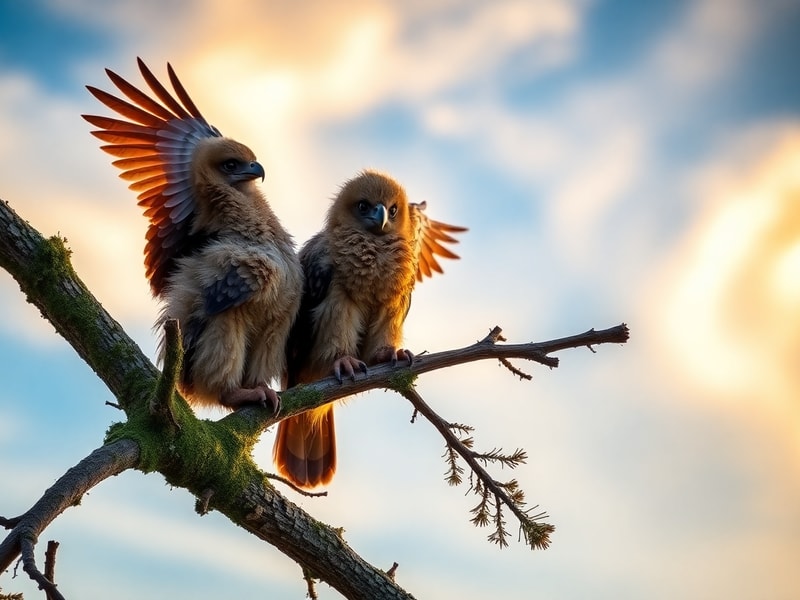
Meet Sandy: The Adorable Eaglets of Big Bear Lake
In the quiet, rugged expanse of Big Bear Lake, California, a remarkable story has unfolded over the past few months. Two eaglet siblings, affectionately nicknamed Sandy by local wildlife enthusiasts, have captured the attention of birdwatchers and nature lovers alike. Their journey from fragile hatchlings to near-fledged juveniles is a testament to the resilience and beauty of wildlife, offering a rare glimpse into the private lives of these majestic birds.
A Nest Built for Survival
The nest of Sandy and their sibling is perched high in a Jeffrey pine, roughly 50 feet above the ground. This elevated vantage point provides a clear view of the surrounding forest and lake, allowing the adult bald eagles to monitor their territory while keeping a watchful eye on their offspring. The nest itself is a marvel of natural engineering—constructed from thick branches and lined with softer materials like pine needles and moss. Over the years, eagles often return to the same nest, adding new layers each breeding season, which has resulted in a structure that can weigh up to a ton.
Sandy’s parents, both experienced breeders, have been a constant presence since the eggs were laid in early spring. Bald eagles typically incubate their eggs for about 35 days, and the hatchlings—known as eaglets—emerge blind and covered in a thin layer of white down. For the first few weeks, the adult eagles take turns brooding the chicks to keep them warm while the other hunts for food. Sandy’s early days were spent nestled close to their sibling, their tiny bodies barely visible against the vast expanse of the nest.
The Challenges of Growing Up
Life in the nest is not without its challenges. Sandy and their sibling faced their first major hurdle when a late-season snowstorm rolled through the San Bernardino Mountains in April. Temperatures dropped below freezing, and the adults struggled to find open water for fishing. Observers noted that the parents made fewer hunting trips during the storm, leaving the eaglets to huddle together for warmth. Fortunately, the adults adapted quickly, targeting trout in deeper, unfrozen sections of the lake. By the end of the week, the storm had passed, and the eaglets were none the worse for wear, their downy feathers fluffed up against the cold.
As the weeks progressed, Sandy began to exhibit behaviors that signaled their transition into adolescence. At around six weeks old, the eaglets started to develop their juvenile plumage, which includes darker brown feathers speckled with white. This stage is critical, as it prepares them for their eventual fledging. Sandy’s first attempts at flapping their wings were clumsy but determined, a sign that their muscles were strengthening. Wildlife biologists note that this period is when eaglets begin to test their physical limits, often standing on the edge of the nest and testing their balance.
Sibling Rivalry and Cooperation
Sandy’s relationship with their sibling has been a fascinating dynamic to observe. Unlike some bird species where the older or stronger chick may dominate, Sandy and their sibling have demonstrated a surprising level of cooperation. There have been occasional squabbles over food, typical of young birds, but for the most part, they share the nest harmoniously. This balance is crucial, as it ensures both eaglets receive adequate nutrition and care during their development. Researchers have found that sibling rivalry in bald eagles is less intense than in some other raptor species, likely because both chicks stand an equal chance of surviving to adulthood.
The adults have played a pivotal role in maintaining this equilibrium. They distribute food evenly, often tearing prey into manageable pieces to prevent competition. Observers have noted that the parents sometimes leave whole fish in the nest, allowing the eaglets to practice their tearing and feeding techniques. This hands-off approach encourages independence while ensuring the chicks are well-fed.
The Road to Fledging
As of late June, Sandy and their sibling are nearing the fledging stage, a milestone that typically occurs between 8 and 14 weeks of age. Fledging is the process where young eagles take their first flight, a momentous occasion that is both exhilarating and nerve-wracking for observers. The eaglets will spend several days or even weeks hopping between branches and flapping their wings in preparation for the big leap. This period is critical for building the strength and confidence needed for sustained flight.
Wildlife cameras positioned near the nest have provided invaluable insights into Sandy’s progress. Footage shows the eaglet perched on the edge of the nest, wings outstretched, testing the wind. Biologists caution that fledging is a high-risk phase, as young eagles may misjudge distances or collide with obstacles. However, the success rate for bald eagles is relatively high, thanks to their innate instincts and the guidance of their parents.
Once fledged, Sandy will likely remain in the vicinity of the nest for several weeks, learning to hunt and perfecting their flight skills. Bald eagle fledglings often stay close to their natal territory for up to a year, gradually expanding their range as they gain experience. During this time, they will rely on their parents for food, though they will begin to take their own prey as they mature.
Why Sandy Matters
The story of Sandy and their sibling is more than just a heartwarming tale of wildlife; it’s a reminder of the delicate balance within ecosystems. Bald eagles, once on the brink of extinction due to DDT poisoning and habitat loss, have made a remarkable recovery thanks to conservation efforts. The successful rearing of these eaglets is a positive indicator that their population continues to thrive in regions like Big Bear Lake.
For locals and visitors alike, Sandy has become a symbol of hope and resilience. The wildlife community in California has embraced the eaglets, with many setting up live streams and cameras to monitor their progress. This level of engagement highlights the growing public interest in wildlife conservation and the role that citizen science can play in tracking species recovery.
Moreover, Sandy’s story underscores the importance of preserving natural habitats. Big Bear Lake and the surrounding San Bernardino National Forest provide critical resources for bald eagles, from nesting sites to abundant prey. Protecting these areas ensures that future generations of eagles—and other wildlife—can thrive.
As Sandy prepares to take their first flight, the world watches with bated breath. Their journey from hatchling to fledgling is a powerful example of nature’s tenacity and the enduring appeal of wildlife. Whether you’re a seasoned birder or a casual observer, Sandy’s story is a reminder of the wonders that unfold in our own backyards when we take the time to look.