Queen Latifah: The Rapper, Actress, and Icon Redefining Success
From Brooklyn Bars to Hollywood Thrones: Queen Latifah’s Unmatched Journey
Queen Latifah’s career reads like a playbook on reinvention. Born Dana Elaine Owens in Newark, New Jersey, she began rhyming in the late 1980s as a teenager in a local rap group called Ladies Fresh. By the time she released her 1989 debut album All Hail the Queen, she wasn’t just another MC—she was a revolutionary. With tracks like “Ladies First,” a duet with Monie Love, she delivered a message that resonated far beyond the mic: women could command respect in hip-hop, a genre often dominated by men.
Her voice alone—deep, resonant, and authoritative—set her apart. But it was her lyrical precision that cemented her legacy. Songs like “U.N.I.T.Y.” tackled street harassment and gender inequality with unflinching clarity. She didn’t just rap about empowerment; she embodied it. This wasn’t just music. It was a movement.
The Hip-Hop Icon Who Spoke Truth to Power
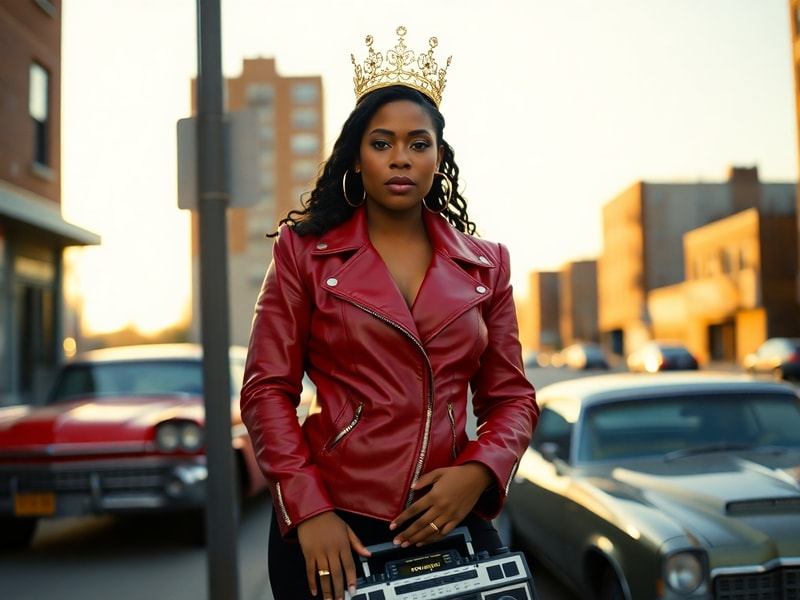
Queen Latifah’s impact on hip-hop is immeasurable, yet often understated in mainstream discussions of the genre’s history. She emerged during a time when women in rap were frequently sidelined or reduced to sexualized caricatures. Instead of conforming, Latifah flipped the script. She wore a crown in her logo and a leather jacket in her videos, blending regal imagery with street credibility.
Her music wasn’t just catchy—it was culturally vital. On Nature of a Sista (1991), she explored themes of self-worth and resilience. By 1993’s Black Reign, she cemented her place as a pioneer with the Grammy-nominated track “Come Into My House.” She didn’t just break barriers; she built new ones.
Beyond the studio, Latifah used her platform to challenge systemic issues. She became a vocal advocate for LGBTQ+ rights and HIV/AIDS awareness, long before such conversations were commonplace in hip-hop. Her 1993 appearance on Arsenio Hall Show, where she spoke openly about queer representation, was a bold statement for the era.
Beyond the Mic: A Multifaceted Empire
Queen Latifah’s ambitions weren’t confined to music. In the late 1990s, she pivoted to acting with a role in Set It Off (1996), proving her dramatic range. Her portrayal of Cleo, a tough-as-nails bank robber, earned critical acclaim and showcased her ability to command the screen. This role opened doors to a new chapter in her career.
She became one of the first hip-hop artists to successfully transition into Hollywood without losing her authenticity. Films like Living Out Loud (1998) and Brown Sugar (2002) demonstrated her versatility—whether as a comedic lead or a romantic lead. Her performance in Chicago (2002) earned her an Oscar nomination for Best Supporting Actress, a rarity for a woman of color in Hollywood at the time.
Her TV work has been equally transformative. As a producer and star on Living Single (1993–1998), she helped shape a sitcom that centered Black women in lead roles, paving the way for future shows like Girlfriends and Insecure. Later, her talk show The Queen Latifah Show (1999–2001) broke new ground as one of the few syndicated programs hosted by a Black woman.
Today, she remains a sought-after voice in entertainment. Whether she’s narrating documentaries like When the Levees Broke (2006) or voicing characters in animated films like Ice Age, her presence is unmistakable. Her ability to pivot across mediums isn’t just impressive—it’s a masterclass in artistic evolution.
The Businesswoman Behind the Crown
Queen Latifah isn’t just a performer; she’s a savvy entrepreneur. In 2005, she launched Flavor Unit Entertainment, a production company that has backed films like The Cookout (2008) and TV projects such as Single Ladies. The company reflects her commitment to telling stories that reflect diverse experiences, particularly those of Black women.
Her business ventures extend beyond Hollywood. She’s been a spokesperson for brands like CoverGirl, becoming one of the first Black women to represent a major cosmetics line. Her endorsement deals with companies like AT&T and State Farm highlight her crossover appeal—she’s relatable to audiences across generations and demographics.
Even her fashion choices carry weight. Whether she’s wearing a bold jumpsuit on the red carpet or a sleek pantsuit in a boardroom, she projects confidence and intentionality. She’s not just following trends; she’s setting them.
In 2020, she took her entrepreneurial spirit to new heights with the launch of her lifestyle brand, Queen Collective. The initiative focuses on wellness, self-care, and community empowerment, offering products that align with her values. It’s another reminder that her influence isn’t just cultural—it’s commercial.
The Activist with a Megaphone
Queen Latifah’s activism is woven into the fabric of her career. She’s used her platform to address issues like mass incarceration, voter suppression, and economic inequality. Her involvement with organizations like the Innocence Project and her vocal support for criminal justice reform underscore her commitment to social justice.
She’s also been a staunch advocate for LGBTQ+ rights. In 2010, she publicly supported marriage equality, a stance that aligned with her long-standing allyship. Her advocacy isn’t performative; it’s rooted in lived experience. Growing up in Newark, she witnessed firsthand the struggles of marginalized communities. Her music and public statements reflect that awareness.
Her philanthropy extends to education and youth empowerment. Through her foundation, she’s funded scholarships and mentorship programs, particularly for young women of color. She understands the power of representation—knowing that seeing someone like her succeed can change lives.
Legacy and Influence: Why Queen Latifah Still Matters
More than three decades into her career, Queen Latifah remains a touchstone for artists and audiences alike. Her influence can be seen in the work of contemporary rappers like Nicki Minaj and Cardi B, who cite her as an inspiration. Her impact on acting is equally profound, with stars like Zendaya and Yara Shahidi following in her footsteps as multifaceted entertainers.
What sets Latifah apart is her refusal to be pigeonholed. She’s never limited herself to one genre, one role, or one platform. Whether she’s rapping, acting, producing, or advocating for change, she does so with intention and integrity. She’s a reminder that talent and ambition are only part of the equation—vision and courage are what truly define a legend.
Her journey also highlights the importance of authenticity in a world that often demands conformity. She’s never shied away from her roots, her opinions, or her identity. In an industry that can be unforgiving, she’s carved out a space that feels unapologetically hers.
As she continues to evolve, Queen Latifah’s legacy serves as both a roadmap and a challenge. For artists coming up behind her, she offers a blueprint for longevity and reinvention. For the rest of us, she’s a testament to the power of staying true to oneself.
Queen Latifah isn’t just a pioneer. She’s a force of nature—and her work is far from over.