Skydiving Plane Crashes: Causes, Cases, and How to Stay Safe
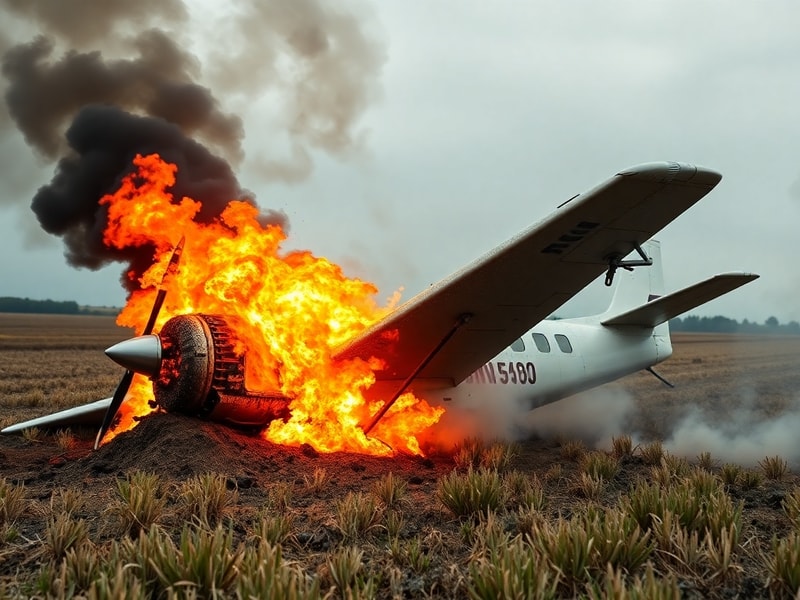
Skydiving offers an unmatched rush of adrenaline, but the sport’s reliance on aircraft adds a layer of risk that often goes unexamined. While most skydiving jumps proceed without incident, plane crashes remain one of the most serious hazards in the sport. These accidents, though rare, can turn a routine day at the drop zone into a life-altering tragedy. Understanding the causes, consequences, and prevention of skydiving plane crashes is essential for both jumpers and pilots who share the sky.
The mechanics of skydiving flights and where risks emerge
Skydiving operations typically use small, piston-engine aircraft such as the Cessna 182 or 208 Caravan. These planes are chosen for their ability to climb quickly, carry multiple jumpers, and operate from short runways. However, their simplicity and light construction also make them vulnerable to mechanical failure and pilot error. Most skydiving flights operate between 10,000 and 15,000 feet, with jumpers exiting at speeds of 90–110 mph. The combination of high altitude, rapid descent, and multiple parachutes in the cabin creates a unique operational environment.
Common risk factors include:
- Engine failure: Piston engines in skydiving aircraft are often pushed to their limits with frequent takeoffs and climbs. Overheating, carburetor icing, or fuel starvation can lead to sudden power loss.
- Door or latch malfunctions: Jumpers exit through open doors or side hatches, which must remain securely closed during flight. A faulty latch can cause a door to open mid-flight, destabilizing the aircraft.
- Overloading: While most operators stay within weight limits, overloaded planes reduce climb performance and increase stall risk, especially during hot weather or high-density altitudes.
- Pilot fatigue: Skydiving pilots often fly multiple loads in a single day. Fatigue impairs judgment and reaction time, increasing the likelihood of misjudging altitude or wind conditions.
Investigations by the National Transportation Safety Board (NTSB) have shown that many crashes result from a chain of small errors rather than a single catastrophic failure. For example, a slight engine sputter during climb might prompt a pilot to abort the jump, but if they descend too quickly to land, they risk stalling the aircraft.
Real-world cases: lessons from high-profile accidents
One of the most widely studied skydiving crashes occurred in 2016 in Lockhart, Texas. A Cessna 182 overloaded with nine skydivers and a pilot crashed shortly after takeoff, killing all on board. Investigators found that the aircraft had been flown beyond its certified weight limit and that the pilot had failed to account for high temperatures and humidity, which further reduced engine performance. This case underscored the importance of strict weight management and environmental awareness in flight planning.
In 2019, a Twin Otter operated by a Canadian skydiving company suffered a partial engine failure during climb. The pilot attempted to return to the airport but misjudged altitude and crashed in a wooded area. All 17 people on board survived, but the incident highlighted the critical role of pilot training in engine-out scenarios. The NTSB later recommended improved simulator training for skydiving pilots to practice emergency landings under realistic conditions.
Another notable case involved a door opening mid-flight in 2021 over Arizona. The sudden decompression caused the pilot to lose control, and the aircraft entered an unrecoverable spin. While no one was seriously injured, the accident led to stricter pre-flight door inspections and the installation of secondary latches on many skydiving aircraft.
These incidents reveal a pattern: most skydiving plane crashes are preventable. They occur not because of reckless behavior, but because of overlooked details—an extra passenger, a warm afternoon, a slightly loose door latch. The skydiving community has responded by implementing stricter safety protocols, but the margin for error remains thin.
Regulations, training, and the future of safety in skydiving aviation
Skydiving operations in the United States are regulated by the Federal Aviation Administration (FAA). All skydiving aircraft must undergo annual inspections, and pilots must hold a commercial pilot certificate with a minimum of 250 flight hours. However, critics argue that these standards are not enough. The FAA’s Part 105 regulations, which govern skydiving, allow operators to self-certify their aircraft for weight and balance, creating potential for abuse.
To address these concerns, many drop zones have adopted voluntary safety programs such as the Parachute Industry Association’s Safety Management System (SMS). These programs encourage operators to conduct regular risk assessments, maintain detailed maintenance logs, and provide ongoing pilot training. Some of the most advanced drop zones now use real-time telemetry systems that monitor engine performance, cabin pressure, and parachute deployment rates.
Another promising development is the increased use of turbine-powered aircraft like the Cessna Caravan with Pratt & Whitney PT6 engines. These engines are more reliable in hot conditions and less prone to carburetor icing. While turbine conversions are expensive, they are becoming more common at high-volume drop zones where safety and efficiency are top priorities.
Pilot training is also evolving. The U.S. Parachute Association (USPA) now mandates simulator-based upset recovery training for all skydiving pilots. These sessions help pilots practice recovering from stalls, spins, and engine failures in a controlled environment. The goal is to reduce the likelihood of panic-induced errors during actual emergencies.
What skydivers can do to stay safer in the air
Skydivers are not passive passengers—they have a responsibility to speak up if something feels wrong. Before boarding, jumpers should check the aircraft’s load manifest and confirm that the total weight is within safe limits. If the plane feels overloaded or the pilot seems rushed, it’s reasonable to ask questions or even decline the jump. A few extra minutes of caution can prevent a lifetime of regret.
Jumpers should also pay attention during the pre-flight briefing. Pilots should explain the planned exit point, emergency landing zones, and what to expect during the climb. If the pilot skips this step or seems distracted, it’s a red flag. Once in the air, jumpers should monitor the aircraft’s behavior—unusual noises, vibrations, or a sudden loss of power are all signals to prepare for an emergency exit.
After landing, reporting any concerns—no matter how minor—can help prevent future accidents. Many drop zones have anonymous reporting systems for safety issues. Sharing observations about engine performance, door latches, or pilot behavior contributes to a culture of transparency and accountability.
The skydiving community thrives on trust. Jumpers trust pilots to get them safely to altitude. Pilots trust mechanics to keep the aircraft airworthy. And everyone trusts each other to follow the rules. When that trust is broken, the consequences can be devastating. Skydiving will never be risk-free, but by confronting the reality of plane crashes—not as distant horror stories, but as preventable events—we can make the sport safer for everyone who dares to leap into the blue.