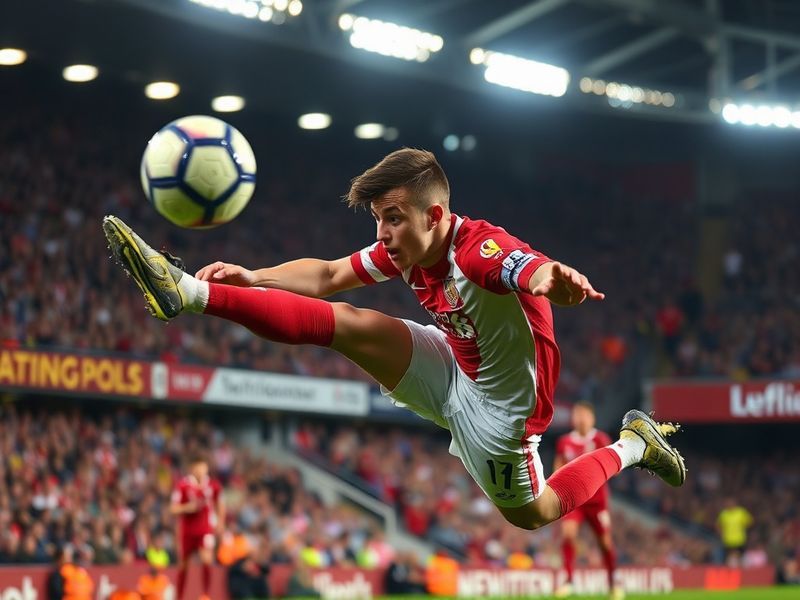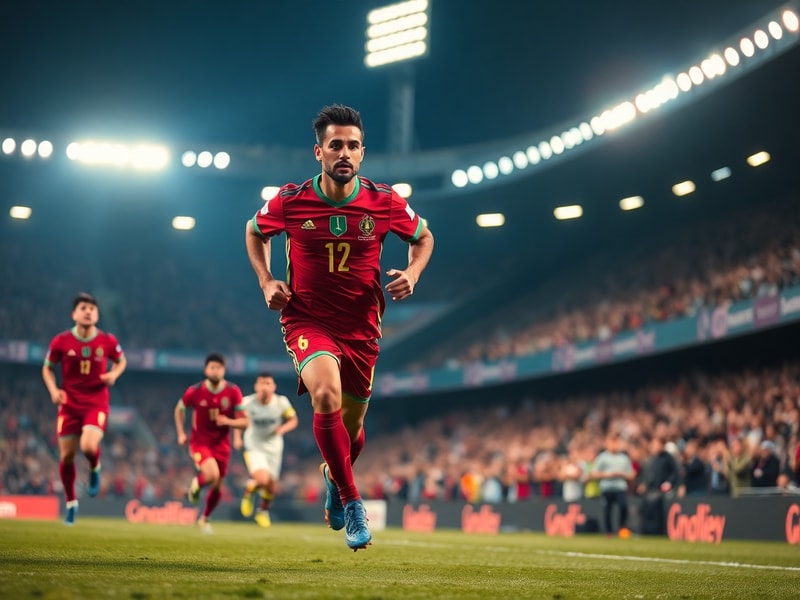
Achraf Hakimi has quietly cemented his status as one of football’s most electrifying defenders. At just 25 years old, the Moroccan international balances elite athleticism with tactical intelligence, making him a cornerstone for both club and country. His journey—from the streets of Madrid to the brightest stages of European football—tells a story of relentless work ethic and adaptability. Hakimi’s rise isn’t just about raw speed or defensive prowess; it’s about redefining what it means to be a modern full-back in an era where attacking football dominates.
The early years: from San Sebastián de los Reyes to PSG
Hakimi’s footballing foundation was laid in the modest youth academy of San Sebastián de los Reyes, a club on the outskirts of Madrid. His talent was undeniable early on, catching the eye of Real Madrid’s scouts. By 2016, he had earned a spot in the club’s famed La Fábrica academy, where he honed his technical and physical attributes under elite coaching. His breakthrough came during the 2017-18 season when he was promoted to Real Madrid’s senior squad, though his opportunities were initially limited behind established stars like Dani Carvajal and Nacho.
Hakimi’s first real taste of top-level football arrived on loan at Borussia Dortmund in 2018. The Bundesliga’s fast-paced environment suited his dynamic style perfectly. While injuries and inconsistency occasionally disrupted his rhythm, his performances—particularly his blistering pace and crossing ability—demonstrated his potential. A second loan, this time to Inter Milan in 2020, further refined his game. Playing in Serie A’s tactical system taught him the importance of positioning and defensive solidity, traits that would later define his Paris Saint-Germain (PSG) tenure.
PSG: a marquee move and the evolution of a star
In 2021, Hakimi completed a high-profile transfer to PSG for a reported €60 million, a move that signaled the club’s intent to bolster their defensive options while adding a direct, attacking threat down the right flank. The transition wasn’t seamless. PSG’s complex tactical setup under Mauricio Pochettino and later Christophe Galtier required Hakimi to adapt quickly. His first season was marked by flashes of brilliance—most notably in the Champions League—but also moments of inconsistency, particularly in defensive duels and decision-making under pressure.
By the 2022-23 campaign, however, Hakimi had fully integrated into PSG’s system. His partnership with Neymar and Mbappé on the right side became a tactical nightmare for opponents. His ability to overlap, deliver pinpoint crosses, and even contribute goals made him a dual threat. Statistically, the 2022-23 season was his most productive at PSG, with 7 goals and 11 assists across all competitions. His performance in the Champions League, where PSG reached the semifinals, further solidified his reputation as one of Europe’s best attacking full-backs.
Hakimi’s development at PSG reflects broader trends in modern football. Clubs increasingly value full-backs who can function as auxiliary wingers, and Hakimi’s evolution mirrors that shift. His success also highlights the growing influence of African players in European football, a trend that has reshaped tactical approaches across the continent.
Morocco’s backbone: Hakimi’s role in the Atlas Lions’ resurgence
While Hakimi’s club career has garnered attention, his contributions to Morocco’s national team have been equally pivotal. Since making his debut in 2016 at just 17 years old, he has become the backbone of a Moroccan side that has consistently punched above its weight. His performances in the 2022 FIFA World Cup were particularly notable. Morocco’s historic run to the semifinals—becoming the first African and Arab nation to achieve this feat—was built on a foundation of disciplined defending and rapid counterattacks, with Hakimi playing a crucial role.
In the group stage, his defensive awareness and ability to join attacks provided the perfect foil for Morocco’s midfield. Against powerhouses like Spain and Portugal, Hakimi’s composure under pressure was evident. His assist for Achraf Dari’s header against Spain in the Round of 16 showcased his knack for delivering in big moments. The World Cup run wasn’t just a personal triumph for Hakimi; it was a statement to the world about Morocco’s growing footballing ambition and the caliber of talent emerging from the continent.
Hakimi’s leadership extends beyond his on-field contributions. At 25, he is already one of Morocco’s most experienced players, and his influence in the locker room is palpable. His ability to bridge the gap between older, more experienced players and the new generation speaks to his maturity and tactical understanding.
Key milestones in Hakimi’s career
- 2016: Made his professional debut for Real Madrid Castilla at age 16.
- 2017: Promoted to Real Madrid’s senior squad under Zinedine Zidane.
- 2018-19: Loaned to Borussia Dortmund, where he scored 3 goals and provided 7 assists in all competitions.
- 2020-21: Loaned to Inter Milan, winning the Serie A title and reaching the Champions League final.
- 2021: Transferred to PSG for €60 million, becoming one of the most expensive full-backs in history.
- 2022: Played a pivotal role in Morocco’s historic World Cup run.
The modern full-back: what sets Hakimi apart
Hakimi’s playing style is a blend of raw athleticism, technical skill, and tactical versatility. His greatest asset is his speed—both in defense and attack. Defensively, he uses his pace to recover ground quickly, often neutralizing opposition wingers before they can create danger. Offensively, his overlapping runs and ability to deliver crosses with precision make him a constant threat. Unlike traditional full-backs who prioritize defensive solidity above all else, Hakimi thrives in systems that allow him to push forward.
What truly sets Hakimi apart, however, is his adaptability. Whether playing as an inverted full-back in a back three, a traditional wing-back in a 4-3-3, or even as a makeshift winger, he adjusts seamlessly. This versatility is a product of his footballing education in multiple leagues—La Liga, the Bundesliga, Serie A, and Ligue 1—each of which demands different tactical approaches. His ability to read the game and make split-second decisions also reflects his high footballing IQ.
Another defining trait is his mentality. Hakimi has often spoken about the importance of resilience, particularly after setbacks like injuries or tactical changes. His work ethic in training is well-documented, with teammates and coaches frequently praising his dedication. This mindset has been crucial in his development from a promising youngster to one of the world’s best full-backs.
The road ahead: what’s next for Hakimi?
The next phase of Hakimi’s career will likely be defined by two key questions: Can he maintain his elite level at PSG, and what will his next move be? PSG’s financial fair play constraints and the club’s ambition to win the Champions League mean Hakimi could be part of a significant transfer overhaul. Speculation has linked him with moves to Premier League giants like Manchester United or Manchester City, where his style would fit seamlessly into systems prioritizing attacking full-backs.
Regardless of where he ends up, Hakimi’s trajectory suggests he is destined for even greater heights. His combination of physical gifts, technical ability, and tactical awareness makes him a prototype for the modern full-back. Clubs will continue to covet players like him, and national teams—particularly those from Africa—will look to him as a model for developing their own talent.
Off the pitch, Hakimi’s influence is growing. He has leveraged his platform to advocate for social causes, including education and youth development in Morocco. His partnership with the Dave’s Locker Foundation highlights his commitment to giving back, something that resonates strongly with fans and peers alike.
As football continues to evolve, players like Hakimi are not just participants—they are architects of the game’s future. His story is one of ambition, adaptability, and excellence, a testament to what can be achieved with talent and determination. Whether he lifts the Champions League trophy or continues to dazzle in domestic competitions, one thing is certain: Achraf Hakimi is only just getting started.